Clearing a drain and dealing with a dripping tap – without chemicals
A blocked basin or shower drain can usually be cleared mechanically: clean the strainer, use a plunger, unscrew and rinse the trap. A dripping tap often has a worn washer or cartridge. Shut off the water before any work. Chemical drain cleaners are corrosive and an unnecessary risk. Anything involving gas, water heaters or pipes behind the wall belongs to professionals.
- 15–60 minutes
Explained simply
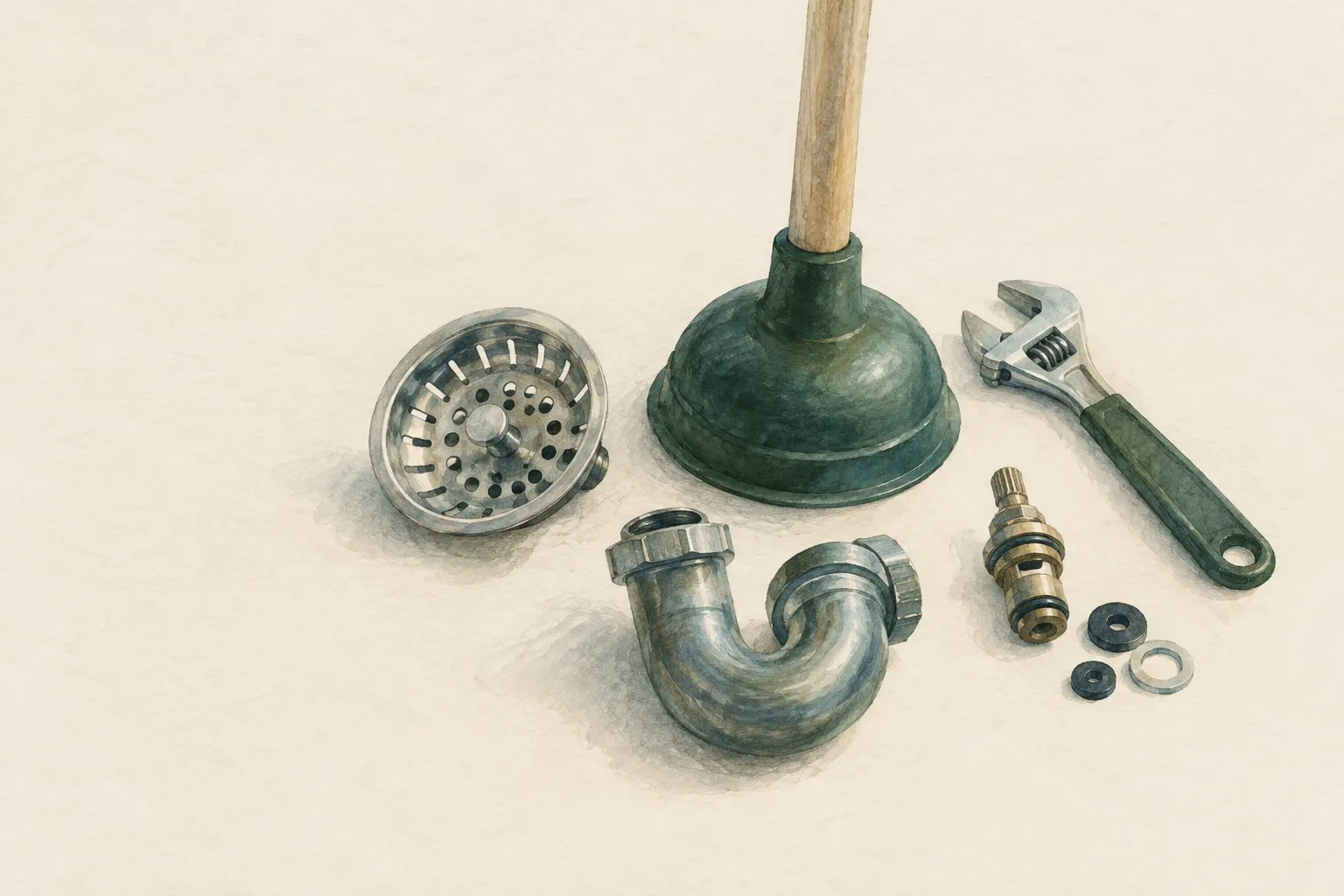
Under every washbasin there is a bent pipe that looks like a U. It is called a trap. Some water always stays in the bend – like a plug made of water that stops sewer smells coming up. But that is exactly where hair, soap residue and grease get stuck. Over time the pipe gets narrower and the water drains slowly.
Often, cleaning the strainer in the plughole is already enough. If not, the plunger comes next – the rubber cup on a stick. It pushes and sucks in turn and so loosens the blockage. And sometimes you unscrew the trap and rinse it out. Do not forget to put a bucket underneath!
A dripping tap often has a small, worn seal. Before unscrewing anything there, the water must be turned off. Chemical drain cleaners are corrosive – they can injure skin and eyes and are unnecessary. Anything involving gas, water heaters or pipes in the wall is done by professionals.
How it works
The trap is a simple, clever invention: the bend keeps a small amount of water in the pipe that separates the room from the sewer system. But because everything that is heavier or catches collects there too, most blockages sit very close to the outlet – in the strainer, in the trap or just beyond it. That is why they can often be cleared without special equipment.
The plunger works with water pressure. Because water hardly compresses, it transmits each push directly to the blockage. Alternating pressure and suction shake it loose until it is flushed on. For this to work, the pressure has to reach it and must not escape through another opening – that is why you cover the overflow.
A tap closes by having a part seal the opening. In older taps this is a rubber washer, in many newer ones a cartridge with ceramic discs. If the washer becomes hard or the disc is roughened by limescale, the tap no longer seals completely – and it drips.
What really matters
Always move from simple to more involved: first remove the strainer or plug and clear hair with gloves, then use the plunger, then the trap. Put a bucket underneath when unscrewing the trap, because the standing water will run out. Loosen the nuts of plastic traps by hand; pipe wrenches easily crush or overtighten them. When reassembling, seat the sealing rings correctly, tighten hand-tight and then run water to check everything is watertight.
With a dripping tap, shutting off the water is the first step: close the isolation valve under the basin or the main stopcock and open the tap until nothing more comes out. Close the plughole with the plug so no small parts disappear. Take the old part to the shop to get a matching replacement – washers and cartridges come in many forms. If it is unclear how the tap is built, that is the moment for a professional.
In rented homes: cleaning the strainer and using a plunger are usually fine; if more is needed, inform the landlord.
Safety: what to watch out for
Chemical drain cleaners are strongly corrosive. They can seriously injure skin and eyes, react dangerously with other cleaners and attack pipes. So it is best to do without them altogether. If cleaner has already been poured in, do not use the plunger under any circumstances – it can make the liquid splash out. Then wear goggles and gloves, ventilate well and open the trap only very carefully, or call professionals.
There are often appliances or sockets under the sink. Before working there with water, unplug appliances and keep wet areas dry. Water and electricity do not belong together.
Gas pipes, gas boilers and water heaters are off-limits. If you smell gas: do not operate any switch, no flames, open windows, leave the building and call the emergency service or the local emergency number from outside (112 in the EU).
When it is no longer your job
If several drains are slow at the same time, the toilet gurgles when the basin is running, or water rises in the shower or floor drain, the blockage is usually deeper in the main drain. That is a job for a professional with the right equipment. The same applies to leaking pipes in the wall, damp patches on ceilings and walls, and anything to do with the water heater.
During floods or a failure of the sewage system, different rules apply: drains can then push water back up, and the authorities give advice on what to do. That advice comes first.
Prevention is easier
Most blockages can be avoided. A hair catcher in the shower and basin catches the main culprit and is easy to empty. Fat and frying oil do not belong in the drain but, once cooled, in the bin – warm it flows, in a cold pipe it sets and glues dirt together.
A hand drain snake – a flexible wire with a crank – reaches blockages beyond the trap. Turn it slowly and without force so the pipes are not damaged. A plunger and a snake are cheap aids that pay for themselves over the years in many households.
Step by step
Clean the strainer
Remove the strainer or plug and clear hair and dirt with gloves. Often that is enough.
- 1
Clean the strainer
Remove the strainer or plug and clear hair and dirt with gloves. Often that is enough.
- 2
Plunger
Cover the overflow with a wet cloth, leave some water in the basin, place the plunger and pump firmly several times.
- 3
Clean the trap
Put a bucket underneath, unscrew the trap by hand, rinse it out, check the seals and refit hand-tight. Then check for leaks.
- 4
Tap: shut off the water
Close the isolation valve under the basin or the main stopcock, open the tap until no more water comes. Plug the outlet so no small parts disappear.
- 5
Replace washer or cartridge
Unscrew the head according to the manufacturer's instructions, take the old part with you to buy the matching replacement, fit it and slowly turn the water back on. If the design is unclear: call a professional.
Common mistakes
- Combining chemicals and a plunger
- Overtightening the trap with pipe wrenches
- Not shutting off the water
- Pouring grease down the drain
Quick view
Materials
Sink plunger
Do not use after chemical drain cleaner has been poured in – risk of splashing.
Household tool kit
Store tools out of children's reach; wear safety glasses for striking and cutting work.
Disposable gloves
Consider latex allergies – prefer latex-free gloves (e.g. nitrile).
Headlamp / flashlight
Suitable for
- Slow-draining basins, showers, sinks
- Dripping taps with an accessible head
Not suitable for
- Blockages in the main drain or several drains at once
- Leaking pipes in the wall or at the water heater
- Backflow during floods
Prerequisites
- Know the isolation valves under the basin or the main stopcock
- Bucket and cloths
- In rented homes: inform the landlord if more than simple cleaning is needed
Safety
- Do not use chemical drain cleaners, and never mix them with other cleaners. If cleaner has already been poured in: no plunger, wear goggles and gloves, ventilate well.
- Keep water and electricity apart: unplug appliances under the sink and keep wet areas dry before working.
How it works
Most blockages sit close to the outlet: hair, soap residue and grease collect in the strainer and the trap. A plunger creates pressure and suction waves that loosen the plug. A dripping tap no longer seals because a rubber washer or ceramic cartridge is worn or scaled up.
Advantages
- Saves call-out costs for small jobs
- No corrosive chemicals
Disadvantages
- Unpleasant work
- Risk of follow-on damage if refitted badly
Deep knowledge
Background
Mechanically cleaning the strainer and trap is considered the first step for drain problems, before professionals use snakes or jetting equipment. Work on gas appliances and building installations is reserved for licensed businesses in many countries – check local rules.
During floods or a failure of the sewage system different rules apply: follow official advice.
Variants
- Drain snake
- A hand drain snake reaches blockages beyond the trap. Turn slowly and do not force it, to avoid damaging pipes.
- Prevention
- Fit a hair catcher, put grease in the bin, run hot water through regularly.
Common mistakes
- Combining chemicals and a plunger
- Overtightening the trap with pipe wrenches
- Not shutting off the water
- Pouring grease down the drain
Limits and risks
- No work on pipes in the wall, gas or hot-water appliances
- No instructions for individual tap models
Material alternatives
Derived from material properties: a substitute must have all relevant properties. Observe the notes on the substitute.
- Headlamp / flashlight
- Mobile phone (The battery drains quickly in cold and with continuous screen and GPS use.), Battery lantern / LED light
Results come exclusively from structured entries. No improvised instructions are generated.
Sources
U.S. Federal Emergency Management Agency (FEMA): Are You Ready? An In-Depth Guide to Citizen Preparedness
Shutting off the water supply; gas smell: leave the house, call professionals