Reading track patterns: walkers, bounders and gallopers
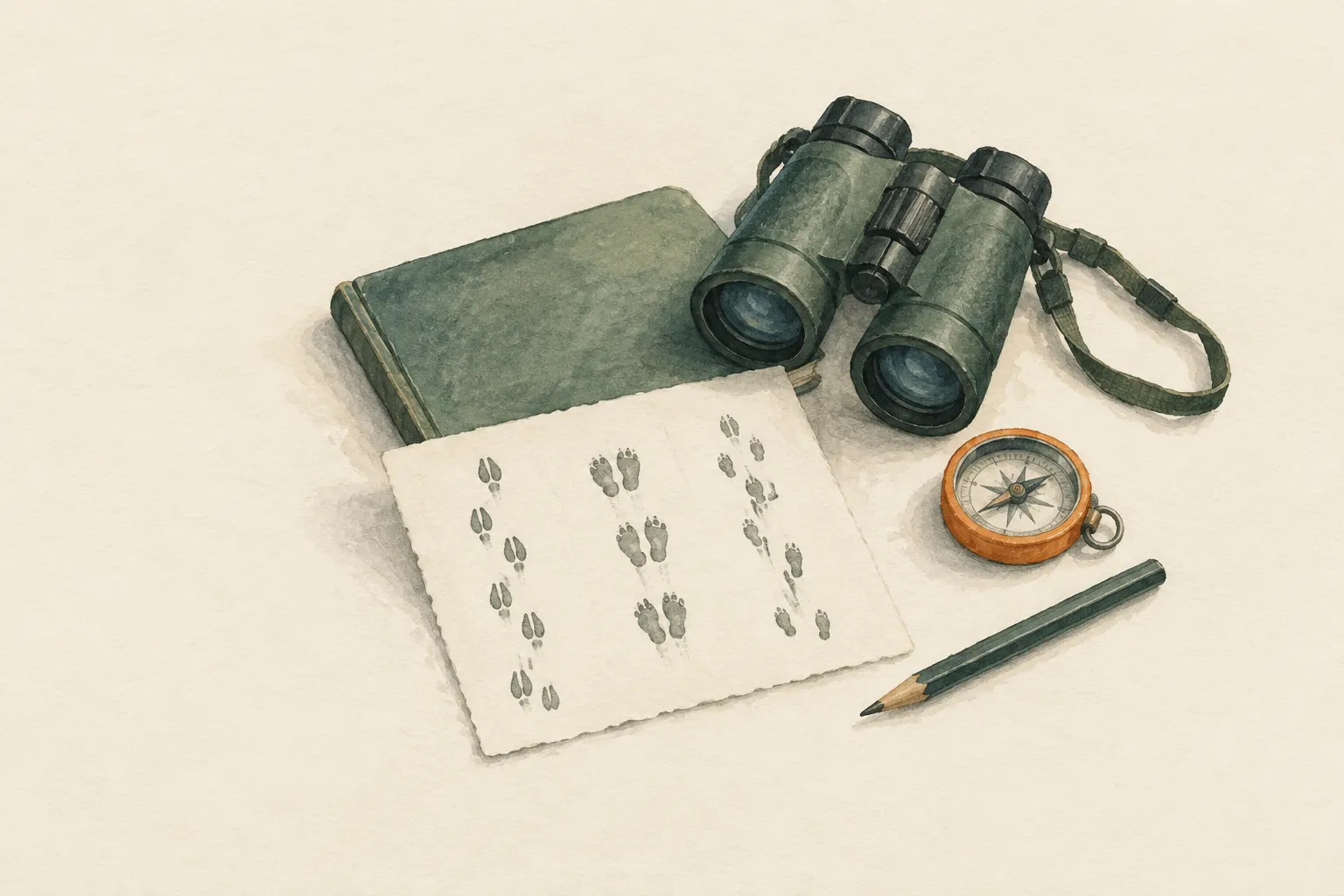
Not the single print but the arrangement of many prints tells you the most: did the animal walk step by step, bound with both hind legs together, or gallop? Tracking literature groups mammals roughly by how they move. Recognising the pattern narrows down the possibilities and shows whether the animal was moving calmly or in a hurry.
- 10 minutes to read, practice over many outings
Explained simply
A single footprint is like a single letter. Many prints in a row are like a whole word – they tell you much more. Animals move in very different ways: some walk step by step, some hop, some leap with both hind legs at once.
A hare, for example, hops. Its large hind legs land in front of its small front legs. In snow you then see groups of four prints again and again. A fox walking calmly, on the other hand, often places its hind foot exactly in the print of its front foot. Its trail then looks like an almost straight string of beads.
Such a pattern is called a trail pattern. It helps you understand how an animal moved – calmly or in a hurry. And here too: you look at the trail, but you do not follow it if it is fresh and comes from a large animal.
How it works
Tracking books roughly divide mammals into four groups by how they move. The first group are walkers and trotters, which include many deer, dogs and cats. When moving steadily, they often place the hind foot exactly in the print of the front foot. This creates a narrow, almost single-line trail in which each print is actually two on top of each other. It saves energy and is quiet.
The second group are waddlers: wide animals with short legs, such as bears, badgers or beavers. They move with a swaying body, and their trail is wide and clearly alternates from left to right. The third group are bounders, which include many members of the weasel family. They move in leaps in which the hind feet land roughly where the front feet were before. So in the trail you often see pairs of prints.
The fourth group are gallopers and hoppers such as hares, rabbits and squirrels. With each leap their large hind legs swing past the front legs and land in front of them. This creates groups of four in which the large prints are at the front – even if that looks strange at first. This grouping is a rule of thumb: one and the same animal changes its gait depending on speed and ground.
What really matters
Always start with the overview. Stand beside the trail and look at it over several metres before you examine individual prints. Does a pattern of single prints, pairs or groups of four repeat? A single print can deceive; a pattern over many metres hardly can.
Then pay attention to width and line. A narrow, almost straight line suggests an efficient walker or trotter; a wide, swaying trail suggests a waddler. With groups of four, check whether the large prints are at the front – typical of hoppers and gallopers.
Finally compare the spacing. If the distances between groups suddenly increase, the animal sped up, perhaps because it was startled. Even spacing suggests calm movement. That way you read not only roughly who was here, but also what the animal was doing.
When it makes sense – and when not
Trail patterns are easiest to read after fresh snow, on damp sand or on muddy paths. There, a longer trail is visible as a whole. On leaf litter or grass you usually only see fragments. Winter with fresh snow is therefore a good time to get to know trail patterns.
Deep snow changes the pattern a lot. Many animals then switch to bounding because walking becomes too tiring, or they drag their feet through the snow. Drag marks between prints are then quite normal. An animal that leaves a neat single line in summer may look completely different in deep snow.
A trail pattern alone is not enough for reliable species identification. Gaits overlap between species, and regional wildlife differs greatly. For exact identification you need additional features such as toe count and claws – and a regional tracking guide. A particularly common mix-up: on hiking paths, many tracks come from dogs.
Safety: what to watch out for
Only look at trails for a short stretch, ideally from paths or open ground. Do not follow a fresh trail of a large animal, however exciting it is. A large animal that has just walked steadily ahead of you is a reason to keep your distance or turn back.
Respect quiet zones and stay-on-trail rules. In winter many animals urgently need their energy, and every escape through deep snow costs them a lot of strength. Anyone tramping off trail through snow to follow a track can unknowingly flush animals.
How to practise it
The easiest exercise involves dogs in the park or yourself. Walk slowly across damp sand, then faster, then hop with both feet together. Compare the patterns: the spacing and arrangement change clearly. That gives you a feel for how speed changes a trail pattern.
With real animal tracks, photograph a longer stretch with an object of known size beside it and note substrate, date and weather. At home, compare calmly with a regional tracking guide. Over time you will recognise typical patterns faster and faster.
Grouping by movement is widespread in tracking literature, for example in Mark Elbroch's standard work on North American mammal tracks. It helps beginners organise a trail before they pay attention to details.
Step by step
Get the overview first
Stand beside the trail and look at it over several metres. Does a pattern of single prints, pairs or groups of four repeat?
- 1
Get the overview first
Stand beside the trail and look at it over several metres. Does a pattern of single prints, pairs or groups of four repeat?
- 2
Trail width and line
A narrow, almost straight line suggests an efficient walker or trotter; a wide, swaying trail suggests a waddler.
- 3
Look at the groups
With groups of four, check: are the large prints at the front? That is typical of hoppers and gallopers. Pairs side by side suggest bounders.
- 4
Compare spacing
If the distances between groups suddenly increase, the animal sped up – perhaps because it was disturbed. Even spacing suggests calm movement.
- 5
Record
Photograph a longer stretch with a size reference and note substrate, date and weather. Identify later with a regional tracking guide.
Common mistakes
- Looking only at a single print
- Assigning a gait firmly to one species
- Walking through the trail and destroying it
- Confusing dog tracks on hiking paths with wildlife tracks
Quick view
Materials
Mobile phone
Photos of the whole trail, not just one print
The battery drains quickly in cold and with continuous screen and GPS use.
Do not plan on it as your only means of navigation or emergency calls.
Field notebook and pencil
Suitable for
- Nature observation and education
- Understanding how animals use an area
- Winter hikes with snow
Not suitable for
- Reliable species identification from one pattern alone
- Following animals
Prerequisites
- A longer, clearly visible trail (snow, mud, sand)
- Basics from “Reading animal signs”
Safety
- Only look at trails for a short stretch on paths or open ground. Do not follow fresh trails of large animals and respect quiet zones.
How it works
Tracking guides usually distinguish four rough groups: walkers and trotters (many deer, dogs and cats often place the hind foot exactly in the front foot's print – an almost single-line, even trail), waddlers (wide, short-legged animals such as bears, badgers or beavers – a wide, alternating trail), bounders (many members of the weasel family – prints in pairs) and gallopers or hoppers (hares, rabbits, squirrels – groups of four in which the large hind feet land ahead of the front feet). The same species changes gait with speed, so the groups are rules of thumb, not rigid boxes.
Advantages
- Works even when individual prints are unclear
- Shows behaviour, not just presence
- No equipment needed
Disadvantages
- Needs a longer, well-preserved trail
- Gaits overlap between species
Deep knowledge
Background
Grouping by movement is widespread in tracking literature, for example in Mark Elbroch's standard work on North American mammal tracks. It helps beginners organise a trail before looking at details such as toe count or claws.
For safety, this rough classification is often enough: a large animal that recently walked ahead at an even pace is a reason to keep your distance or turn back.
Variants
- In snow
- Deep snow changes the pattern: many animals switch to bounding or drag their feet. Drag marks between prints are then normal.
Common mistakes
- Looking only at a single print
- Assigning a gait firmly to one species
- Walking through the trail and destroying it
- Confusing dog tracks on hiking paths with wildlife tracks
Limits and risks
- No species identification keys
- Regional wildlife differs greatly
Material alternatives
Derived from material properties: a substitute must have all relevant properties. Observe the notes on the substitute.
- Mobile phone
- Headlamp / flashlight, Battery lantern / LED light
Results come exclusively from structured entries. No improvised instructions are generated.
Sources
Mark Elbroch – Stackpole Books (2003): Mammal Tracks & Sign: A Guide to North American Species
Classification of trail patterns by gaits and movement groups