Rodent-proofing a home: exclusion instead of trapping
Mice and rats come for food and shelter and use very small openings. What helps in the long term: recognising signs, finding entry points and sealing them with metal, storing food out of reach and removing droppings safely and wet. Catching and poison belong in the hands of professional pest control according to local rules.
- Inspection 1–2 hours; sealing depends on the building
Explained simply
Mice and rats come into the house because they find two things there: something to eat and a warm, safe hiding place. They can squeeze through surprisingly small holes – for mice a gap as wide as a finger is often enough. And they can gnaw through wood, plastic and foam with their sharp teeth.
So what helps most is: finding the holes and closing them with material they cannot gnaw through, such as metal mesh or steel wool. And storing all food so they cannot get at it. Just catching an animal without closing the holes simply invites the next one. Catching and poison are left to professionals according to local rules.
Very important when cleaning up: never sweep or vacuum mouse droppings dry. That creates dust, and with it you can breathe in pathogens. Ventilate first, put on gloves, soak everything with disinfectant and then pick it up with paper towels. Children are best off leaving this to the adults.
How it works
Rodents follow their noses. Smells from food supplies, pet food, bird food or rubbish attract them, and warm, sheltered corners in cellars, attics, cavity walls or garden sheds give them room for nests. Especially in the cold season they seek out buildings.
Their incisors keep growing throughout their lives and have to be worn down by gnawing. That is why mice and rats simply gnaw through soft materials such as wood, plastic, rubber and expanding foam. A hole filled only with foam is often soon open again for them. Metal, mortar and concrete, by contrast, withstand them.
This leads to the basic principle: only the combination of inaccessible food and openings sealed with gnaw-proof materials works long-term. The US health authority CDC summarises rodent control in three steps: seal up, remove rodents and clean up safely. This entry deliberately does not cover the “remove” part in practice but refers to professionals and local rules.
What really matters: signs and entry points
Typical signs are small dark droppings, gnaw marks on packaging, wood or cables, dark grease smears on walls along their runs, nests of shredded paper, fabric or insulation, and scratching or rustling noises at night. Note where you find which signs – that shows you where the animals are moving.
Then you look for the entry points. Walk around the outside and inside of the house with a lamp and check pipe and cable penetrations, gaps at doors and gates, vents, cellar windows and joints at the foundation. Do not underestimate small gaps: even gaps about a finger's width can be enough for mice.
At the same time you remove the food: store food and pet food in sealed containers, rubbish in closed bins, offer bird food so nothing falls to the ground, and no food scraps on the compost. In the garden shed and garage, metal containers for seed and feed are especially secure.
Gear and materials: sealing gnaw-proof
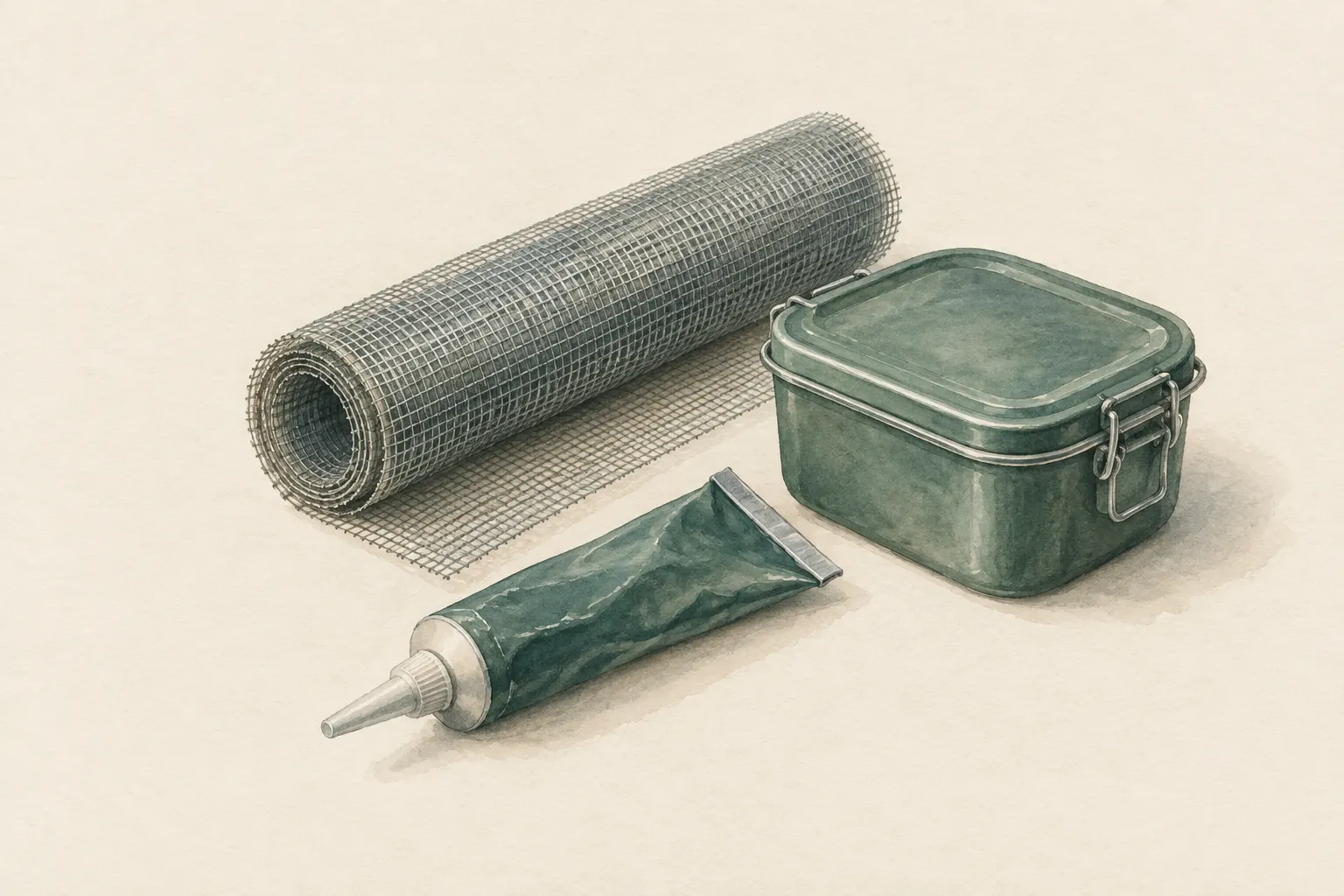
Small gaps are filled with steel wool and then sealed with caulk so that the wool stays in place. Larger openings are closed with metal mesh, sheet metal or mortar. On outside doors, door sweeps or brush seals help against the gap at the bottom. Expanding foam alone is not a good solution, because it gets gnawed through.
Vents must not simply be closed – the house needs air, and some openings are important for heating or damp protection. Instead they are covered with fine metal mesh. Work on roofs, façades or electrics belongs in the hands of professionals; if you are unsure, it is better to ask.
Tenants agree such work with their landlord. With heavy infestation, rats in the house or when the entry points cannot be found, a pest controller is the right contact; local reporting and control rules apply.
Safety: what to watch out for
Clean up safely: rodent droppings, urine and nests can contain pathogens, in some regions for example hantaviruses, which can be inhaled with stirred-up dust. So never sweep or vacuum dry. Ventilate for about half an hour first, wear gloves, thoroughly soak droppings and nests with a disinfectant solution per the label and let it act, then pick them up with paper towels and dispose of them in a sealed bag. Afterwards wipe surfaces and wash your hands thoroughly. Local health guidance takes precedence.
Chemicals: never mix bleach with other cleaners, especially not those containing acid or ammonia – toxic gases can form. Rodent poison endangers children, pets and wildlife; many products are approved for professionals only. Catching and control are left to a professional pest controller according to local rules. Glue traps are not an option.
Trapped animals: do not close any opening while animals are still in the building – especially not young. Bats and birds also use gaps and openings in houses and are strictly protected in many places. If you are unsure who is using an opening, ask professionals before you close it.
Typical mistakes
The most common mistakes are: plugging holes with expanding foam only, sweeping or vacuuming droppings dry, sealing openings while animals are inside, putting out poison openly and using glue traps. Another widespread mistake is only catching but not sealing – then new animals soon arrive.
Good prevention is unspectacular but effective: store supplies sealed, keep cellars and sheds tidy so hiding places disappear, and once a year, ideally before autumn, check the outside walls for new gaps. That keeps the house rodent-free in the long term, without poison and without animal suffering.
Step by step
Recognise signs
Droppings, gnaw marks, grease smears on walls, nests of paper or insulation, scratching noises at night. Note where you find them.
- 1
Recognise signs
Droppings, gnaw marks, grease smears on walls, nests of paper or insulation, scratching noises at night. Note where you find them.
- 2
Find entry points
Check outside and inside with a lamp: pipe and cable penetrations, gaps at doors and gates, vents, cellar windows, joints at the foundation. Even gaps about a finger's width can be enough for mice.
- 3
Seal gnaw-proof
Fill small gaps with steel wool and seal with caulk, larger ones with metal mesh, sheet metal or mortar. Fit door sweeps or brush seals to outside doors. Cover vents with mesh rather than closing them.
- 4
Remove food
Keep food and pet food in sealed containers, rubbish in closed bins, offer bird food so nothing falls to the ground, no food scraps in compost.
- 5
Clean up safely
Ventilate for 30 minutes, wear gloves, soak droppings and nests with disinfectant solution and let it act, pick up with paper towels, dispose of in a sealed bag, wipe surfaces, wash hands.
- 6
Involve professionals
With persistent infestation, rats in the house or uncertainty, hire a pest controller; follow local reporting and control rules.
Common mistakes
- Sealing with expanding foam alone
- Sweeping or vacuuming droppings dry
- Sealing openings while animals are inside
- Putting out poison openly
- Using glue traps
- Only catching, not sealing
Quick view
Materials
Metal mesh and sealing material against rodents
Foam, plastic and wood alone are gnawed through by rodents – combine with metal.
For work on roofs, façades or electrics, hire professionals.
Headlamp / flashlight
Disposable gloves
Consider latex allergies – prefer latex-free gloves (e.g. nitrile).
Unscented household bleach (sodium hypochlorite)
Diluted as a disinfectant per label
Only unscented, without additives, with known concentration.
Dose depends on concentration – use only following official public-health instructions.
Never mix with other cleaners.
Particle-filtering respirator (FFP2/N95)
Only protects with a tight fit; beards and the wrong size reduce effectiveness.
Filters particles, not gases – no protection against chemical vapours or carbon monoxide.
Airtight food-grade storage container
Fill only when clean and completely dry; never use containers that previously held chemicals.
Suitable for
- Houses, garden sheds, cellars
- Prevention after first signs
- Storerooms
Not suitable for
- Heavy infestation – then a professional
- Work on roofs, façades or electrics without expertise
Prerequisites
- Access to cellar, attic and outside walls
- In rented homes, agreement with the landlord
Safety
- Poison endangers children, pets and wildlife; many products are approved for professionals only. Leave catching and control to professional pest control according to local rules. No glue traps.
- Never mix bleach with other cleaners (especially those containing acid or ammonia) – toxic gases.
How it works
Rodents follow the smell of food and look for sheltered, warm hiding places. They squeeze through surprisingly small gaps and gnaw through soft materials such as foam, plastic and wood. Only the combination of inaccessible food and openings sealed with gnaw-proof materials works long-term; catching without sealing just invites the next animals.
Advantages
- Long-lasting effect
- No poison and no animal suffering
- Protects supplies and the building
Disadvantages
- Entry points are often hard to find
- Work on building parts may need professionals
Deep knowledge
Background
The CDC summarise rodent control as 'Seal Up! Trap Up! Clean Up!': seal openings, remove rodents and clean up droppings safely and wet without stirring up dust. This entry deliberately does not cover the 'Trap Up' part practically but refers to professionals and local rules.
Which control products are permitted is regulated differently from country to country.
Variants
- Garden shed and garage
- Store seed, bird food and pet food in metal containers; close floor gaps with mesh; check regularly for nests.
Common mistakes
- Sealing with expanding foam alone
- Sweeping or vacuuming droppings dry
- Sealing openings while animals are inside
- Putting out poison openly
- Using glue traps
- Only catching, not sealing
Limits and risks
- No trapping or poisoning guidance
- No construction guidance for building parts
- No medical advice
Material alternatives
Derived from material properties: a substitute must have all relevant properties. Observe the notes on the substitute.
- Headlamp / flashlight
- Mobile phone (The battery drains quickly in cold and with continuous screen and GPS use.), Battery lantern / LED light
- Unscented household bleach (sodium hypochlorite)
- Chlorine tablets (NaDCC) for drinking water (Follow the manufacturer's dose and contact time.), Chlorine dioxide tablets or drops (Only approved drinking-water products; follow manufacturer instructions.), Iodine water purification tablets (Not in pregnancy, thyroid disease or iodine allergy without medical advice.)
- Airtight food-grade storage container
- Single-wall stainless steel bottle (Heat only single-wall bottles without paint/plastic; remove the lid before heating.), Double-wall insulated bottle (Never heat directly.), PET bottle (clear, max. 2 litres) (Do not heat or place in a fire.), Food-grade water container (Only use containers that never held chemicals or fuel.), Collapsible water container or bag (Protect from sharp objects.), Food-grade water bag (Use only for drinking water, never for chemicals or fuel.), Fermentation jar or crock (Use only food-grade containers of glass, food-safe glazed stoneware or food-grade plastic – no metal containers for acidic food.), Resealable food bags (Use only bags intended for food; do not use with boiling water unless the manufacturer explicitly allows it.)
Results come exclusively from structured entries. No improvised instructions are generated.
Sources
Centers for Disease Control and Prevention (CDC): Rodents – prevention and control guidance (Seal Up! Trap Up! Clean Up!)
Sealing with gnaw-proof materials, removing food, safe wet clean-up of droppings and nests
Council of the European Communities (1992): Council Directive 92/43/EEC on the conservation of natural habitats and of wild fauna and flora (Habitats Directive)
Strict protection of bats