Tracking in the city: foxes, martens, hedgehogs and more
Many wild animals live in cities too: foxes, martens, hedgehogs, badgers, and in many places raccoons or wild boar. Their tracks appear on dusty car roofs, in snow on pavements, at gaps in fences and in gardens. Watching is allowed and instructive – feeding, luring or approaching harms animals and people and is prohibited in some places.
- Ongoing, a few minutes a day
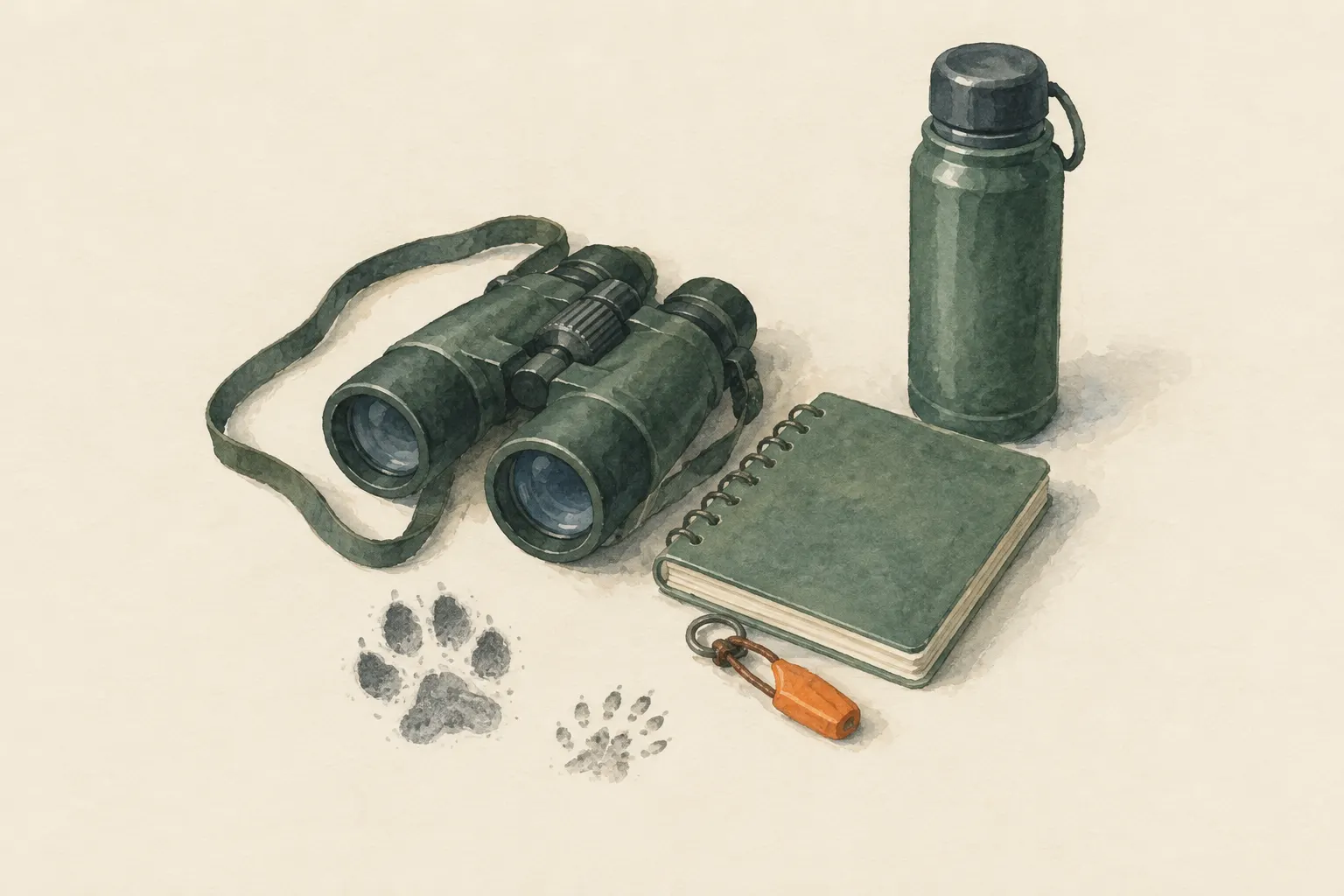
Explained simply
Wild animals live right in the middle of cities too: foxes, martens, hedgehogs, sometimes badgers, and in many places also raccoons or wild boar. Most of them are out at night while we sleep. That is why you rarely see them – but you can find their tracks if you know where to look.
Good spots are dusty car roofs, fresh snow on the pavement, dew on the lawn in the morning, gaps in fences and muddy corners at building sites. With a torch held very low over the ground, prints become much easier to see.
Watching is great, but feeding is not a good idea. Animals that are fed lose their shyness, come closer and closer and then cause trouble – often they even have to be killed in the end. Also keep your distance from wild boar and from animals with young.
How it works: wildlife in the city
Cities offer wild animals a lot: food from waste, compost heaps and gardens, warmth and plenty of hiding places under sheds, in hedges, in attics or on wasteland. What is missing is undisturbed space. That is why most urban animals are active at night, when it is quiet, and move along fixed routes.
Such routes like to follow railway embankments, green strips, streams and canals, through allotments and under fences. Animals use the same gaps and passages again and again. If you find these “animal roads”, you will find their tracks too.
Smooth urban surfaces such as paving and tarmac hold tracks poorly. Well suited, by contrast, are dust on cars and bin lids, snow, dew, hoar frost and mud, for example at building sites or puddles. The best time is early morning after new snow, dew or rain, before people and cars destroy the tracks.
What really matters: tracks and signs
Besides prints there are many other signs: droppings on raised spots such as walls, stones or grass tussocks, torn rubbish bags, small holes dug in the lawn, scratch marks on trees or worn paths through hedges. Record such finds with location, date and photo and compare them later with a field guide.
The most common confusion in the city is domestic cats and dogs – they leave the most tracks there. A dog print can resemble a fox print, and cat tracks turn up almost everywhere. So be careful with quick conclusions and look at the overall picture of print, trail, location and other signs.
For watching the animals themselves, a window at dusk or a wildlife camera in your own garden works well. Point the camera so that it captures neither neighbouring properties nor pavements or public areas. Privacy rules differ from country to country – check them locally.
Safety: what to watch out for
Feeding is the biggest mistake when dealing with urban wildlife. Fed animals lose their fear of people, become pushy, rummage through gardens and patios and can get into conflicts that often end fatally for them. Some cities expressly prohibit feeding certain species – check local rules.
Distance is especially important with wild boar and animals with young. Always leave them an escape route and do not corner them, for example in a courtyard or doorway. If there is danger, go indoors and contact the police or authority.
Report injured or unusually tame animals to the local wildlife rescue or authority instead of catching them yourself. An animal wandering around in broad daylight without any shyness may be ill – keep your distance and ask experts.
A wildlife-friendly, low-conflict garden
A garden can help animals and avoid trouble at the same time. Closing bins, not leaving pet food outside overnight and collecting fallen fruit removes the attraction for foxes, raccoons and rats. Small gaps at the bottom of the fence let hedgehogs move between gardens, because they need more than a single garden for their nightly foraging.
Robotic mowers should not run at night, because hedgehogs and other small animals are out then and can be injured by the machines. Cover pits, shafts and light wells by the house so that no animals fall in. Garden ponds with a shallow edge or an exit ramp prevent animals from drowning.
How to practise it with children
A lovely family idea is a track map of your own neighbourhood. Draw a simple plan with streets, gardens and green spaces, and after each snowfall or on dewy mornings mark where you found which tracks. Over time you will recognise the animals' routes.
Important: tracks are read, animals are not pursued. Anyone who runs after a fox disturbs it and can put it in a dangerous situation. The excitement lies in the puzzle – who was here last night, and where did it go?
Step by step
Find routes
Look for gaps in fences, passages under hedges, worn paths in the lawn and trails on embankments.
- 1
Find routes
Look for gaps in fences, passages under hedges, worn paths in the lawn and trails on embankments.
- 2
Use good surfaces
In the morning after new snow, dew or rain, check pavements, car roofs and bin lids; use the lamp at a low angle.
- 3
Interpret signs
Note droppings on raised spots, torn rubbish bags, holes dug in lawns and scratch marks – and compare with a field guide.
- 4
Observe from a distance
Watch from a window at dusk or use a wildlife camera in your own garden.
- 5
Make the garden wildlife-friendly and low-conflict
Close bins, do not leave pet food outside, hedgehog gaps in fences, do not run robotic mowers at night, cover pits and shafts.
- 6
Report unusual things
Report injured or unusually tame animals to local wildlife rescue or the authority; do not catch them yourself.
Common mistakes
- Feeding foxes or wild boar
- 'Rescuing' young animals that are not abandoned
- Pointing a wildlife camera at public areas
- Running robotic mowers at night
Quick view
Materials
Headlamp / flashlight
Wildlife camera
Check data protection and hunting rules; do not record people, paths or neighbouring property.
Only set up with the landowner's permission.
Field notebook and pencil
Tape measure or folding rule
Suitable for
- City dwellers
- Families with children
- Winter months with snow
Not suitable for
- Luring with food
- Approaching animals with young
Prerequisites
- Access to a garden, yard, park or city edge
Safety
- Do not feed wild animals. Fed animals lose their shyness, cause conflicts and are sometimes killed. Some cities prohibit feeding certain species – check local rules.
- Do not approach wild boar or animals with young; leave them an escape route. If there is danger, go indoors and contact police or the authority.
- Point wildlife cameras so that no neighbours, pavements or public areas are recorded – privacy rules differ, check locally.
How it works
Cities offer food, warmth and hiding places but little undisturbed space. Animals therefore use fixed routes along railway embankments, green strips, fence gaps and waterways and are mostly active at night. Smooth urban surfaces hold tracks poorly – dust, snow, dew and mud at building sites hold them very well.
Advantages
- Possible right outside the door
- Promotes understanding and consideration
Disadvantages
- Tracks are rare on smooth surfaces
- Disturbance and confusion with pets
Deep knowledge
Background
Field guides to animal tracks cover many species that also occur in cities; Elbroch's 'Mammal Tracks & Sign' describes foxes and mustelids, for example. Domestic cats and dogs leave most tracks in cities and are the most common confusion.
Which species live in which city varies greatly by region.
Variants
- With children
- Make a track map of the neighbourhood and add to it after each snowfall – without pursuing animals.
Common mistakes
- Feeding foxes or wild boar
- 'Rescuing' young animals that are not abandoned
- Pointing a wildlife camera at public areas
- Running robotic mowers at night
Limits and risks
- No guidance on deterring or catching
- Species and rules differ by region
Material alternatives
Derived from material properties: a substitute must have all relevant properties. Observe the notes on the substitute.
- Headlamp / flashlight
- Mobile phone (The battery drains quickly in cold and with continuous screen and GPS use.), Battery lantern / LED light
Results come exclusively from structured entries. No improvised instructions are generated.
Sources
Mark Elbroch – Stackpole Books (2003): Mammal Tracks & Sign: A Guide to North American Species
Tracks and signs of foxes and mustelids