Jet lag and travel fatigue: no important decisions while exhausted
After long flights and time zone changes, attention, reaction and judgement are often impaired for days. So: avoid driving on the day of arrival if possible, no risky tours, no important contracts. Daylight, meals and sleep on local time help the body clock; medication for jet lag only after medical advice.
- Planning arrival and departure days
Explained simply
Inside your body an internal clock is ticking. It tells you when you get tired, when you are hungry and when you are awake. When you fly a long way east or west, the time outside suddenly jumps by several hours – but your internal clock does not jump with it. It only adjusts slowly, a bit like a heavy door you can only push open slowly.
During that time you are tired in the day and wide awake at night. That is called jet lag. On top comes tiredness from the journey itself: little sleep, long sitting, dry air. Daylight helps most, because light is the strongest signal for the internal clock. Eating and sleeping on the new local time also help.
The most important point: someone who is over-tired reacts more slowly and decides worse without noticing it themselves. So avoid driving on the day of arrival if possible, do no risky tours and put important decisions off until a day when you are rested.
How it works
The internal clock controls a daily rhythm of sleeping and waking, body temperature, hunger and performance. It follows outside cues, and the strongest of them is light. After a flight across several time zones, the clock no longer matches the surroundings and has to reset gradually.
How long that takes depends on the number of time zones, the direction of travel and the person. Many find travelling east harder than travelling west, because you would have to fall asleep earlier than the body is used to. Some people adapt quickly, others need considerably longer.
Travel fatigue is different from jet lag and also occurs without a time change: after overnight flights, night trains or long bus journeys. Sleep loss, fluid loss and stress add up. The tricky part: tiredness worsens judgement, and you often do not notice that well in yourself.
What really matters
Before: depart rested. For large time differences you can shift sleep times slightly towards destination time a few days before, if that fits your routine. On the way: set your watch to destination time, drink enough, keep alcohol and caffeine moderate and sleep if possible when it is night at the destination.
On arrival day: eat and go to bed on local time, get outside into daylight during the day, and if you have to sleep, choose a short nap rather than a long daytime sleep. Sleeping through the whole first day often just pushes the adjustment back. Trying to fall asleep with lots of alcohol tends to make sleep worse.
For very short trips of one or two days it may make more sense to stay close to home time and schedule appointments accordingly, instead of resetting the body twice in a row.
Safety: driving and decisions
Driving while over-tired is dangerous. After an overnight flight or a long journey it is best to pick up the rental car only after a sleep, or to use a transfer, train or taxi for the first leg. A long drive straight after an overnight flight is a typical mistake.
Do not schedule risky activities for arrival day either: no mountain tour, no dives, no demanding excursions. Put important decisions – route choice, contracts, larger expenses – off until the next rested day if possible, or cross-check them with fellow travellers.
Do not take sleeping pills or melatonin on your own initiative. There may be interactions, and the rules differ by country. Ask your doctor – also about how to adjust the timing of regular medication across time zones.
Good to know
The CDC Yellow Book, the US public health agency's reference on travel medicine, covers jet lag and travel fatigue and stresses the role of light, sleeping on local time and caution with medication. There is no trick that removes jet lag instantly – but the basic rules noticeably shorten the bad phase for many people.
Plan the adjustment as part of the trip. A quiet first day may feel like lost holiday time, but it prevents you from spending the next days half awake – or making a mistake in a situation that needs full attention. Anyone with chronic sleep problems or who works shifts should get medical advice.
Step by step
Before
Depart rested. For large time differences, shift sleep times slightly towards destination time a few days before, if feasible.
- 1
Before
Depart rested. For large time differences, shift sleep times slightly towards destination time a few days before, if feasible.
- 2
On the way
Set your watch to destination time, drink enough, keep alcohol and caffeine moderate, sleep if possible when it is night at the destination.
- 3
Day of arrival
Eat and sleep on local time, get daylight during the day, short naps instead of long daytime sleep. No driving and no risky activities when exhausted.
- 4
Postpone decisions
Put important decisions (route choice, contracts, money) on the next rested day if possible or cross-check with fellow travellers.
Common mistakes
- A long drive straight after an overnight flight
- First mountain tour on arrival day
- Trying to fall asleep with lots of alcohol
- Sleeping through the whole first day
Quick view
Materials
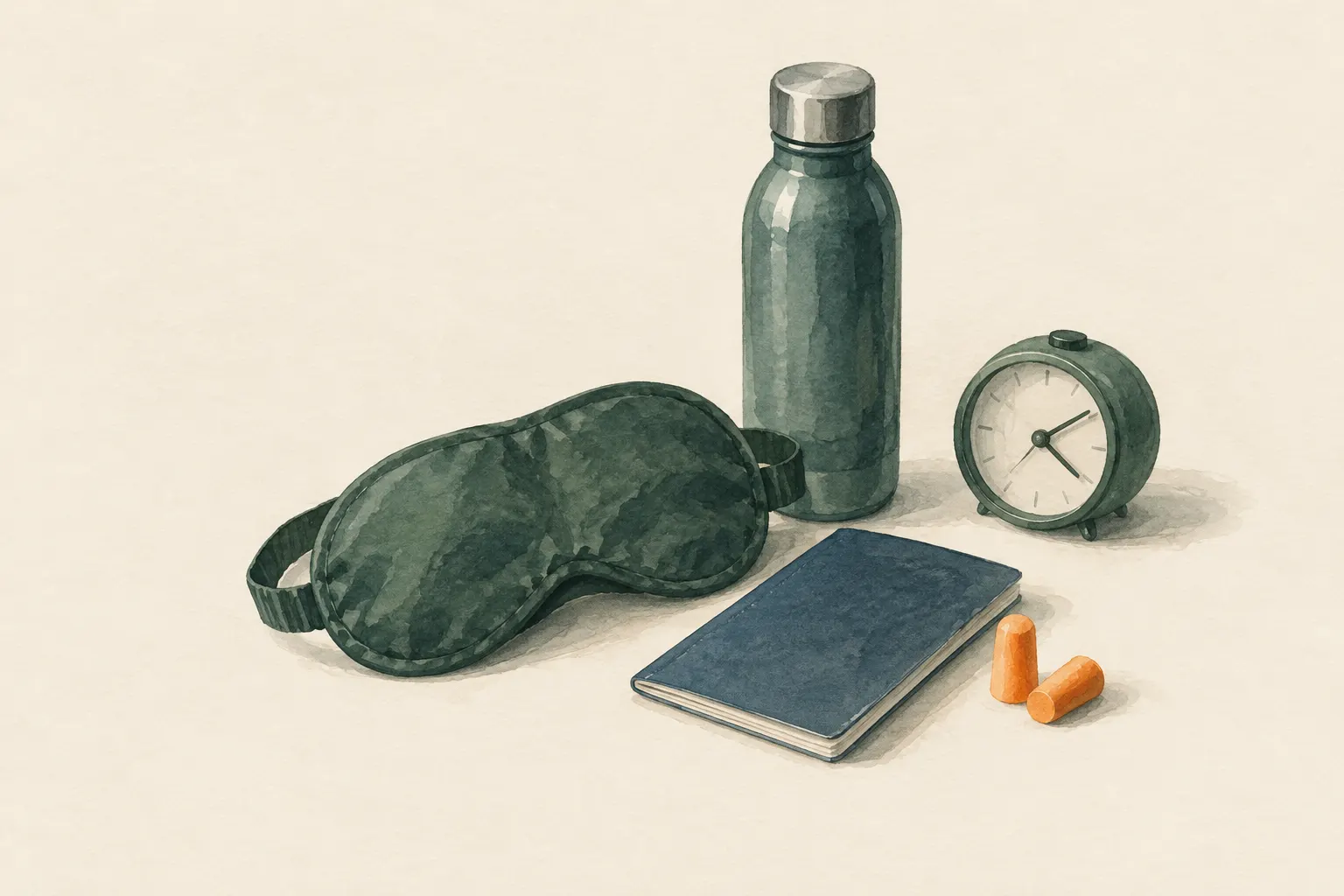
Earplugs and eye mask
Only use if warning signals, alarms or calls will still be heard – e.g. when someone is keeping watch.
PET bottle (clear, max. 2 litres)
Do not heat or place in a fire.
Suitable for
- Long-haul trips across several time zones
- Overnight flights, night trains, long bus journeys
Not suitable for
- Shift-work sleep disorders or chronic sleep problems – get medical advice
Prerequisites
- Know the time difference and arrival time
Safety
- Do not take sleeping pills or melatonin on your own – interactions and rules differ by country. Get medical advice; also clarify timing of regular medication across time zones with a doctor.
How it works
The body clock adjusts only gradually to a new time zone; light is its strongest cue. Many people find travelling east harder than travelling west. On top come sleep loss and fluid loss from the travel day. Fatigue worsens decisions without you noticing it well yourself.
Advantages
- Free
- Lowers accident risk in the first days
Disadvantages
- Costs holiday time
- Adaptation varies between individuals
Deep knowledge
Background
The CDC Yellow Book covers jet lag and travel fatigue, including the role of light, sleeping on local time and caution with medication.
How long adaptation takes depends on the number of time zones, the direction of travel and the person.
Variants
- Short trips
- For only one or two days at the destination, it may make more sense to stay close to home time and schedule appointments accordingly.
Common mistakes
- A long drive straight after an overnight flight
- First mountain tour on arrival day
- Trying to fall asleep with lots of alcohol
- Sleeping through the whole first day
Limits and risks
- No medication recommendations
- No treatment of sleep disorders
Sources
Centers for Disease Control and Prevention: CDC Yellow Book: Health Information for International Travel
Jet lag: light, sleeping on local time, caution with medication