Driving at night and on remote roads
At night visibility and reaction time are limited, fatigue increases and on lonely roads help is far away. Start rested, take regular breaks, fill up, know the route and dead zones and tell someone your planned arrival – or move the drive to daytime.
- 15 minutes of planning
Explained simply
Driving at night is a bit like walking through a dark forest with a torch: you only see the patch that is lit up right now. Everything else stays dark – including an animal about to step onto the road. At the same time your body wants to sleep at night, because your body clock tells it that this is rest time.
On lonely roads a third thing comes in: if something happens, help is far away, and sometimes the phone has no signal. That is why sensible drivers plan such routes: they set off rested, fill the tank, take regular breaks and tell someone when they expect to arrive. Often the best solution is very simple: drive the next morning.
The most important point: if you are yawning, your eyelids feel heavy or you nod off for a moment, stop immediately in a safe place and sleep. An open window or loud music does not help reliably.
How it works: three risks at once
First, fatigue: the body has an internal clock that follows the cycle of day and night. At night, and especially in the early hours of the morning, the urge to sleep is strongest, even if you felt fit beforehand. Fatigue slows reactions, worsens judgement and can lead to microsleep – a brief nodding off that you often do not notice yourself.
Second, visibility: headlights only light a limited area in front of the car. Pedestrians in dark clothing, animals or obstacles appear late. Oncoming traffic dazzles, and wet roads swallow light. Choose a speed at which you can stop within the distance you can see.
Third, remoteness: on remote roads it takes longer after a breakdown or accident until someone passes or help arrives. Fuel stations are rare, dead zones common. Good planning and regular breaks reduce all three risks at the same time.
What really matters
The most important question comes before setting off: does this drive really have to be at night? If it can be moved to daytime, that is almost always the safer choice. After a long working day, a flight or a tiring excursion you are often more tired than you think.
If the drive must happen: look at the route beforehand, check fuel stations and dead zones, download offline maps and set off with a full tank. Tell a contact which route you are taking and when you plan to arrive, and agree when they should raise the alarm if they hear nothing from you.
On the way: regular breaks, and swap drivers if possible. Traffic rules such as the UK Highway Code recommend breaks roughly every two hours. Keep windows and headlights clean, use high beam where allowed and dip in good time when someone comes towards you.
Safety: fatigue and animals
Warning signs of dangerous fatigue are frequent yawning, heavy eyelids, difficulty keeping in lane and memory gaps about the last few kilometres. Then only one thing helps: stop in a safe place and sleep. Open windows, cold air or loud music work briefly at best and can give a false feeling of safety.
At dusk and at night many animals are on the move and cross roads. Drive more slowly, especially near forests and fields, and expect that more animals may follow the first one. Sudden, risky swerving can be more dangerous than a collision, for example if you leave the road or end up in oncoming traffic. Exactly how to behave differs by country – follow local guidance.
After an accident or in an emergency, call the local emergency number (112 in the EU). Emergency calls often go through other mobile networks when your own has no signal. So it is worth trying even with poor reception.
If the car breaks down
Secure the vehicle: hazard lights on, as far from the carriageway as possible, put on the hi-vis vest before getting out and set up the warning triangle according to local rules. If possible, get out on the side away from traffic. Where passengers are safest depends on the road and traffic – on fast roads usually behind a crash barrier, not next to the car.
Stay with the vehicle if it is safe. A car is much easier for helpers to find than a person on foot, and it protects from wind, cold and rain. Setting off on foot into the unknown at night is a typical and dangerous mistake: you get lost, are overlooked or get chilled.
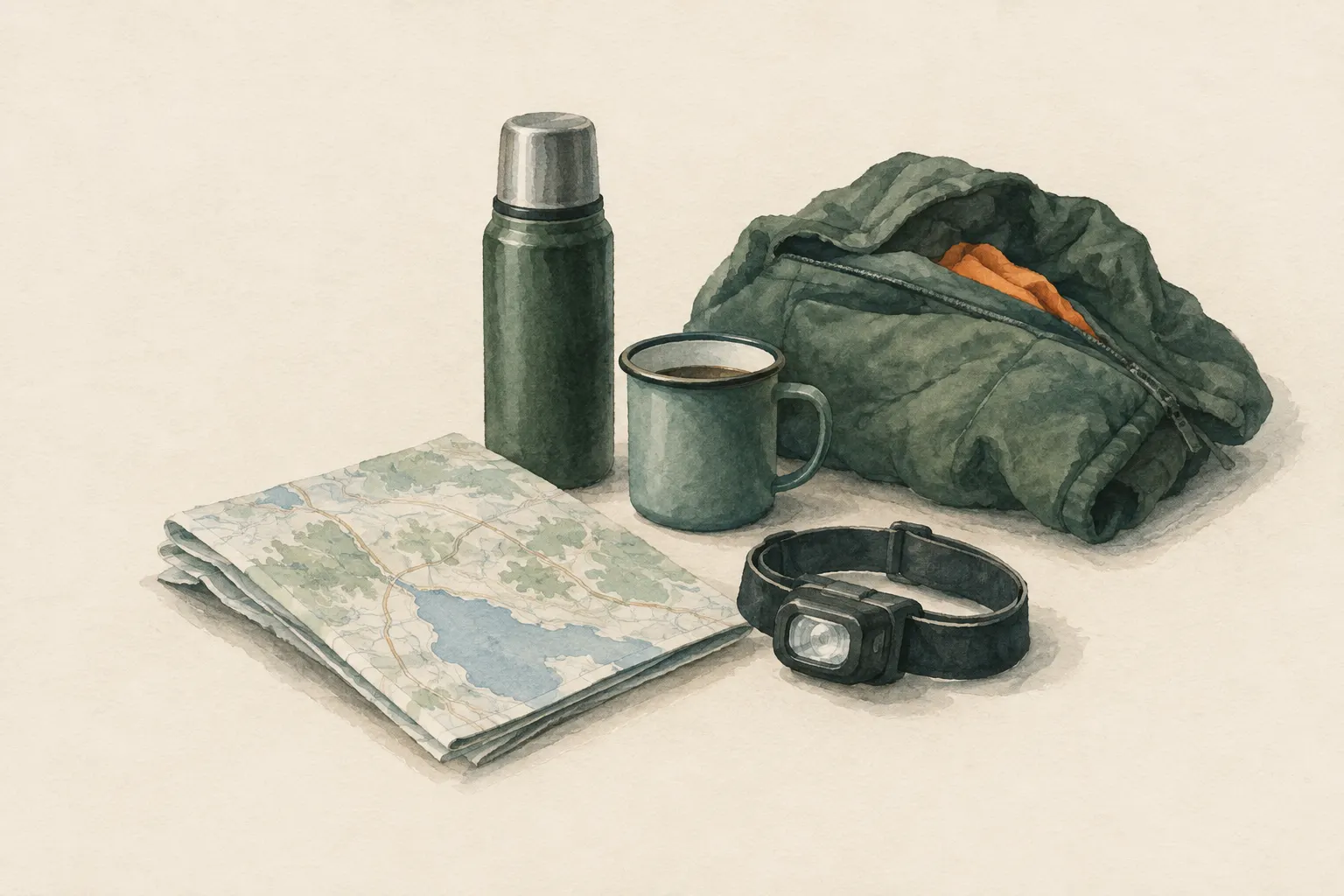
In the desert or in great heat, also: carry plenty of water and in a breakdown stay in the shade of the vehicle. A vehicle emergency kit – light, warm clothing or a blanket, water, some food, a charging cable – makes long waits much more bearable.
Step by step
Check if necessary
Can the drive happen in daylight? If so, postpone it.
- 1
Check if necessary
Can the drive happen in daylight? If so, postpone it.
- 2
Route and gaps
Check the route, fuel stations and dead zones; download offline maps; fill up.
- 3
Tell someone
Share the route and planned arrival with a contact and agree when they should raise the alarm.
- 4
Breaks
Take regular breaks; traffic rules such as the UK Highway Code recommend breaks roughly every two hours. Swap drivers if possible.
- 5
Lights and visibility
Keep windows and headlights clean; use high beam but dip in good time for oncoming traffic.
- 6
In a breakdown
Secure the vehicle, make it visible, stay with it if safe; do not set off on foot into the unknown at night.
Common mistakes
- Setting off after a long day
- Entering remote areas on a near-empty tank
- Telling no one
- Walking off at night to look for help
Quick view
Materials
Vehicle emergency kit
Which equipment (e.g. warning triangle, high-visibility vest, first-aid kit) is mandatory differs between countries – check local rules.
Headlamp / flashlight
Mobile phone
The battery drains quickly in cold and with continuous screen and GPS use.
Do not plan on it as your only means of navigation or emergency calls.
Power bank
Do not use damaged or swollen batteries; do not charge while covered.
Topographic map
Check the publication date – paths and buildings may have changed.
Protect from wet (map case or bag).
Suitable for
- Long cross-country drives
- Desert, mountain and forest roads
- Drives in regions with sparse infrastructure
Not suitable for
- Off-road driving without training
Prerequisites
- A rested driver
- A vehicle in good condition
Safety
- At dusk and at night expect animals on the road. Adjust speed; risky swerving can be more dangerous than a collision – follow local guidance.
- In an accident or emergency call the local emergency number (112 in the EU); emergency calls often go through other networks when your own has no signal.
How it works
The body clock makes you sleepy at night, headlights show only a small section, and remote roads lengthen the time until help arrives. Planning and breaks reduce all three risks.
Advantages
- Reduces the risk of accidents and being stranded
Disadvantages
- Longer journey times due to breaks
Deep knowledge
Background
The UK Highway Code contains rules on tiredness, breaks and driving in darkness. Ready.gov recommends a vehicle emergency kit, especially for winter and long-distance drives.
Rules on lights, speed and animal collisions differ by country – check local rules.
Variants
- Desert and heat
- Additionally carry plenty of water and in a breakdown stay in the shade of the vehicle.
Common mistakes
- Setting off after a long day
- Entering remote areas on a near-empty tank
- Telling no one
- Walking off at night to look for help
Limits and risks
- No driver training
- No country-specific rules
Material alternatives
Derived from material properties: a substitute must have all relevant properties. Observe the notes on the substitute.
- Headlamp / flashlight
- Mobile phone (The battery drains quickly in cold and with continuous screen and GPS use.), Battery lantern / LED light
- Mobile phone
- Headlamp / flashlight, Battery lantern / LED light
Results come exclusively from structured entries. No improvised instructions are generated.
Sources
Department for Transport and Driver and Vehicle Standards Agency (United Kingdom): The Highway Code
Tiredness, breaks and driving in darkness (example of national rules)
Ready.gov – U.S. Federal Emergency Management Agency (FEMA): Winter Weather
Vehicle emergency kit
European Commission: 112 – the European emergency number
European emergency number 112