Skip to content
In an emergencyAustriaEmergency numbers →
SurviveBetter
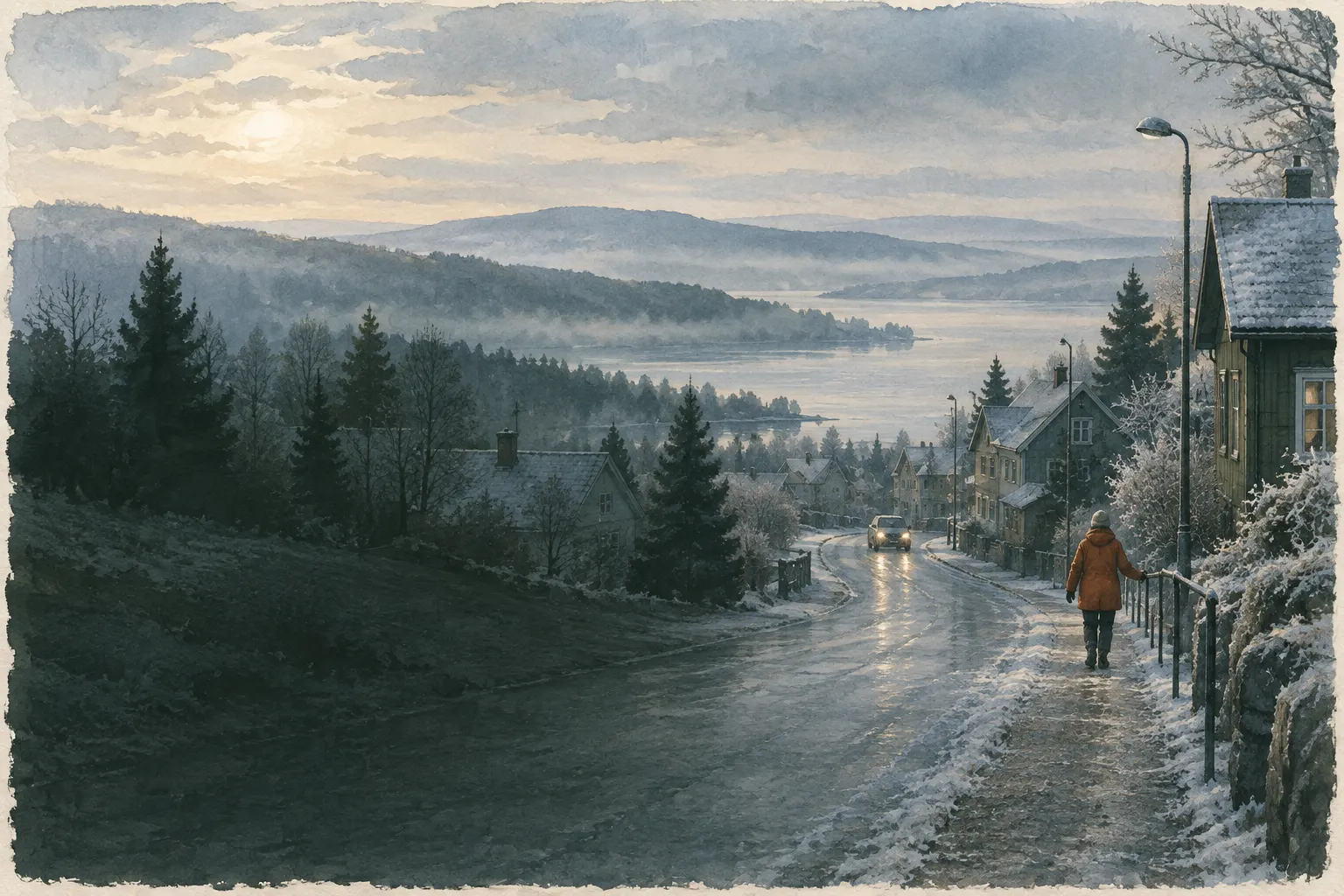
Frosty winter morning, a person walking carefully on a gritted path by a handrail

It is icy: black ice or freezing rain

The road looks wet but is as smooth as glass. On black ice patience counts: stay home if you can – otherwise slowly, gently and with plenty of distance.

First

  1. If possible stay at home and postpone journeys until paths are cleared and gritted.
  2. On foot: sturdy shoes with good tread or ice cleats, small steps, hands out of your pockets.
  3. In the car: much slower, much more distance, steer, brake and accelerate gently.
  4. After a fall with severe pain or an accident with injuries: call 112.

Call emergency services if

  • After a fall: severe pain, the person cannot get up, or has hit their head and is dazed
  • An accident with injuries
  • Someone is lying helpless in the cold

What is happening

Black ice forms mainly when rain or drizzle falls on frozen ground and freezes at once. When this happens very suddenly, it is often called flash ice. Freezing wet surfaces, frozen puddles and packed snow also make paths and roads slippery. The treacherous part is that thin ice often just looks wet.

On foot, falls are the greatest danger, especially for older people. In a car, according to the UK Highway Code, stopping distances on ice can be up to ten times longer than on a dry road; steering, braking and accelerating must be very gentle or the car loses grip.

Bridges and shaded sections are often icy first, even when the rest of the road looks clear. If the steering suddenly feels unresponsive, that may mean ice.

This page guides you through the warning, walking and driving on ice, what to do when the car skids, and what to do after a fall or an accident. Driving on ice is best practised in a driver safety course.

Step by step

It is icy: black ice or freezing rain – Phase 1 of 5When ice is forecast. Follow weather warnings and postpone journeys if you can. Have grit and a shovel ready, charge your phone. Ask older neighbours whether they need anything. If you must drive: check warnings and road conditions, tell someone your route and arrival time, put warm clothes and a blanket in the car.
Phase 1 of 5

Phase 1 of 5

When ice is forecast

Follow weather warnings and postpone journeys if you can. Have grit and a shovel ready, charge your phone. Ask older neighbours whether they need anything. If you must drive: check warnings and road conditions, tell someone your route and arrival time, put warm clothes and a blanket in the car.

The animation shows the key actions of each phase schematically; the text below is what counts.

  1. Phase 1

    When ice is forecast

    • Follow weather warnings and postpone journeys if you can.
    • Have grit and a shovel ready, charge your phone.
    • Ask older neighbours whether they need anything.
    • If you must drive: check warnings and road conditions, tell someone your route and arrival time, put warm clothes and a blanket in the car.
  2. Phase 2

    On foot

    • Sturdy shoes with good tread, on ice slip-on spikes or ice cleats.
    • Walk slowly with small steps, hands out of your pockets to break a fall.
    • Use handrails and choose cleared, gritted paths even if they are longer.
    • Under eaves watch out for falling ice and snow.
  3. Phase 3

    In the car

    • Clear windows, lights and roof completely of snow and ice.
    • Drive slowly in as high a gear as possible, accelerate and brake gently.
    • Keep a very large distance – the stopping distance can be many times longer.
    • Brake on the straight before bends and steer smoothly, without sudden movements.
    • Take extra care on bridges and in shaded sections.
  4. Phase 4

    If the car skids

    • Remove the cause: release the brake fully or ease off the accelerator.
    • Calmly steer in the direction of the skid – if the rear slides to the right, steer to the right.
    • With ABS, in an emergency stop: press the brake firmly and keep the pressure on; follow the car's handbook.
    • Once the car has stopped: hazard lights on, put on a hi-vis vest, get behind the barrier if possible, set up the warning triangle if it is safe.
  5. Phase 5

    After a fall or an accident

    • After a fall, first stay down for a moment and feel whether anything hurts badly before you get up.
    • Severe pain, unable to get up, hit their head and dazed: call 112, cover them warmly, do not leave them alone.
    • After an accident: secure the scene, report injured people, keep them warm.
    • Warn others and, if possible, have the spot gritted.

★ Pro tips

What experienced people do differently: proven practice from mountain rescue, fire services, lifeguards and civil protection that beginners rarely know.

  1. Walk like a penguin

    Bend your knees slightly, lean your upper body a little forward and put your whole foot down flat. Take short steps so your weight stays over your front foot. That stops your foot shooting out in front of you.

  2. Getting in and out: hold on to the car

    Many falls happen not while walking but when getting out of a car. Put both feet on the ground and hold the door or frame before you stand up. When getting in, sit down first, then swing your legs in.

  3. The snowflake warning comes above zero

    Many cars show an ice warning at a few degrees above zero. There is a reason: the road surface can be colder than the air, especially on bridges and in shade. Take the warning seriously even if it does not feel icy outside.

  4. If the tyres suddenly go quiet, it's ice

    On ice the rolling noise of the tyres often suddenly gets quieter. If you notice that, ease off the accelerator gently without braking or steering. Only drive normally again once the road clearly has grip.

  5. Look where you want to go

    When a car slides, many drivers stare at the obstacle – and steer towards it without meaning to. That is why driver safety courses teach: look at the open space you want to go to. Your hands follow your eyes.

What to watch out for

  • Ice that looks like water

    Thin black ice is transparent and shines like a wet surface. At temperatures around freezing, treat every wet patch like ice.

  • Bridges and shade

    Bridges cool from above and below, shaded spots thaw late. They can be icy even though the road before them is clear.

  • Sudden movements

    Harsh braking, sudden steering or accelerating are the most common reasons a car starts to skid.

  • Falls in older people

    A fall on ice can have serious consequences for older people. Better to run their errands or go with them than to send them alone onto icy paths.

Common mistakes

  • Setting off despite a warning because “it will be fine”.
  • Hands in pockets, big strides, hurrying.
  • Following too closely and braking normally on ice.
  • Braking in the bend instead of before it.
  • Braking hard in panic and yanking the wheel when skidding (without ABS).
  • Scraping only a peephole in an iced-up windscreen.

Prepare in advance

  • Enable weather warnings for your location.
  • Keep shoes with good tread and slip-on spikes or ice cleats ready.
  • Get grit and a snow shovel before winter.
  • Car with winter equipment: winter tyres, ice scraper, brush, blanket, hi-vis vest, charged phone.
  • Take a driver safety course on snow and ice.

Special consideration

Older people
Falls on ice are especially dangerous for them. Neighbours and relatives can do their shopping, go with them or grit outside their front door.
Children
Children love sliding on icy patches – on pavements and roads that is dangerous. Leave earlier, agree the safest route and wear shoes with good tread.

Sources

  • Wetter- und Klimalexikon · Deutscher Wetterdienst (DWD)
  • Winter Weather · Ready.gov – U.S. Federal Emergency Management Agency (FEMA)
  • The Highway Code · Department for Transport and Driver and Vehicle Standards Agency (United Kingdom)
  • 112 – the European emergency number · European Commission

Your situation

How are you travelling?
Situation
Who is affected?

Matching entries

0 rules apply

No AI decides here. Every recommendation is based on a visible rule.

Add details about your situation above to get more specific guidance.

Basics for this situation

Why: Always applies to this situation – regardless of your answers.

All rules of this situation (6)
  1. [not active] If Situation = Ice is forecast

    Take weather warnings seriously: postpone appointments, have grit and a shovel ready, charge your phone. Anyone who has to drive checks warnings and road conditions first.

  2. [not active] If How are you travelling? = On foot

    Walk slowly with small steps, hands free to break a fall, use handrails. Choose cleared and gritted paths even if they are longer.

  3. [not active] If How are you travelling? = By car

    Stopping distances on ice can be many times longer than on a dry road. Drive slowly in as high a gear as possible and brake on the straight before bends. Bridges and shaded spots are often icy first.

  4. [not active] If Situation = The car is skidding or has skidded

    Remove the cause: release the brake or ease off the accelerator and calmly steer in the direction of the skid. With ABS, in an emergency stop press firmly and keep the pressure on. Once stopped: hazard lights, hi-vis vest, get safely behind the barrier.

  5. [not active] If Who is affected? = Older people

    A fall is especially dangerous for older people. Do their shopping or go with them, and offer to grit outside their door.

  6. [not active] If Who is affected? = Children, e.g. on the way to school

    Leave earlier, shoes with good tread, no sliding games on pavements and roads. Agree the safest, gritted route with your child.