Skip to content
In an emergencyAustriaEmergency numbers →
SurviveBetter
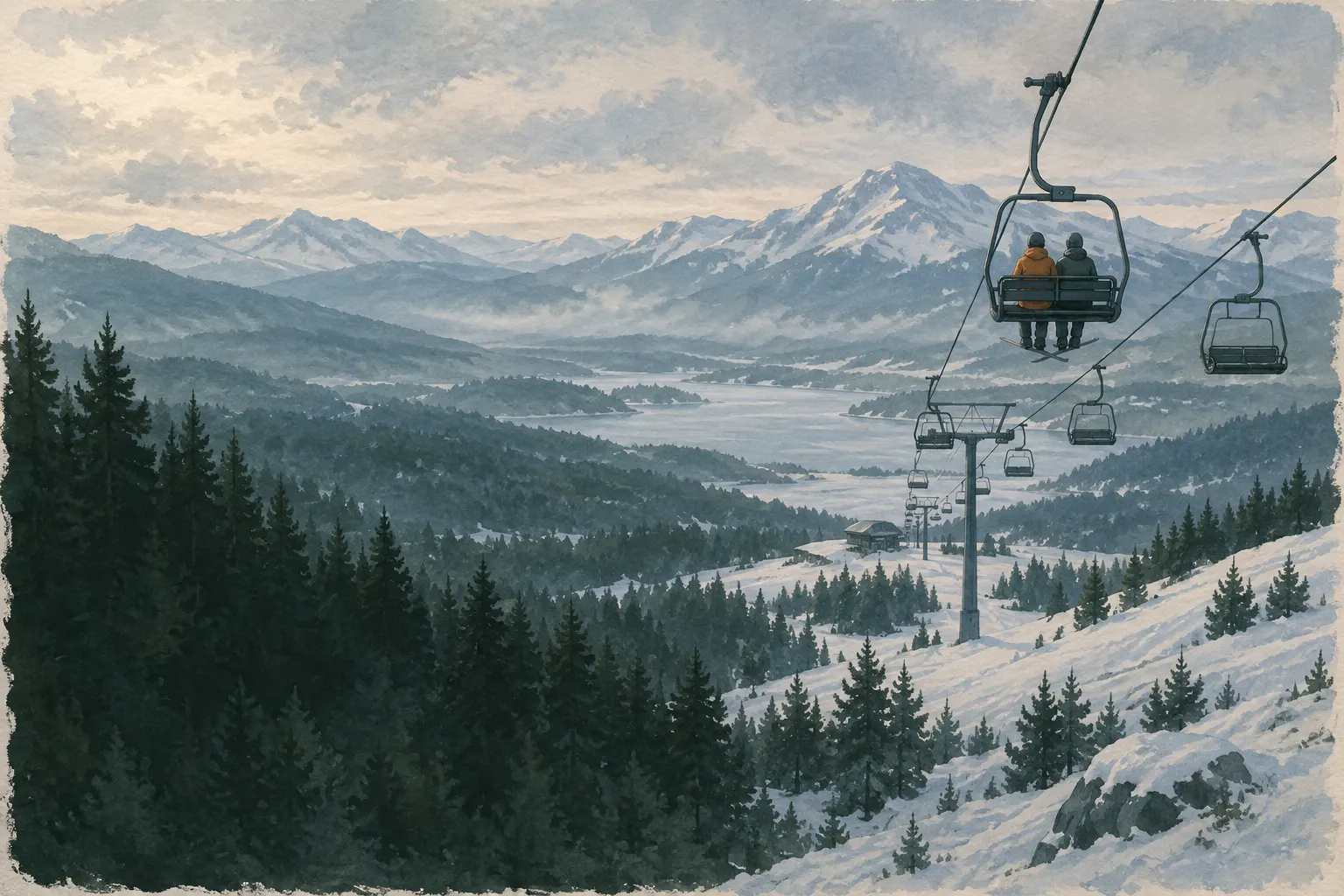
Stopped chairlift over a snowy slope, two people sitting close together with the bar closed

The cable car or chairlift has stopped

Halfway up the slope the chair jolts and stops. Now one thing helps most: stay seated, bar down, keep warm and listen to the staff.

First

  1. Stay seated and stay calm. Keep the safety bar closed.
  2. Never jump off, swing, stand up or climb out – not even if the ground looks close.
  3. Wait for announcements and the lift staff's instructions and follow them exactly.
  4. Keep warm: hood, hat, gloves. Children close to you.

Call emergency services if

  • Someone faints, has severe breathing difficulty or chest pain
  • Someone is very cold: shivering hard or becoming confused and drowsy
  • There is no announcement and no contact with staff, and the stop lasts a long time

What is happening

Cable cars and chairlifts stop from time to time: because of wind, a technical problem, a passenger who has fallen at the station, or because the staff stop the system to be safe. For passengers, any stop high above the ground feels uncomfortable – especially in the cold, in wind and with children.

The lift companies' conditions of carriage say clearly what to do: if the lift stops during the ride, passengers stay calm and wait for the staff's instructions. Jumping off, swinging and standing up are forbidden, the safety bar on a chair stays closed during the ride, and staff instructions must always be followed.

If the lift cannot restart, staff and rescuers bring the passengers down. That takes time because everyone is reached one after another. During this time, cold and fear are the biggest problems – not the height, as long as nobody does anything rash.

This page guides you through the stop, the waiting, the rescue and the time afterwards.

Step by step

The cable car or chairlift has stopped – Phase 1 of 4The lift stops. Stay seated and stay calm. Keep the safety bar closed and lean back. Do not jump off, swing, stand up or throw anything out. Hold poles, backpack and phone firmly. Listen for announcements.
Phase 1 of 4

Phase 1 of 4

The lift stops

Stay seated and stay calm. Keep the safety bar closed and lean back. Do not jump off, swing, stand up or throw anything out. Hold poles, backpack and phone firmly. Listen for announcements.

The animation shows the key actions of each phase schematically; the text below is what counts.

  1. Phase 1

    The lift stops

    • Stay seated and stay calm.
    • Keep the safety bar closed and lean back.
    • Do not jump off, swing, stand up or throw anything out.
    • Hold poles, backpack and phone firmly.
    • Listen for announcements.
  2. Phase 2

    Waiting

    • Keep warm: hood up, hat, gloves, collar closed; hands in your armpits.
    • Move toes and fingers, huddle close if several of you are sitting together.
    • Children close beside you under the bar; talk calmly, small games.
    • Save phone battery; announcements take priority over calls.
  3. Phase 3

    When the rescue comes

    • Move only when the rescuers say so.
    • Open the bar or doors only when you are told to.
    • Follow every instruction exactly, even if it feels unusual.
    • Tell the rescuers who belongs together, so children and their adults stay together.
  4. Phase 4

    Afterwards

    • Warm up indoors, have a warm drink, change wet clothing.
    • Tell the staff if someone is very cold, confused or drowsy.
    • Talk with children about what happened; fear and shaking afterwards are normal.

★ Pro tips

What experienced people do differently: proven practice from mountain rescue, fire services, lifeguards and civil protection that beginners rarely know.

  1. Note your chair or cabin number

    Chairs and cabins are numbered, usually clearly visible inside or outside. Remember yours or take a photo. If you have to call because of a medical emergency, rescuers can find you at once.

  2. Swinging after a stop is normal

    When a lift stops suddenly, chairs and cabins often swing back and forth for a while. That comes from the rope and settles by itself. Hold on, stay seated and do not try to counter the swing by moving.

  3. Tense your muscles instead of fidgeting

    To stay warm without moving the chair: tense your legs, buttocks, stomach and arms hard for a few seconds, then relax. Repeat this again and again. It makes heat while you stay sitting still.

  4. Use the toilet before long rides

    A stoppage with an evacuation can take a long time. Use the toilet before long lift rides, especially with children. It sounds trivial, but saves a lot of stress up in the air.

What to watch out for

  • The ground looks closer than it is

    From above, distances look smaller, and snow hides rocks and dips. Jumping off is forbidden and dangerous – even when the height seems small.

  • Cold and wind

    On an open chair you cool down fast in the wind. Put on everything you have with you early, and do not wait until you shiver.

  • Falling objects

    Anything that falls from the chair can hit people below. Hold on to gloves, phone and poles, throw nothing out.

  • Panic

    Fear of heights can grow strong when the lift stands still. Breathe out slowly, look at a fixed point on the chair or in the cabin instead of down, and talk to the others.

Common mistakes

  • Opening the bar to sit more comfortably or to turn round.
  • Jumping off because the snow looks soft.
  • Swinging to keep warm or for fun.
  • Putting on warm clothing too late.
  • Standing up or opening doors before being told to.

Prepare in advance

  • Dress warmly enough for the ride, even if it is mild in the valley; hat and gloves to hand.
  • Phone charged and safely stowed.
  • Talk it through with children beforehand: we stay seated, the bar stays down, we listen to the staff.
  • Take small children only as the lift company allows – often only with an adult directly beside them.
  • In strong wind, switch to enclosed lifts or postpone the ride.

Special consideration

Children
Children can slip under the bar more easily and get cold faster. They sit close beside an adult; calmly explain what is happening and play small games.
Older people and people with existing conditions
Cold and stress are harder on them. Anyone who needs medication carries it on their body, not in a backpack on the cabin floor.

Sources

Your situation

Which lift?
For how long?
What worries you?

Matching entries

0 rules apply

No AI decides here. Every recommendation is based on a visible rule.

Add details about your situation above to get more specific guidance.

Basics for this situation

Why: Always applies to this situation – regardless of your answers.

All rules of this situation (5)
  1. [not active] If Which lift? = Open chairlift

    Bar down, lean back, hold on to poles and backpack, drop nothing and do not swing.

  2. [not active] If For how long? = A long time, or a rescue has been announced

    If the lift cannot restart, staff and rescuers bring the passengers down. That takes time because everyone is reached one after another. Move only when the rescuers say so and follow every instruction exactly.

  3. [not active] If What worries you? = Cold and wind

    Put on everything you have with you, hood up, hands in your armpits, move toes and fingers. Huddle close if you are sitting with others.

  4. [not active] If What worries you? = A child is with me

    The child sits close beside you under the bar. Speak calmly; small games (counting things, stories) help against fear and boredom.

  5. [not active] If What worries you? = Fear of heights or panic

    Breathe out slowly and look at a fixed point in the cabin or on the chair instead of down. A pounding heart and shaking are normal stress reactions and they pass.