Skip to content
In an emergencyAustriaEmergency numbers →
SurviveBetter
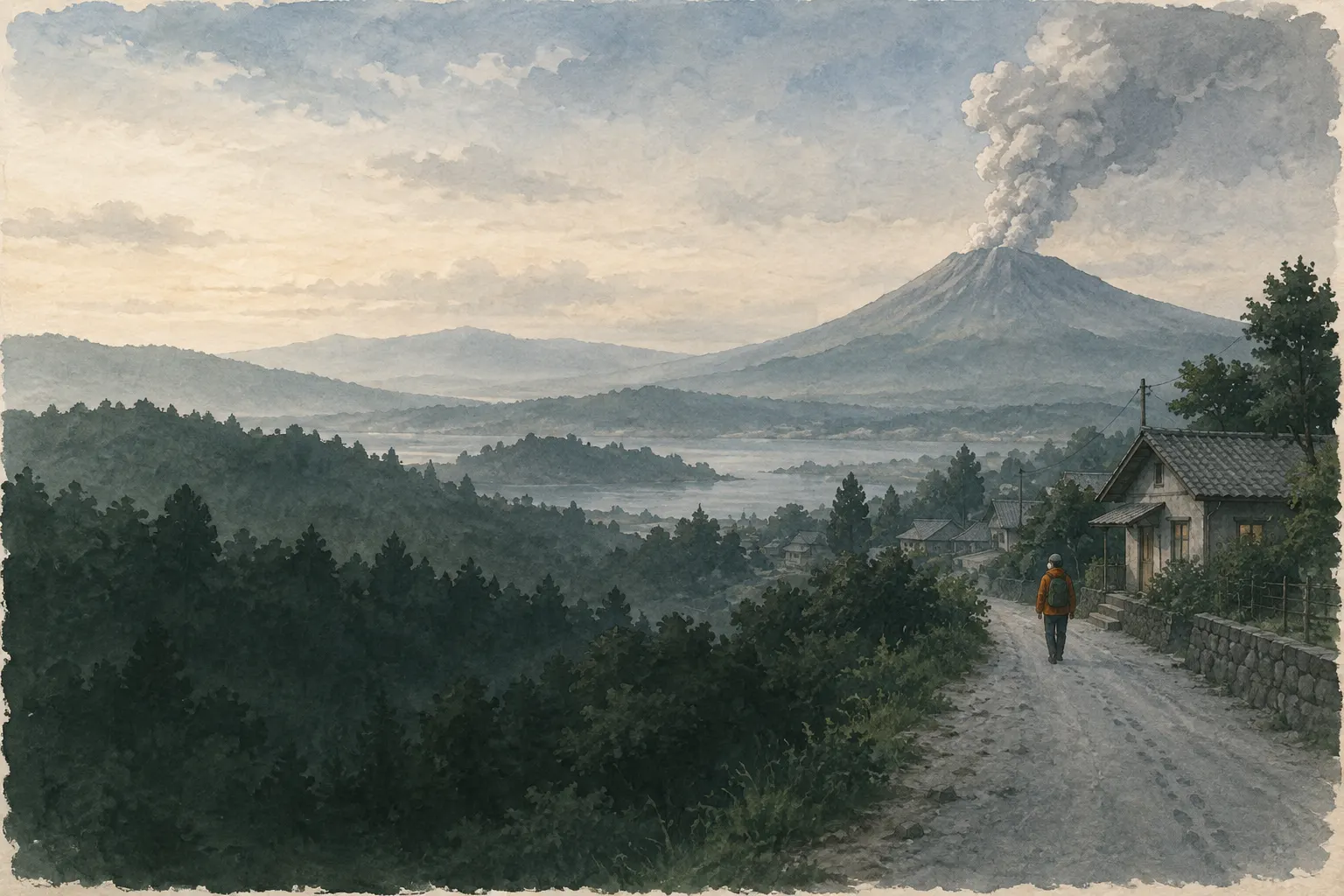
Distant volcano with an ash plume, a person in a mask walking on an ash-covered village road

Volcanic ash is falling

A grey veil settles over cars and roofs and crunches underfoot. Volcanic ash is not dust like any other – but with a few rules it is manageable.

First

  1. Stay indoors, close windows and doors, switch off ventilation and air conditioning that draws in outside air.
  2. If you have to go out: wear a well-fitting respirator mask, long clothing, glasses instead of contact lenses.
  3. Follow the authorities' warnings on the radio and warning app.
  4. Only drive if necessary – slowly, with lights on and plenty of distance.

Call emergency services if

  • Breathlessness or chest tightness
  • A roof is giving way under the ash load
  • You are trapped or ordered to evacuate and cannot leave

What is happening

Volcanic ash consists of tiny fragments of rock and glass. It irritates eyes, skin and airways, makes roads slippery, clogs filters and drains and can – especially when wet – put a heavy load on roofs. Even a few millimetres can disrupt traffic and power supplies.

In its guide for the public the International Volcanic Health Hazard Network (IVHHN) advises staying indoors as much as possible during ashfall, closing windows and doors and wearing a well-fitting respirator mask outside. People with asthma, lung or heart disease are particularly at risk.

When travelling, an eruption often shows up first as flight cancellations, because ash damages engines. Anyone near the volcano must also expect gases, lava flows or mudflows – here only the orders of the local authorities count.

This page helps you through days of ashfall: stay protected indoors, be properly equipped outside and remove the ash safely afterwards.

Step by step

Volcanic ash is falling – Phase 1 of 4Stay inside and seal up. Close windows and doors, switch off ventilation and air conditioning that draws in outside air. Seal gaps under doors with damp cloths. Bring pets inside. Follow warnings on the radio and warning app.
Phase 1 of 4

Phase 1 of 4

Stay inside and seal up

Close windows and doors, switch off ventilation and air conditioning that draws in outside air. Seal gaps under doors with damp cloths. Bring pets inside. Follow warnings on the radio and warning app.

The animation shows the key actions of each phase schematically; the text below is what counts.

  1. Phase 1

    Stay inside and seal up

    • Close windows and doors, switch off ventilation and air conditioning that draws in outside air.
    • Seal gaps under doors with damp cloths.
    • Bring pets inside.
    • Follow warnings on the radio and warning app.
  2. Phase 2

    If you have to go out

    • Wear a well-fitting respirator mask; a damp cloth is only a stopgap.
    • Glasses instead of contact lenses, long sleeves and trousers.
    • Only drive if necessary: slowly, lights on, keep your distance, do not wipe windscreens dry.
    • When you get back, take off shoes and outer clothing outside.
  3. Phase 3

    Keep an eye on health

    • Anyone with asthma or a lung or heart condition: stay indoors, keep medication to hand.
    • Keep children busy indoors and do not let them play in the ash.
    • Rinse irritated eyes with clean water, do not rub them.
    • With breathlessness or chest tightness: call 112.
  4. Phase 4

    Removing ash

    • Dampen ash lightly and push it together; do not sweep it dry or blow it around with a leaf blower.
    • Wear a mask and goggles while doing so.
    • Do not climb onto the roof without protection; with thick ash ask professionals.
    • Do not wash ash into drains; dispose of it as the municipality says.

★ Pro tips

What experienced people do differently: proven practice from mountain rescue, fire services, lifeguards and civil protection that beginners rarely know.

  1. Disconnect downpipes before clearing

    Ash from the gutters clogs downpipes and drains and turns into a kind of cement with water. So disconnect the downpipes from the gutter or drain before you clear up. Then collect the ash at the bottom and dispose of it as your council says.

  2. Wet ash conducts electricity

    Dry ash does little to power lines, but wet ash conducts electricity and can cause short circuits on lines and appliances. So expect power cuts when it rains after ashfall and keep torches ready. Keep away from sagging power lines.

  3. The mask must seal tightly

    An FFP2 or N95 mask only protects you if the air goes through the filter, not around the edges. Press the nose clip into shape and check when breathing out whether air escapes at the sides. A beard prevents the mask from sealing properly.

  4. Change the car's air filter more often

    Ash is fine and sharp-edged like tiny glass splinters. It clogs air filters and can damage the engine. If you drive in ash-affected areas, have the engine air filter and cabin filter checked and changed much more often than usual.

What to watch out for

  • Roof load

    Wet ash is much heavier than dry ash. Flat and weak roofs can give way.

  • Slippery roads

    Ash makes roads as slippery as snow and reduces visibility. Postpone trips where possible.

  • Water and food

    Cover rain barrels and open water containers. Follow the authorities' advice on drinking water.

  • Near the volcano

    Near a volcano, gases, lava or mudflows can be more dangerous than the ash. Never enter closed zones.

Common mistakes

  • Opening windows for air while ash is falling.
  • Sweeping ash dry or blowing it away.
  • Going out with contact lenses.
  • Climbing onto the roof without protection.
  • Entering closed zones to see the eruption.

Prepare in advance

  • In volcanic areas keep a few well-fitting respirator masks and goggles ready.
  • Supplies of water, food and medication for several days.
  • Install a warning app and know the region's hazard maps.
  • When travelling, check travel insurance and rebooking rules.
  • Keep covers ready for sensitive equipment and vehicles.

Special consideration

People with respiratory conditions
Discuss with your doctor beforehand what to do during ashfall and keep enough medication ready.
Children
Adult masks often do not fit young children. Staying indoors is their most important protection.

Sources

  • The Health Hazards of Volcanic Ash – A guide for the public · International Volcanic Health Hazard Network (IVHHN)
  • Volcanoes · Ready.gov – U.S. Federal Emergency Management Agency (FEMA)
  • Volcanic gases (Volcano Hazards Program information pages) · U.S. Geological Survey (USGS) – Volcano Hazards Program

Your situation

Where are you?
Health
How much ash?

Matching entries

0 rules apply

No AI decides here. Every recommendation is based on a visible rule.

Add details about your situation above to get more specific guidance.

Basics for this situation

Why: Always applies to this situation – regardless of your answers.

All rules of this situation (4)
  1. [not active] If Where are you? = Travelling, flights are cancelled

    With flight cancellations follow the airline and the authorities, secure accommodation and let relatives know. Near the volcano follow local orders.

  2. [not active] If Health = Asthma, lung or heart disease

    Anyone with asthma or a lung or heart condition stays indoors, keeps medication to hand and gets help at once with breathlessness (112).

  3. [not active] If Health = Young children

    Keep children busy indoors and do not let them play in the ash. Adult masks often do not fit young children – staying indoors is the best protection.

  4. [not active] If How much ash? = Thick layer on roofs and roads

    Thick, wet ash is heavy and can overload roofs. Do not climb onto the roof without protection; dampen ash lightly instead of sweeping it dry.