Skip to content
In an emergencyAustriaEmergency numbers →
SurviveBetter
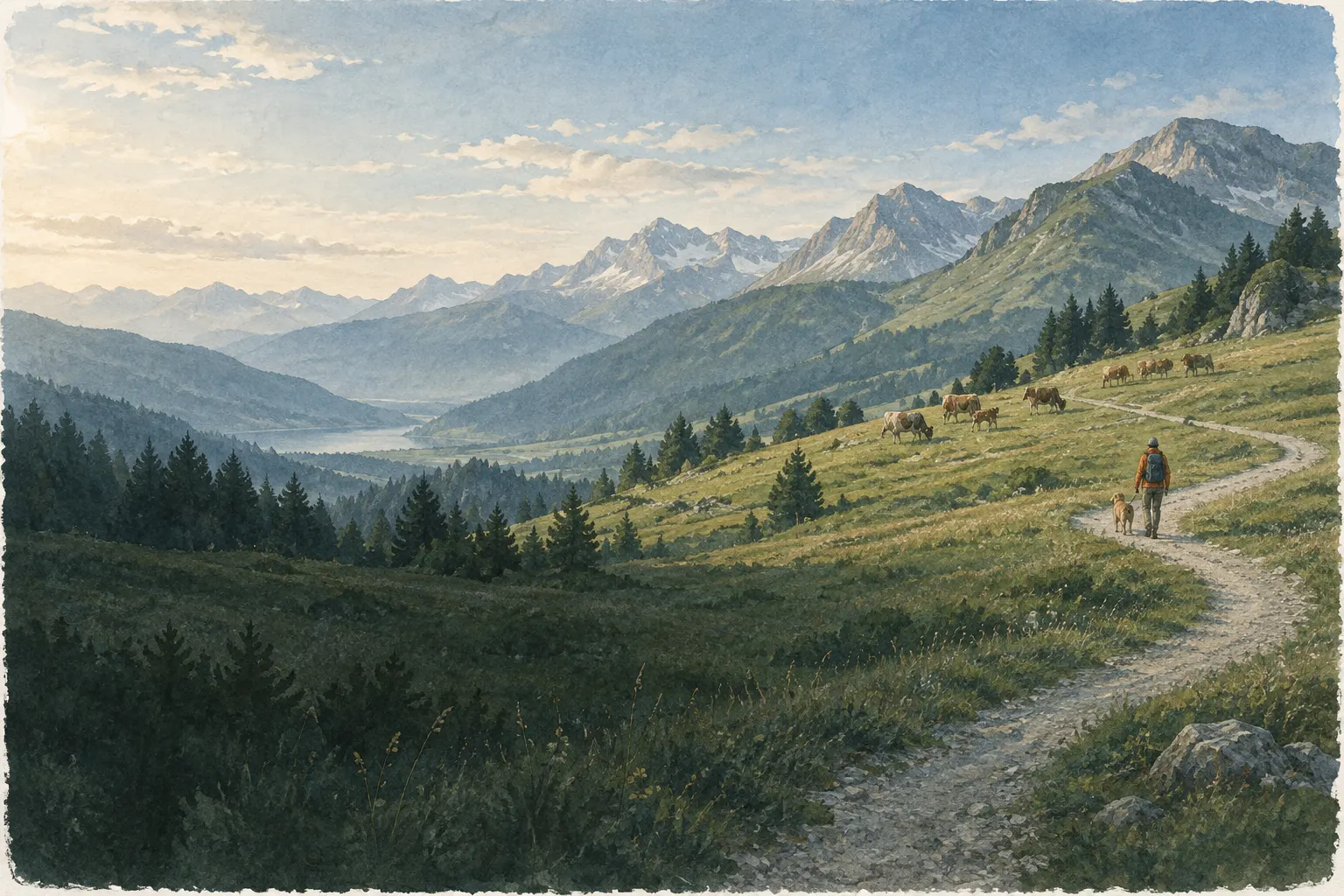
Hiker with a dog on a short lead walking in a wide curve past a herd of cows on an alpine pasture

Encounter with livestock or wild animals

A herd of suckler cows on the path, a wild boar in the undergrowth, an unfamiliar dog: with distance, calm and a few rules, almost every encounter ends harmlessly.

First

  1. Stop, calm down, keep your distance. Never approach, feed or touch an animal.
  2. Back away slowly without running and without turning your back on the animal completely. Always leave the animal a way out.
  3. On alpine pastures, give cows with calves a wide berth. Keep your dog on a short lead – if a cow attacks, let the dog go at once.
  4. After a bite or a kick: stop any bleeding with pressure and call 112.

Call emergency services if

  • Severe bleeding or deep bite wound
  • Someone was kicked or knocked down by cattle
  • Snakebite, especially with swelling, nausea, dizziness or in children
  • Unconsciousness or breathing difficulty
  • An animal is behaving aggressively near people (inform the police)

What is happening

Most animals in central Europe avoid people. Encounters become dangerous mainly when an animal feels threatened, defends its young, is surprised or is cornered. That applies to wild animals just as much as to livestock.

In the Alps, suckler cows with calves are the most common cause of serious animal accidents while hiking. In Austria there have been repeated serious and even fatal incidents, often involving dogs, which remind the cows of wolves. Austria has therefore published rules for dealing with grazing livestock: keep your distance, do not feed, keep your dog on a short lead – and if attacked, let the dog off the lead at once.

Wild boar almost always flee. Sows with piglets in spring and injured or cornered animals are risky. Brown bears occur only very occasionally in the Alps and avoid people; an encounter is extremely rare. Unfamiliar dogs and snakes such as the adder are more common, but calm behaviour usually avoids problems.

The key principles apply to all animals: distance, calm, never feed, never get between mother and young, leave the animal an escape route and back away slowly instead of running.

Step by step

Encounter with livestock or wild animals – Phase 1 of 4Before it gets close. Walk attentively on pastures and in the forest, headphones out; see and hear animals early. Go round livestock at a great distance, do not walk between cows and calves, do not pet or feed animals. Keep your dog on a short lead and do not let it go to the animals. In camp, store food and rubbish sealed and not in the tent.
Phase 1 of 4

Phase 1 of 4

Before it gets close

Walk attentively on pastures and in the forest, headphones out; see and hear animals early. Go round livestock at a great distance, do not walk between cows and calves, do not pet or feed animals. Keep your dog on a short lead and do not let it go to the animals. In camp, store food and rubbish sealed and not in the tent.

The animation shows the key actions of each phase schematically; the text below is what counts.

  1. Phase 1

    Before it gets close

    • Walk attentively on pastures and in the forest, headphones out; see and hear animals early.
    • Go round livestock at a great distance, do not walk between cows and calves, do not pet or feed animals.
    • Keep your dog on a short lead and do not let it go to the animals.
    • In camp, store food and rubbish sealed and not in the tent.
  2. Phase 2

    When an animal reacts

    • Stop, calm down, watch the animal: lowered head, pawing, snorting, bellowing or bared teeth are warning signs.
    • Back away slowly backwards or sideways without running, without turning your back on the animal completely, and leave it an escape route.
    • Cows: leave the pasture briskly, if necessary over a fence or behind an obstacle. If a cow attacks, let the dog off the lead – dog and human get to safety separately.
    • Unfamiliar dog: stand still, turn side-on, arms against your body, do not stare, speak calmly in a low voice.
    • Wild boar: increase the distance, leave the escape route clear; if it charges, get onto a raised hide, a rock or behind a tree.
    • Bear: speak calmly in a low voice, back away slowly, do not run, do not climb trees. If a bear actually attacks, lie on your stomach, hands behind your neck, keep your pack on.
  3. Phase 3

    After an injury

    • First get out of the animal’s reach.
    • Stop severe bleeding with firm pressure; call 112.
    • Rinse bite wounds with clean water and cover them.
    • Snakebite: stay calm, keep the limb still, remove rings and watch, call for help – do not suck, do not cut, do not apply a tourniquet.
    • After being kicked or knocked down by cattle, watch for internal injuries: abdominal or chest pain, pallor, dizziness – call for help.
  4. Phase 4

    Afterwards

    • Have every bite wound treated by a doctor; check tetanus protection, and abroad think of rabies too.
    • Report aggressive animals: livestock to the farmer or the municipality, dogs to the police, injured game to the local hunting authority.
    • Do not underestimate the shock – talking about it helps.
    • Next time choose a route or time that lets you avoid pastures with suckler cows.

★ Pro tips

What experienced people do differently: proven practice from mountain rescue, fire services, lifeguards and civil protection that beginners rarely know.

  1. Make some noise in thick cover

    Most dangerous encounters start with a surprise. In thick vegetation, blind bends or by noisy streams, talk loudly now and then. Wild boar and bears then hear you early and usually move away on their own.

  2. Cross pastures along the edge

    Walk close to the fence or wall so you always have a quick way out. Watch the herd from a distance: if all the animals turn to look at you and bunch together, take another route. That's the moment to act, not once they start moving.

  3. Put something between you and a dog

    If a strange dog approaches threateningly, hold your pack, a jacket or a stick in front of you. If it bites, it's more likely to get the object than you. Don't hit out with it – just shield yourself.

  4. Knocked down by a dog: curl up

    If a dog knocks you over, curl into a ball on your side, knees to chest, hands over your neck and ears. Keep as still as you can. This protects your face, throat and belly.

  5. Bear hasn't seen you: quietly turn back

    If you spot a bear in the distance and it hasn't noticed you, calmly go back the way you came and give it a wide berth or wait. In a group, stay close together – together you look bigger.

What to watch out for

  • Suckler cows and dogs

    Suckler cows defend their calves especially against dogs. Anyone who holds on to the dog during an attack is attacked too. Let go of the lead – the dog is faster than the cow.

  • Feeding

    Animals that are fed lose their shyness and become pushy or aggressive. That applies to cows, foxes, wild boar and above all bears.

  • Running triggers a chase

    Dogs, cattle and bears often react to flight by chasing. Calm withdrawal is safer.

  • Young animals

    Fawns, piglets and young birds are almost never abandoned. Touching them puts them at risk – and may provoke the mother.

  • Adder

    The adder only bites when harassed or trodden on. Sturdy shoes and attention on sunny rocks are usually enough. Bites are rarely life-threatening for healthy adults but always need medical treatment.

Common mistakes

  • Walking straight through a herd with calves.
  • Petting or photographing cows or calves as if they were tame.
  • Holding on to the dog during an attack.
  • Running away from an animal.
  • Feeding wild animals or leaving food out in camp.
  • Taking seemingly abandoned young animals with you.

Prepare in advance

  • Know the rules for alpine pastures and fields and explain them to children.
  • Train dogs to the lead and recall; before the trip check whether dogs are allowed on the route.
  • Sturdy shoes and long trousers on sunny paths where snakes are common.
  • In camp, store food and rubbish in sealed containers away from the sleeping area.
  • Keep tetanus vaccination up to date; before travelling to rabies areas get medical advice.
  • Where bears are more common, find out about local rules from local authorities beforehand.

Special consideration

Children
Children like to run towards animals or run away. Take them by the hand, keep them behind you and agree clear rules beforehand.
Out with a dog
On pastures with suckler cows a dog is an additional risk. If possible choose routes that do not cross pastures.

Sources

  • Sichere Almen – Verhaltensregeln für den Umgang mit Weidevieh (10 Regeln für Almbesucherinnen und Almbesucher) · Bundesministerium für Land- und Forstwirtschaft, Regionen und Wasserwirtschaft (Österreich), gemeinsam mit Landwirtschaftskammer Österreich
  • The Countryside Code · Natural England and Natural Resources Wales
  • Bear Safety · U.S. National Park Service
  • International First Aid, Resuscitation, and Education Guidelines 2020 · International Federation of Red Cross and Red Crescent Societies (IFRC) – Global First Aid Reference Centre, 2020
  • European Resuscitation Council Guidelines 2021: First Aid · European Resuscitation Council – Resuscitation (journal), 2021

Your situation

Animal
With you
Situation

Matching entries

0 rules apply

No AI decides here. Every recommendation is based on a visible rule.

Add details about your situation above to get more specific guidance.

Basics for this situation

Why: Always applies to this situation – regardless of your answers.

All rules of this situation (9)
  1. [not active] If Animal = Cows / livestock

    Suckler cows defend their calves. Stay on the path, go round the herd at a great distance, take restlessness (lowered head, pawing, bellowing) seriously and leave the pasture briskly but without running.

  2. [not active] If Animal = Wild boar

    Wild boar usually flee. Sows with piglets and cornered animals are dangerous: withdraw calmly, leave an escape route, if necessary get onto a raised hide or rock.

  3. [not active] If Animal = Unfamiliar dog

    Stand still, turn side-on, do not stare into its eyes, do not shout or run. Keep your arms close to your body; a rucksack or jacket can serve as a buffer.

  4. [not active] If Animal = Bear (rare)

    Brown bears are very rare in the Alps and avoid people. Speak calmly in a low voice, back away slowly, do not run and do not climb trees. Never leave food out in camp.

  5. [not active] If Animal = Snake (adder)

    Snakes move away if given time. After a bite: stay calm, keep the limb still, remove rings, call for help – do not suck, do not cut, do not apply a tourniquet.

  6. [not active] If Animal = Injured animal or young animal that seems alone

    Young wild animals are almost never abandoned – the mother is nearby. Do not touch, walk away and, if injured, notify the local hunting authority, police or a wildlife rescue.

  7. [not active] If With you = Your own dog

    Dogs provoke livestock and wild animals. Keep on a short lead – but if livestock attacks, let go at once so the dog and you can each get to safety separately.

  8. [not active] If With you = Children

    Take children by the hand and keep them behind you; explain beforehand: never pet, feed or chase animals.

  9. [not active] If Situation = Bite, kick or injury

    First get out of the animal's reach, then stop the bleeding, cover the wound and call for help. Always have bite wounds treated by a doctor (infection, tetanus; abroad rabies).