Supporting a person with dementia in a crisis
Noise, unfamiliar places and rush are especially distressing for people with dementia; during evacuations they may become confused or wander off. Preparedness means: information about the person at hand, medication and familiar items in the go bag, identification on the body, a plan for who accompanies them – and in the situation itself calm, simple sentences and closeness.
- A few hours of preparation, update regularly
Explained simply
Dementia is an illness in which memory and thinking gradually get worse. People with dementia easily lose their bearings, especially in unfamiliar places. Imagine waking up in a noisy sports hall, surrounded by strangers, without knowing how you got there. That is how an evacuation can feel for them.
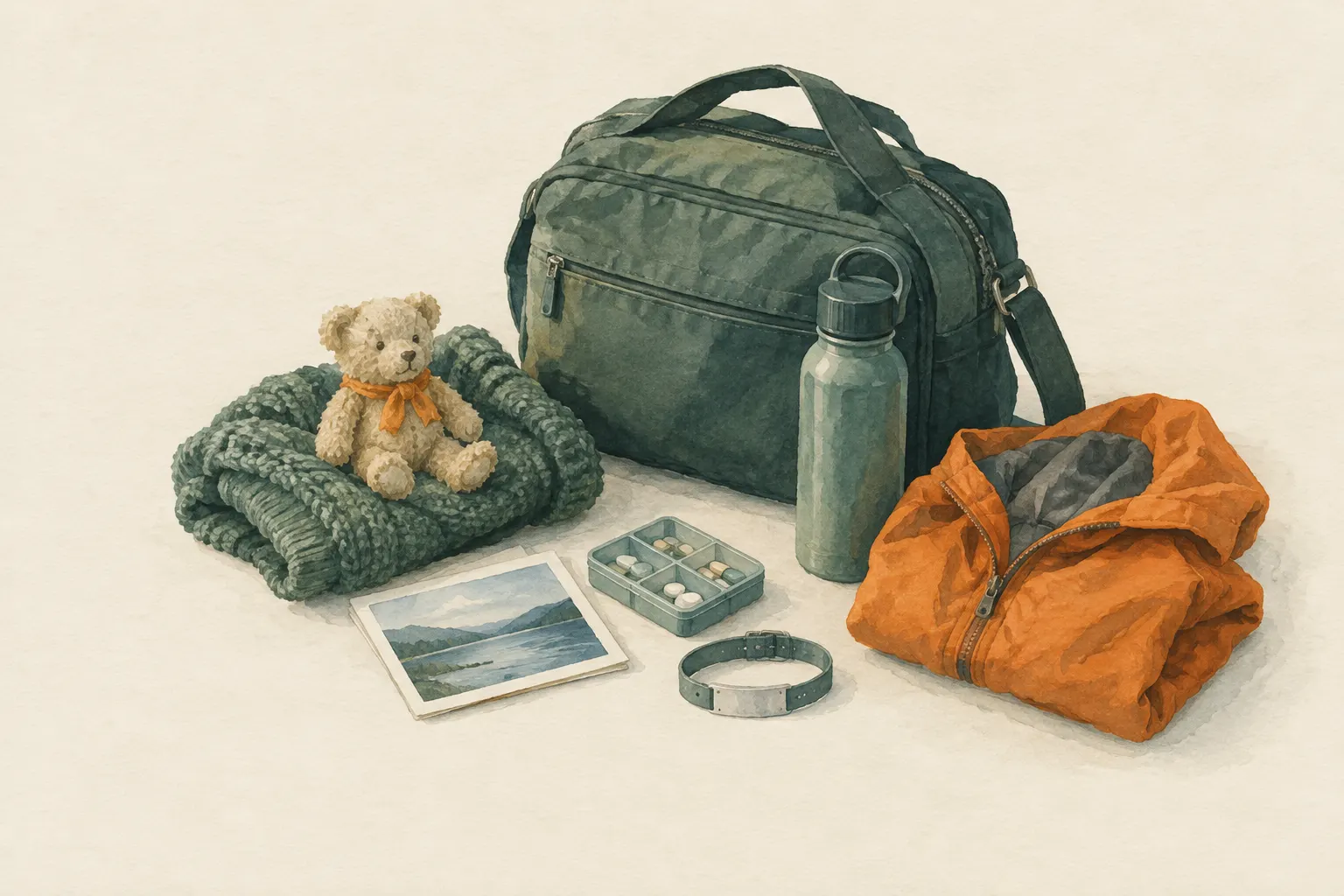
What helps is everything familiar: a known person at their side, their own blanket, a photo, the usual mealtimes. That is why you pack such things in advance and write down on a sheet what the person needs and what calms them.
The most important safety point: if a person with dementia has gone missing, call the emergency number at once (112 in the EU) and do not search alone for long.
How it works
People with dementia rely heavily on what is familiar: known faces, fixed routines, usual rooms and objects. These things are like handrails that guide them through the day. In a crisis, many of these handrails disappear at once – it is noisy and hectic, the surroundings are unfamiliar and the people around them are stressed. Fear and confusion can then increase sharply, and some people try to walk away.
Preparedness starts right there. It brings along as much that is familiar as possible and makes sure strangers – emergency services, staff in a shelter – quickly learn what the person needs. The less the companion has to explain in the moment, the more attention is left for the person themselves.
Every case of dementia progresses differently, and what fits today may no longer fit in a year. So the plan is discussed and adjusted regularly with the care service and the doctor. Medical and nursing questions always belong with these professionals.
What to prepare
The personal profile is a single page with name, diagnosis, medication list, allergies, communication tips, what calms and what upsets, the relatives' contact details and a recent photo. The photo is especially important: if the person goes missing, police and rescue services need a picture that matches how they look today. A photo from ten years ago helps little.
Identification on the body helps if the person is found alone: name and emergency contact in the jacket pocket, on clothing or on a bracelet. Which solution fits depends on what the person accepts and does not take off. Whether technical aids such as locating devices make sense and are permitted is something to clarify with the care service or an advice centre.
The go bag holds medication for several days, aids such as glasses, hearing aid and walking aid, continence supplies, a change of clothes and a familiar item, such as a blanket or a photo album. How to keep a supply of medication is something to discuss with the doctor's practice or pharmacy.
In the situation itself
Speak calmly, in short sentences, and give one piece of information at a time. “Now we put the jacket on.” Pause. “Now we walk to the car together.” Long explanations of why something is happening tend to overwhelm. Do not contradict or argue if the person misunderstands something – gently redirect instead.
Do not rush, even if time is pressing. Pressure usually causes resistance and costs more time in the end. Lead the person by the hand, stay close and do not leave them alone in unfamiliar surroundings. These are exactly the moments when people with dementia are most likely to get lost.
In a shelter, hand the profile to the staff and ask for a quiet spot, ideally away from the entrance and through-routes. Keep usual routines as far as possible: mealtimes, bedtimes, small rituals. Even if you stay at home, for example during a power cut, torches on walkways (no candles) and secured doors help.
Safety: what to watch out for
If a person with dementia has gone missing, call the local emergency number at once (112 in the EU) and have the recent photo ready. Many relatives hesitate because they hope to find the person themselves straight away. But time is decisive here, and emergency services can deploy far more people and resources for a search. Getting help is not overreacting.
Clarify early with the care service, the family doctor and, where available, local authorities whether support is offered during evacuations. Such services differ greatly from place to place. For someone who lives in a care home, the home's emergency plans apply – ask there what they look like.
Decide on a companion and a deputy whom the person knows and trusts. Involve neighbours too, so someone is there if you happen not to be. Legal questions such as powers of attorney or guardianship are a separate topic; there are advice services for that.
Good to know
Family carers are also under great pressure in a crisis. A well-thought-out plan relieves them because not everything has to be kept in their head. It is fine to ask for help – from neighbours, friends, care services or advice centres.
Ready.gov gives family carers guidance on emergency preparedness, for example on medication supplies, identification and familiar items. How to support older people emotionally in crises is covered by a separate entry in the psychology world.
Step by step
Personal profile
One page with name, diagnosis, medication, allergies, communication tips, what calms and what upsets, contact details and a recent photo.
- 1
Personal profile
One page with name, diagnosis, medication, allergies, communication tips, what calms and what upsets, contact details and a recent photo.
- 2
Identification
Name and emergency contact on clothing, a bracelet or in the jacket pocket – in case the person is found alone.
- 3
Add to the go bag
Medication for several days, aids (glasses, hearing aid, walking aid), continence supplies, change of clothes, a familiar item.
- 4
Decide who accompanies
One main person and a deputy who knows the person. Involve neighbours in case you are not there.
- 5
In the situation
Speak calmly, short sentences, one piece of information at a time. Do not argue or rush, lead by the hand, stay with the person.
- 6
In the shelter
Hand the profile to staff, ask for a quiet spot, keep routines such as meal and sleep times.
Common mistakes
- No recent photo
- Leaving the person alone in unfamiliar surroundings
- Explaining a lot at once
- Packing medication for only one day
Quick view
Materials
Medication supply
Agree any stock of prescription medication with a doctor or pharmacist; observe storage instructions and expiry dates.
Document folder (waterproof)
Copy of medication list, diagnosis, contacts, recent photo
Store securely – contains sensitive personal data.
Comfort and activity items for children
A familiar item, e.g. a blanket or photo
Suitable for
- Family carers at home
- Families with relatives in the early stages
- Neighbourhood support
Not suitable for
- Medical or nursing decisions – those need professionals
- Care homes – their emergency plans apply
Prerequisites
- Agreement with the care service and doctor
- A family emergency plan
Safety
- Clarify early with the care service, family doctor and, where available, local authorities whether support is offered during evacuations – local services differ.
How it works
People with dementia orient themselves by familiar people, routines and objects. When these are lost, fear and confusion increase. Preparedness brings along as much that is familiar as possible and makes sure that strangers – emergency services, shelters – quickly know what the person needs.
Advantages
- Less fear and confusion
- Emergency services can help better
- Relieves family carers
Disadvantages
- Must be adjusted as the illness progresses
- Needs several people to take part
Deep knowledge
Background
Ready.gov gives family carers guidance on emergency preparedness, for example on medication supplies, identification and familiar items.
Emotional support for older people in crises is covered by a separate entry in the psychology world.
Variants
- Staying at home
- During an outage or storm at home: light on walkways (torches, not candles), secure doors against wandering, continue routines.
Common mistakes
- No recent photo
- Leaving the person alone in unfamiliar surroundings
- Explaining a lot at once
- Packing medication for only one day
Limits and risks
- No medical or nursing advice
- No statements on legal matters such as guardianship or powers of attorney
Material alternatives
Derived from material properties: a substitute must have all relevant properties. Observe the notes on the substitute.
- Document folder (waterproof)
- Tarp, Plastic sheet / large bin bag (Tears easily; never pull over the head (suffocation risk).), Emergency blanket (Tears easily once punctured; short-term shelter only.), Rain poncho (When used as a shelter, it no longer protects your body from rain.), Bivy bag (Never fully close off the face.), Tent (Do not cook or heat inside the tent (fire and carbon monoxide danger).), Heavy-duty bin bag (large) (Suffocation risk: never pull plastic bags over the head or face and keep them away from small children.), Group shelter bag (Airtight – ventilate regularly.)
Results come exclusively from structured entries. No improvised instructions are generated.
Sources
Ready.gov – U.S. Federal Emergency Management Agency (FEMA): Older Adults
Emergency preparedness for older people and those needing care