Child safety in a power outage: light, heat, generators
A power outage creates new hazards in the home – especially for children: candles, camping stoves, makeshift heating, a generator, dark stairs and a tangle of power-bank cables. The basic rules: battery light instead of flames, all fuel-burning devices out of reach and never indoors, and every child has their own torch.
- 1 hour of preparation
Explained simply
When the power goes out, it gets dark, and sometimes cold too. Many people then light candles or get out a gas stove. But that is exactly what creates new dangers: candles can fall over and set something on fire, and devices that burn something give off a poisonous gas you cannot smell. It is called carbon monoxide.
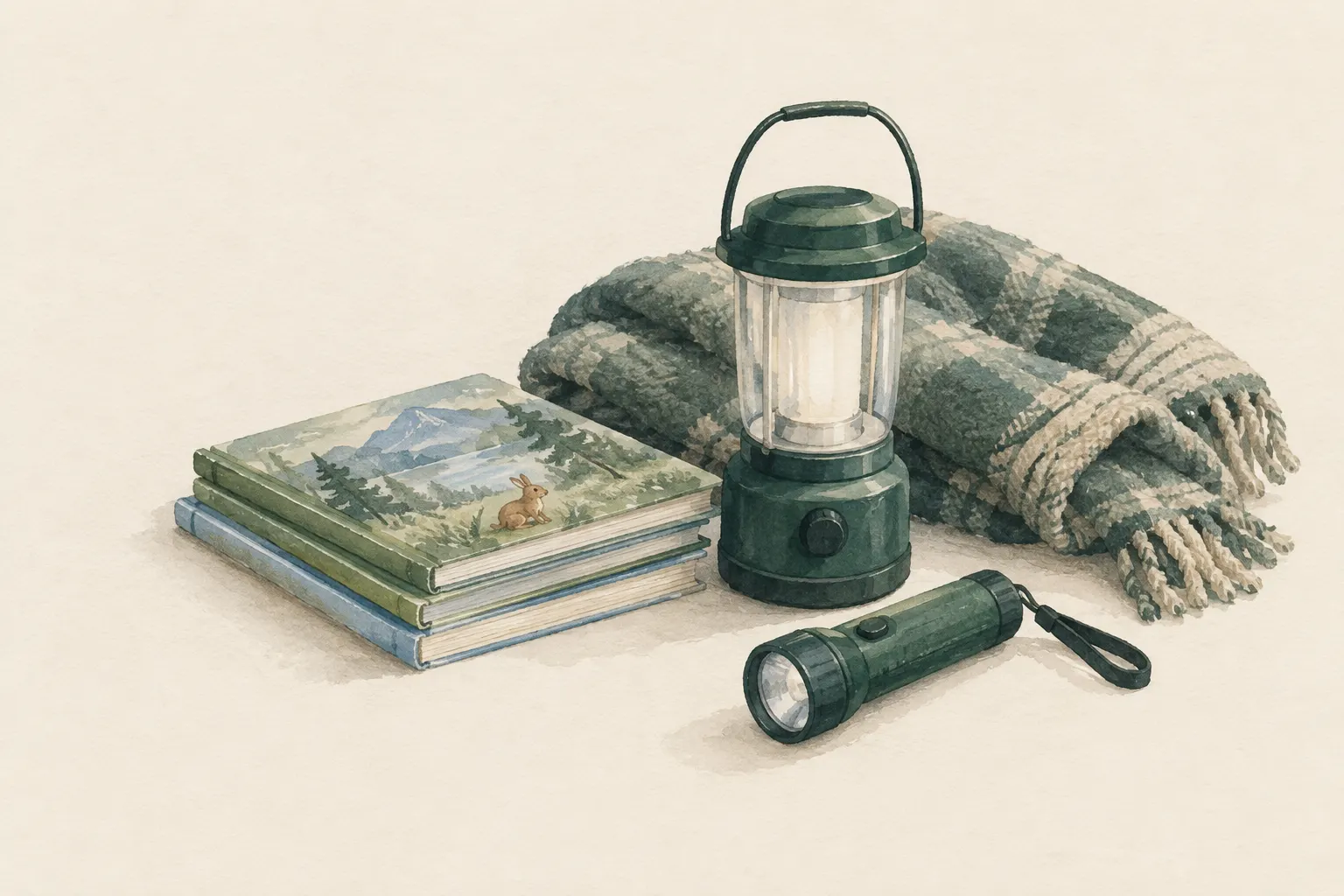
So in a power cut the rule is: battery light instead of flames. Every child gets their own torch or headlamp that they can switch on and off themselves and that always lives in the same place, for example next to the bed. Then nobody gets lost in the dark or trips on the stairs.
Very important: barbecues, camping stoves and generators never belong in the house, not even in the garage. If someone gets a headache, feels sick or dizzy, get everyone into fresh air at once and call the emergency number (112 in the EU).
Why a power cut brings new dangers
In everyday life a home is usually well secured for children: sockets are protected, stairs are lit, open flames are rare. A power cut changes that suddenly. All at once there are candles, gas stoves, makeshift attempts at heating, perhaps a generator outside the house and a tangle of power-bank cables. Children are curious and distracted in the dark, adults are stressed – a combination in which accidents easily happen.
The basic idea is therefore simple: hazards that do not exist in everyday life are not brought into the house in the first place, or are cleared out of the way in advance. Light without flame, warmth without combustion indoors, and clear zones children do not enter. The more of this is prepared before the power goes, the less has to be improvised in the dark.
Safety: carbon monoxide
Carbon monoxide, CO for short, forms when fuels such as gas, charcoal or petrol burn. The gas is invisible and odourless and pushes oxygen out of the blood. That is why it is so dangerous: you do not notice it until it causes symptoms. Children are especially at risk. Generators, barbecues and camping stoves must never run in the home, basement, garage or on an enclosed balcony – not even “just briefly” and not with the door or window open.
A generator, if used at all, stands only outdoors and far from windows, doors and vents so the fumes do not get into the house. Children keep their distance. How to connect and run a generator safely is a separate topic for professionals and the manufacturer's instructions; this entry gives no instructions for that. A battery-powered carbon monoxide alarm also warns during a power cut.
If someone gets a headache, feels sick, dazed or dizzy, especially if several people are affected at once: get everyone into fresh air immediately and call the local emergency number (112 in the EU). Do not stay inside to look for the cause.
Light without flame
Candles and oil lamps cause fires and burns again and again – all the more in the dark with children running around. It is best to avoid them altogether. For rooms, battery lanterns that can stand on the table are suitable; for walking around and for hands, torches and headlamps. Matches, lighters, fuels and gas canisters are locked away out of children's reach.
Every child gets their own lamp that they can operate themselves. A child with their own light feels much safer and does not have to search for their parents in the dark. A fixed place is important, such as by the bed, so the lamp can be found immediately at night too. Check lamps and batteries regularly, for example during the seasonal check.
Light stairs and corridors with battery light, clear cables, toys and other trip hazards out of the way and close stair gates where there are any. Power banks and charging cables are best kept in a place where nobody falls over them.
Keeping warm and explaining well
If it gets cold during a winter outage, the family moves together into one room, ideally a small, well-insulated one. Several layers of clothing, hats, blankets and sleeping bags keep you warm. Improvised heating, such as a barbecue, gas cooker or camping stove used for heat, is off-limits indoors. If a child relies on powered medical devices, they need a separate plan discussed in advance with the doctor and the utility.
Children cope much better with a power cut when they understand what is going on. Explain briefly and calmly what has happened and which rules apply now. The situation can even become something nice: a games night by torchlight, shadow figures on the wall or a story in lamplight. That way a power cut is remembered more as an adventure than as a fright.
Typical mistakes
The most common mistakes are well meant: a candle in the child's room so they are not afraid; the generator in the garage “with the door open”; the barbecue brought indoors for heat; only one torch for the whole family. Each of these can be avoided with a little preparation.
Preparation here mainly means: enough battery light for everyone, working smoke and CO alarms, lighters and fuels locked away, and a plan for which room is the warm room in winter. Detailed guidance on light, generators and communication in a power cut can be found in the blackout world.
Step by step
Their own lamp
Give each child a torch or headlamp they can operate themselves, kept in a fixed place such as by the bed.
- 1
Their own lamp
Give each child a torch or headlamp they can operate themselves, kept in a fixed place such as by the bed.
- 2
No flames
Battery lanterns for rooms instead of candles. Lock away matches and lighters.
- 3
Danger zones
Generator outdoors only, far from windows and doors; children keep away. Stove cooking only under supervision and at a distance.
- 4
Keep warm
One room for everyone, layers, blankets, sleeping bags. No improvised heaters.
- 5
Secure paths
Light stairs and corridors with battery light, clear cables and objects out of the way, close stair gates.
- 6
Explain
Explain briefly and calmly what has happened and which rules apply; turn it into a torchlight games night.
Common mistakes
- Candles in the children's room
- Generator in the garage with the door open
- Bringing a barbecue indoors for heat
- Only one torch for the whole family
Quick view
Materials
Headlamp / flashlight
One per child
Battery lantern / LED light
Carbon monoxide alarm
Does not replace the rule never to run combustion devices indoors. Choose battery-powered or with battery backup.
Smoke alarm
Test regularly; never take the battery out for other uses.
Suitable for
- Families with young children
- Longer power outages
- Winter outages with heating problems
Not suitable for
- Improvised heating with a barbecue, gas cooker or camping stove indoors – never
Prerequisites
- Battery light for each family member
- Working smoke and CO alarms
Safety
- Candles and oil lamps cause fires and burns. Avoid them altogether if possible; if used, never unattended and out of reach of children and pets.
- Store fuels, gas canisters and lighters locked away from children.
How it works
In the dark and in unusual situations children are curious and distracted, and adults are stressed. Hazards that do not exist in everyday life – open flames, exhaust fumes, trip hazards – are therefore removed in advance: light without flame, warmth without combustion indoors, clear zones children do not enter.
Advantages
- Prevents fires, burns and CO poisoning
- Children feel safer with their own light
Disadvantages
- Needs a supply of lamps and batteries
Deep knowledge
Background
Ready.gov advises using flashlights instead of candles during outages and, like the CDC, warns against using generators, barbecues or camping stoves indoors.
Detailed guidance on lighting, generators and communication in an outage is in the blackout world.
Variants
- Powered devices
- If a child relies on powered medical devices, a separate emergency plan with the doctor and the utility applies.
Common mistakes
- Candles in the children's room
- Generator in the garage with the door open
- Bringing a barbecue indoors for heat
- Only one torch for the whole family
Limits and risks
- No instructions for running a generator
- No medical advice on CO poisoning
Material alternatives
Derived from material properties: a substitute must have all relevant properties. Observe the notes on the substitute.
- Headlamp / flashlight
- Mobile phone (The battery drains quickly in cold and with continuous screen and GPS use.), Battery lantern / LED light
- Battery lantern / LED light
- Headlamp / flashlight, Mobile phone (The battery drains quickly in cold and with continuous screen and GPS use.)
Results come exclusively from structured entries. No improvised instructions are generated.
Sources
Ready.gov – U.S. Federal Emergency Management Agency (FEMA): Power Outages
Flashlights instead of candles, generators outdoors only
Centers for Disease Control and Prevention: Carbon Monoxide Poisoning – Prevention guidance
No generators, grills or stoves indoors; CO alarms