Black elder: flowers and berries – only heated
Black elder is a common shrub at forest edges, in hedges and around farms. In early summer it carries large, fragrant, creamy-white flower umbels, in late summer black-violet berries. Raw, unripe or with stalks and leaves they cause nausea, vomiting and diarrhoea – heated they become tea, syrup and purée. Two relatives are dangerous: the poisonous dwarf elder (danewort) and the red-berried elder. Here you learn to tell them apart reliably.
- Practising recognition: several outings; harvest 20 minutes; stripping and cooking 45–60 minutes
Explained simply
Elder is a shrub you find almost everywhere: at forest edges, in hedges and next to farms. In early summer it has big white flower plates that smell sweet. In late summer black berries hang from it.
Raw elderberries cause tummy ache and sickness. Only when you cook them properly do they turn into tasty juice and purée. You also use the flowers only as tea or boiled syrup. Green stalks and leaves always come off.
There is a poisonous relative: dwarf elder. It has no woody trunk but is a herb, and its berries point upwards. On real elder the ripe berries hang down. And red elderberries you always leave on the plant.
How it works
Elderberries, their stalks, the leaves and the bark contain substances that irritate the stomach when raw. There is especially much of them in unripe berries and green parts. Thorough cooking largely destroys these substances. That is why cooked elderberry juice is an old, proven food, but raw berries are not.
The flowers are infused with boiling water as tea, boiled up as syrup or fried in batter. You pick off the thick green stalks as far as possible, because that is where the irritating substances are.
When the berries are cooked the skins burst and the dark juice comes out. If you press everything through a sieve or cloth, skins and seeds stay behind and you have a clean juice or purée.
What really matters
The most important feature is wood. Black elder is a true shrub or small tree with grey-brown, warty bark and white pith in its twigs. Its leaves are opposite and pinnate with 5 to 7 toothed leaflets. The ripe berry umbels are heavy and hang down.
The poisonous dwarf elder is a herbaceous plant that grows anew from the ground every year and dies back above ground in winter. It often forms dense stands, its flowers have reddish anthers and its umbels stand upright even with ripe berries. Red-berried elder flowers earlier, has egg-shaped flower clusters, brownish pith and red berries.
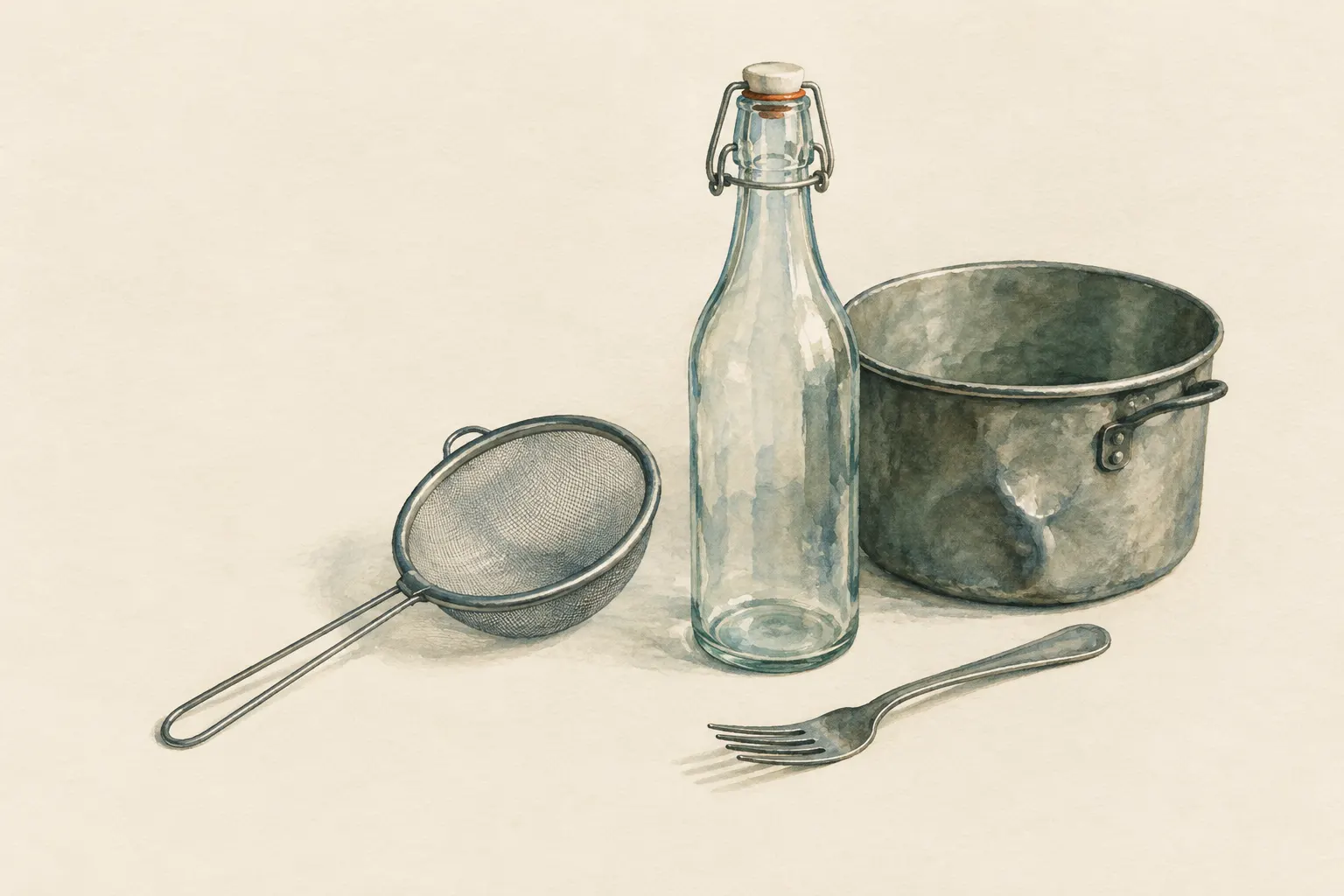
Only harvest umbels on which all berries are ripe, and when stripping consistently remove all green stalks and unripe berries. A fork helps a lot. When cooking, the rule is: let it really boil, for at least ten minutes, until all berries have burst.
Safety: what to watch out for
Raw elderberries cause nausea, vomiting and diarrhoea – even just a few to try can be enough, especially in children. If someone has eaten raw berries, dwarf elder or red elderberries and feels ill, in Austria call the Poison Information Centre (+43 1 406 43 43). With breathing problems, seizures or reduced consciousness call 144 or 112 at once.
Dwarf elder is poisonous even when cooked. If you are not sure whether a shrub is woody or whether the umbels hang, do not harvest there. Better look for the next elder than take a risk.
Elderberry juice permanently stains skin, wood and clothing. Wear old clothes. Fill syrup and juice hot into clean bottles and store cool; mouldy or fermenting syrup is poured away.
When it makes sense – and when not
Elder is worthwhile when you have a pot, water and a fire or stove – in camp, in the garden, at home. Then a single shrub provides plenty of juice, purée or tea. In May and June there are flowers, in August and September berries.
On the move without a way to cook, elder is not for you, because you must not eat it raw. And without sugar it provides little energy – it is taste and variety, not a main meal.
Good to know
Elder likes to grow where people live or have lived: by farms, old walls and garden edges. In the past an elder bush stood by almost every farmhouse.
Every flower you leave in early summer turns into a berry umbel in late summer. Anyone who does not cut everything in May can harvest again in September.
Step by step
Recognise the shrub
Black elder is a shrub or small tree with woody stems. The grey-brown bark carries small corky bumps, young twigs have white, soft pith inside. The leaves are opposite and pinnate: usually 5 to 7 toothed leaflets. Crushed leaves smell unpleasant.
- 1
Recognise the shrub
Black elder is a shrub or small tree with woody stems. The grey-brown bark carries small corky bumps, young twigs have white, soft pith inside. The leaves are opposite and pinnate: usually 5 to 7 toothed leaflets. Crushed leaves smell unpleasant.
- 2
Harvest the flowers
In May and June the shrub carries large, flat, creamy-white flower umbels with a sweet scent. On a dry day cut off only freshly opened, clean umbels with your knife and shake out insects – do not wash them, or the scent is lost. Harvest only a part: every flower you leave turns into berries.
- 3
Danger: dwarf elder (danewort)
Dwarf elder looks similar but is a herbaceous plant without a woody stem, often in dense groups, about hip-high to head-high, and dies back above ground in winter. Its flower umbels have reddish anthers, and its black berries also stand in upright umbels pointing upwards. All of dwarf elder is poisonous – even cooked.
Herbaceous instead of woody, or umbel upright: hands off.
- 4
Avoid red-berried elder
Red-berried elder flowers as early as April and May with yellowish-green flowers in egg-shaped clusters and carries bright red berries in bunches in summer. Its pith is brownish. Its seeds are poisonous. A simple rule applies for you: only black berries from the woody shrub with flat umbels.
- 5
Cut ripe berry umbels
From August the berries turn black-violet and the heavy umbels hang down. Only cut umbels on which all berries are dark and glossy; umbels with green or red berries stay on the shrub. Lay them flat in the container – the juice stains hands and clothes strongly.
- 6
Strip and sort the berries
Strip the berries off the stalks with a fork. Then go through every handful and remove all green stalks, unripe berries, leaves and insects. Finally wash them in clean water and let them drain.
- 7
Cook the berries thoroughly
Put the berries into the pot with a little water, bring them to the boil and let them simmer covered for at least ten minutes until all the berries have burst. Then press through a sieve or cloth: you get juice or purée, skins and seeds stay behind. Just warming them is not enough – it must really boil.
Never eat raw elderberries, not even a few to try.
- 8
Flowers: tea and syrup, heated
For tea, pick the little flowers off the thick green stalks and pour boiling water over a handful, let it steep for about ten minutes. For syrup, soak the umbels without thick stalks in water with lemon slices in a cool place for a day, strain through a cloth, add sugar and bring everything briefly to the boil. Fill hot into clean bottles and store cool.
Common mistakes
- Trying a few raw berries
- Cooking green stalks and unripe berries along with the rest
- Confusing herbaceous dwarf elder with elder
- Collecting red elderberries
- Only warming the juice instead of boiling it
- Harvesting all the flowers – then there are no berries
Quick view
Materials
Knife (fixed or locking blade)
Or scissors, for cutting the umbels
Cut away from your body.
Rules on carrying knives differ by region – check local rules.
Rigid collecting container (box, basket or mug)
Berries stain strongly
One species per container – never mix in anything unknown
Metal pot (stainless steel, aluminium, titanium)
For cooking – never eat raw
Hot – scalding risk.
Fine sieve or dense straining cloth
Or a clean cloth for straining
For rose hips it must be fine enough to hold back the tiny hairs – a coarse colander is not enough
Field guide to wild plants (for your region)
A book does not replace practice with a knowledgeable person
Identification apps can be wrong – never rely on them alone
Suitable for
- Flowers in May and June, berries in August and September
- Tea, syrup and purée in camp or at home
- An easy-to-find, productive shrub
Not suitable for
- Eating raw or unripe berries
- Herbaceous elder-like plants without a woody stem (dwarf elder)
- Red elderberries
- On the move without a pot and fire
Prerequisites
- Having looked at elder, dwarf elder and red-berried elder several times with a knowledgeable person
- A pot, water and a fire or stove
- A clean site
Safety
- Red-berried elder carries red berries in egg-shaped clusters; its seeds are poisonous. For beginners the rule is: only black berries from the woody shrub, red elderberries stay on the plant.
How it works
Elder protects itself with substances found in green parts, unripe berries and seeds that irritate the stomach when raw. Thorough heating largely destroys them, which is why elderberries are only eaten cooked and the flowers are only used as tea, boiled syrup or fried in batter. Because two close relatives are poisonous, every harvest starts by recognising the whole plant: wood or herb, umbel hanging or upright, black or red.
Advantages
- Common and productive
- Two harvests a year: flowers and berries
- Versatile when cooked: tea, syrup, juice, purée
Disadvantages
- Only edible heated – needs a pot and fire
- Dangerous confusion with dwarf elder
- Berries stain strongly
- Few calories without sugar
Deep knowledge
Background
Elder has been used in Central Europe for centuries for syrup, juice and purée. In its brochure Risiko Pflanze, the German Federal Institute for Risk Assessment lists elder species among the plants where the right species and preparation matter; raw berries and green plant parts can cause stomach and gut problems.
Ray Mears and Gordon Hillman describe elderflowers and elderberries in Wild Food as traditional wild food that is prepared before eating. The safe path is always the same: right species, ripe berries, no stalks, thoroughly cooked.
Variants
- Elderflower fritters
- Dip whole flower umbels by the stalk into a thin pancake batter and fry them golden brown in hot fat. Only the flowers are eaten – you hold the stalk and do not eat it. Use hot fat only on a stable stove and never near children.
- Drying the flowers
- Hang umbels upside down in an airy, shady place until the little flowers rustle, then rub them off and store them in a tight jar. Dried, they can be used for tea all year.
Common mistakes
- Trying a few raw berries
- Cooking green stalks and unripe berries along with the rest
- Confusing herbaceous dwarf elder with elder
- Collecting red elderberries
- Only warming the juice instead of boiling it
- Harvesting all the flowers – then there are no berries
Limits and risks
- Not a complete identification key
- Applies to Central Europe; other elder species grow in North America
- No medicinal claims
Material alternatives
Derived from material properties: a substitute must have all relevant properties. Observe the notes on the substitute.
- Rigid collecting container (box, basket or mug)
- Metal pot (stainless steel, aluminium, titanium) (Hot – scalding risk.), Single-wall stainless steel bottle (Heat only single-wall bottles without paint/plastic; remove the lid before heating.), Double-wall insulated bottle (Never heat directly.), PET bottle (clear, max. 2 litres) (Do not heat or place in a fire.), Food-grade water container (Only use containers that never held chemicals or fuel.), Airtight food-grade storage container (Fill only when clean and completely dry; never use containers that previously held chemicals.), Collapsible water container or bag (Protect from sharp objects.), Measuring jug, Food-grade water bag (Use only for drinking water, never for chemicals or fuel.), Fermentation jar or crock (Use only food-grade containers of glass, food-safe glazed stoneware or food-grade plastic – no metal containers for acidic food.), Resealable food bags (Use only bags intended for food; do not use with boiling water unless the manufacturer explicitly allows it.), Airy collecting bag or basket (Collect each species separately so nothing unknown gets mixed in)
- Metal pot (stainless steel, aluminium, titanium)
- Single-wall stainless steel bottle (Heat only single-wall bottles without paint/plastic; remove the lid before heating.)
Results come exclusively from structured entries. No improvised instructions are generated.
Sources
Bundesinstitut für Risikobewertung (BfR) (2017): Risiko Pflanze – Einschätzung und Hinweise
Elder species: raw berries and green parts can cause stomach and gut problems; poisonous relatives
Bundesinstitut für Risikobewertung (BfR): Giftpflanzen: Wie kann man sich schützen und was ist bei einer Vergiftung zu tun? (Fragen und Antworten)
Protection against plant poisoning and what to do in case of poisoning
Ray Mears und Gordon Hillman, Hodder & Stoughton (2007): Wild Food
Elderflowers and elderberries as traditional wild food, prepared before eating
Headquarters, Department of the Army (USA) (2002): FM 3-05.70 Survival
Only eat reliably identified wild plants; some plants only cooked
Gesundheitsportal Österreich (gesundheit.gv.at), Bundesministerium für Soziales, Gesundheit, Pflege und Konsumentenschutz: Vergiftungsinformationszentrale (VIZ)
Poison information line in Austria (VIZ), available around the clock; in acute danger 112 or 144