Alone in the forest at night: coping with fear of the dark and night sounds
Alone in the forest at night you suddenly hear every crack – and your mind imagines the worst. Almost always harmless things are behind it: wind, branches, mice in the leaves, owls or deer. If you prepare everything before dusk, ration your light wisely, calm your breathing, name the sounds and give yourself small tasks, you get through the night much more calmly.
- 30–60 minutes of preparation before dark, then all night
Explained simply
When it gets dark, the forest suddenly looks completely different. You hear a crack, a rustle, a strange call – and your mind immediately thinks of something dangerous. That is completely normal. Your brain wants to protect you and prefers to expect the worst. But almost always it is something harmless: the wind, a branch, a mouse in dry leaves or an owl.
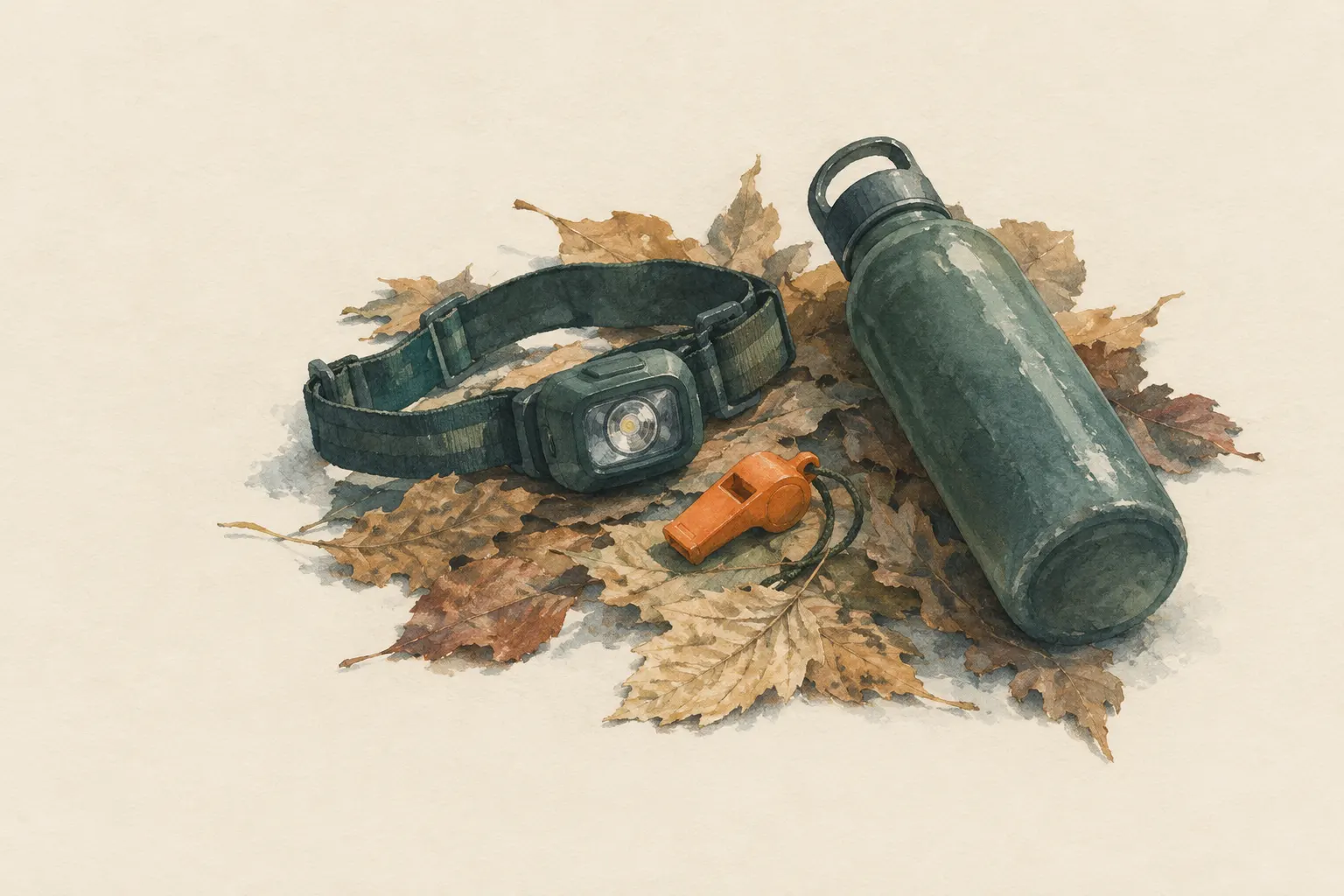
It is best to prepare while it is still light. You look for a spot with no dead branches above you, gather leaves for a thick layer to lie on and always put your lamp, whistle and water in the same place. Then you do not have to search in the dark. When your heart is pounding, put a hand on your belly and breathe out very slowly – out for longer than in.
A good trick is to give every sound a name: “That is the wind.” “That is a mouse.” Then a spooky sound becomes something familiar. And very important: do not run away at night. In the dark it is easy to trip. Stay where you are until it gets light – every night comes to an end.
How it works
Our brain relies mainly on the eyes. When the picture is missing, it fills the gaps with guesses – and under stress these guesses are almost always threatening. That made sense for our ancestors: those who were careful at every rustle were more likely to survive. Today this old protective mechanism means that a mouse in the leaves sounds like a large animal.
On top of that, it is much quieter at night. Without the traffic, voices and birdsong of the day, single sounds stand out more. Dry leaves greatly amplify the steps of small animals. Trees make noises too: trunks creak in the wind, branches and cones fall, cooling wood can crack.
Fear sets off a stress reaction in the body: the heart beats faster, breathing becomes shallow, muscles tense up. Slow, long exhaling counteracts this reaction and signals to the body that it can calm down. Tasks and naming sounds steer thinking away from horror images towards what you can actually influence.
What really matters
The most important time is the last hour of daylight. If you only start looking for wood and leaves when it is dark, you stumble around, use up lamp power and get nervous. Gather far more wood than you think you need, and build the ground layer thick – a hand's width of compressed leaves insulates much better than a few twigs. Fixed places for lamp, whistle and water give security.
Light is precious. A headlamp on a low setting or with red light disturbs your eyes' adjustment to the dark less. This adjustment takes about 20 to 30 minutes, and bright light partly undoes it. If you switch the lamp on only when needed, you will see surprisingly much over time and still have battery for signals in the morning.
With noises a fixed sequence helps: brief light, breathe out slowly, name the sound, lie down again. Typical night sounds in a Central European forest are owl calls, the barking alarm call of roe deer, grunting wild boar, shrill fox calls, rustling mice, hedgehogs and birds, as well as wind and falling branches. If you are unsure, make yourself noticed: wild animals almost always avoid people.
Safety: what to watch out for
The greatest danger is setting off out of fear. Anyone who walks off at night easily falls, gets hurt, loses direction and moves away from searchers. Stay where you are until it is light. The second big danger is cold: you can chill even on summer nights, especially in wet clothing and directly on the ground. Severe shivering, confusion or shivering that suddenly stops are alarm signs – then warmth and an emergency call to 112.
Never camp under dead branches or dead trees; they can fall without warning. A fire in the forest is generally prohibited in Germany and Austria and only justifiable in genuine need: then small, on open ground, away from trees and the emergency blanket, never when there is a wildfire risk, and completely put out at the end. Wild boar are usually shy, but a sow with piglets may defend them – never get between mother and young, calmly gain distance.
When it makes sense – and when not
These steps help on any unplanned night outdoors: after getting lost, with an injury, when darkness came faster than expected. They also help on a first deliberately planned night alone outdoors or for children who are afraid of the dark forest. If you have practised them calmly once, for example on a night in the garden or at a campsite, you can call them up more easily in an emergency.
They are not suitable when there is a real, acute danger: wildfire, flooding, rockfall or severe hypothermia. Then the point is to get to safety and call for help. In regions with bears or other large predators, the local authorities' own rules of behaviour also apply and take precedence.
Good to know
The US Army survival manual describes fear as a normal reaction that cannot be switched off but can be managed through knowledge, preparation and action. Many people find that fear is greatest on the first night and noticeably smaller on the second – because the mind has learned that the sounds were harmless.
It also helps to be aware of the time until morning. If you know roughly when it gets light, you can count the hours down. Dozing is allowed and welcome – you do not have to keep watch all night. Every hour of rest saves strength for the next day.
Step by step
Prepare before dusk
Use the last hour of daylight: pick a spot with no dead branches above and not in a hollow, gather leaves or boughs for a thick ground layer and – if a fire is justifiable – pile up firewood for the whole night. When you think you have enough, gather the same amount again. Always put your lamp, whistle and water in the same place within reach so you can find them blind.
- 1
Prepare before dusk
Use the last hour of daylight: pick a spot with no dead branches above and not in a hollow, gather leaves or boughs for a thick ground layer and – if a fire is justifiable – pile up firewood for the whole night. When you think you have enough, gather the same amount again. Always put your lamp, whistle and water in the same place within reach so you can find them blind.
- 2
Ration your light wisely
Do not leave your headlamp on all the time; switch it on when needed – ideally on a low setting or red light. Your eyes need about 20 to 30 minutes to get used to the dark; every bright light partly resets that. Keep spare batteries and your phone warm in an inside pocket, because cold drains batteries faster.
Never run the lamp completely flat – always keep a reserve for emergencies.
- 3
A small fire, if safe and justifiable
A small fire gives warmth and light and a task to do. Only on open, mineral soil away from trees, tent or emergency blanket, never when there is a wildfire risk or a fire ban. Keep it small, feed it regularly and put it out completely with water or soil before moving on.
Fires in the forest are generally prohibited in Germany and Austria and only justifiable in genuine need.
- 4
Calm your breathing
When your heart is racing: put one hand on your belly, breathe in through your nose for about four seconds and breathe out more slowly, for about six seconds. Deliberately relax your shoulders and jaw. Breathe like this for a few minutes – the long exhale slows the body's stress reaction.
- 5
Name the sounds
Quietly tell yourself what you hear: “That is wind in the trees.” “That is a mouse rustling in dry leaves.” Typical night sounds are creaking trunks, falling cones and branches, owl calls, the barking alarm call of roe deer, grunting wild boar and shrill fox calls. Small animals sound much bigger in dry leaves than they are. If something worries you: light on, speak loudly or whistle – wild animals almost always avoid people.
- 6
Small tasks give you a hold
Give the night some order: feed the fire, check your feet and hands for warmth, drink a few sips, eat a little, note the time, go through the plan for the morning. Talking quietly, humming or singing a song in your head also helps. Doing something means less brooding.
- 7
Rest instead of grimly keeping watch
Lie down well insulated and allow yourself to doze – you do not have to keep watch all night. If a noise wakes you: brief light, breathe out slowly, name the sound, lie down again. Remind yourself that every night ends: note roughly when it gets light and count the hours down.
Common mistakes
- Starting to look for wood and insulation only once it is dark
- Leaving the lamp on until the battery is flat
- Walking on at night out of fear
- Treating every sound as danger instead of naming it
- Lying directly on the cold ground
Quick view
Materials
Headlamp / flashlight
Ideally with a red or low setting
Spare batteries
Carry warm in an inside pocket
Store cool and dry, observe the expiry date; keep button cells out of children's reach.
Signal whistle
Carry within easy reach, not deep in the pack.
Do not blow right next to other people's ears.
Emergency blanket
Tears easily once punctured; short-term shelter only.
Conductive – keep away from power lines.
Lighter, matches or ferro rod
Use only where a fire is safe and justifiable in an emergency
Observe local fire bans.
Suitable for
- An unplanned night in the forest after getting lost or injured
- Your first night alone outdoors
- Children and teenagers who are afraid of the dark (with an adult)
Not suitable for
- Acute danger such as wildfire, flooding or rockfall – get to safety at once and call 112
- Severe hypothermia – warmth and the emergency call come first
Prerequisites
- You have decided to spend the night in one place
- Basic protection from cold and wet (clothing, ground insulation, emergency bivouac)
Safety
- In most nights the real danger is not an animal but cold: insulation from the ground, dry clothing, a hat. Anyone shivering hard, becoming confused or who stops shivering urgently needs warmth – call 112.
- Do not camp under dead branches or dead trees – they can fall without warning, especially in wind.
- Wild boar are usually shy. A sow with piglets may defend them if surprised, though: make yourself noticed calmly, slowly gain distance, never get between the sow and her young.
How it works
In the dark the brain lacks its most important information: the picture. It fills the gap with guesses, and under stress those guesses are almost always threatening. At the same time the ears are more sensitive at night because it is quieter. Preparation, slow exhaling, naming sounds and small tasks give the mind what it is missing: clarity and the feeling of being able to do something yourself.
Advantages
- Works without equipment
- Saves lamp power and energy
- Prevents dangerous decisions made out of fear
Disadvantages
- Fear does not disappear completely – it just gets quieter
- Needs practice to work in a real emergency
Deep knowledge
Background
The US Army survival manual (FM 3-05.70) describes fear as a normal reaction to danger that cannot be switched off but can be managed – above all through preparation, knowledge and action. Stress guides such as the WHO booklet “Doing What Matters in Times of Stress” and the advice of the US health agency CDC recommend calm breathing and deliberately returning to the here and now.
In Central European forests, attacks by wild animals on people are very rare. The most common real dangers of a night outdoors are cold, wet, falls in the dark and falling branches.
Variants
- Without a fire
- Where no fire is possible or permitted: emergency blanket or bivvy bag, a thick layer of leaves underneath, a hat and dry socks. Switching the headlamp on briefly replaces the firelight; the tasks and breathing stay the same.
- With a child
- Children are reassured when an adult calmly explains the sounds, makes a game of it (“Who hears the owl first?”) and offers physical closeness. You may admit your own fear, but show what you are doing about it.
Common mistakes
- Starting to look for wood and insulation only once it is dark
- Leaving the lamp on until the battery is flat
- Walking on at night out of fear
- Treating every sound as danger instead of naming it
- Lying directly on the cold ground
Limits and risks
- Not a treatment for anxiety disorders or panic attacks
- Regions with bears or other large predators have their own rules of behaviour – these take precedence
Material alternatives
Derived from material properties: a substitute must have all relevant properties. Observe the notes on the substitute.
- Headlamp / flashlight
- Mobile phone (The battery drains quickly in cold and with continuous screen and GPS use.), Battery lantern / LED light
- Lighter, matches or ferro rod
- Ferro rod (Practise before you need it.), Fire striker and hard stone (Carbon steel, not stainless.), Bow drill set (bow, spindle, hearth board, bearing block) (Use only dry wood.), Burning lens / magnifier (Never leave lying in the sun – fire risk.), Fire piston (Maintain the seal.), Pump drill (spindle, flywheel, crossbar, cord) (Fix the flywheel firmly and centrally – a loose disc can fly off.)
Results come exclusively from structured entries. No improvised instructions are generated.
Sources
Headquarters, Department of the Army (USA) (2002): FM 3-05.70 Survival
Fear as a normal reaction; preparation and action against fear and panic
World Health Organization (2020): Doing What Matters in Times of Stress: An Illustrated Guide
Grounding yourself in the here and now when feelings are difficult
Centers for Disease Control and Prevention (CDC): Coping with Stress
Deep breathing and calming the body as a way of coping with stress
Leave No Trace Center for Outdoor Ethics: The Seven Principles of Leave No Trace (Principle 5: Minimize Campfire Impacts)
Keep fires small and put them out completely