Bird tracks: telling crow, duck, heron and songbirds apart
Most birds have three toes pointing forward and one back. Songbirds such as sparrows hop and put both feet down side by side; blackbirds and crows also walk step by step. Ducks and geese have webbed feet and turn them inwards; herons leave large, thin prints with a long hind toe. Never touch dead birds or bird droppings, report several dead wild birds.
- 5–15 minutes per site
Explained simply
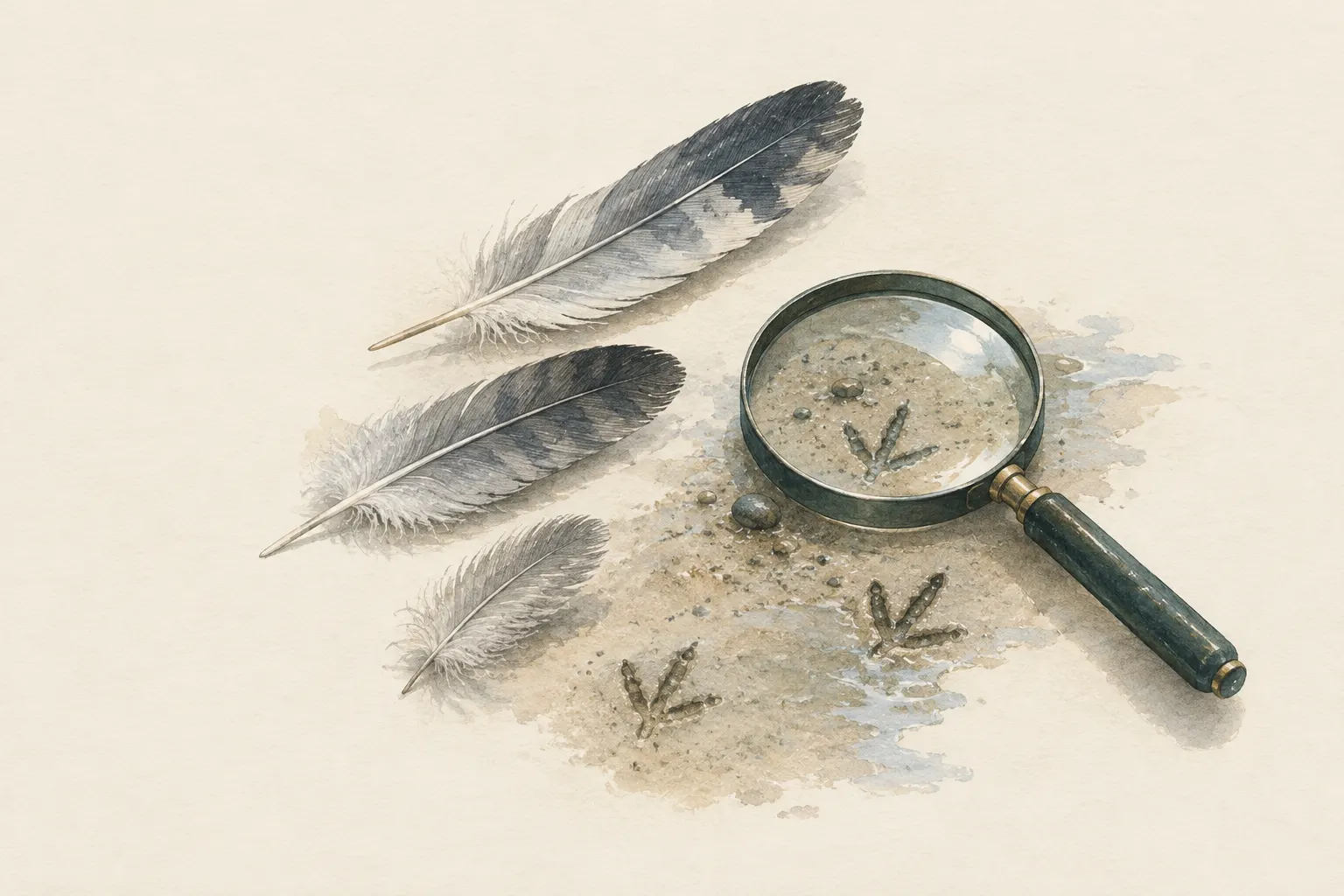
Birds walk on their toes. Most have three toes pointing forward and one pointing back. In mud or snow their print therefore looks like a small star with a long line to the back.
Small birds such as sparrows hop with both feet at the same time – their prints always lie in pairs side by side. Crows and blackbirds also walk step by step; then the prints alternate. Ducks have skin between their toes so they can paddle well, and they waddle with their feet turned inwards. Herons leave really large, thin prints by the water.
You never touch dead birds or bird droppings, because birds can carry diseases such as avian influenza. If you find several dead wild birds, tell an adult so that the find is reported. And on the bank you stay on firm ground.
How it works
In most birds three toes point forward and one back. How these toes are built depends on how the bird lives. Songbirds that perch on twigs have a long, strong hind toe for gripping. Waterbirds such as ducks have webbing between the three front toes and a tiny hind toe. Waders such as the heron have very long, thin toes that spread their weight on soft mud.
The way of moving is just as important. Small birds that spend a lot of time in branches mostly hop with both feet: both feet land at the same time side by side. Larger ground birds walk, one foot after the other. Some species such as blackbird and starling can do both – they hop and walk depending on the situation. This creates a trail of pairs or of alternating prints.
Because the front toes point forward, every print is a small signpost. The hind toe points back, against the direction of travel. Ducks and pigeons turn their feet inwards when walking; the prints then point slightly towards the centre line.
What really matters
Ask three questions for each find: how big is the print? Is there webbing? How do the prints lie to each other – in pairs or alternating? That usually gets you to the right group. As guide values, about 2 to 3 centimetres for small songbirds, 5 to 7 centimetres for crows, 5 to 6 centimetres for ducks and often over 10 centimetres for the grey heron.
With crows, look for the slim toes and the strong, long hind toe. Crows usually walk in an almost straight line; in snow the middle toe often leaves a small drag mark. Pigeons print similarly but turn their feet inwards and have a shorter hind toe. Magpies hop more often than crows.
By the water you tell duck and heron apart easily: the duck has webbing between its toes and waddles widely; the heron has long, thin toes without webbing and a long hind toe, and its steps lie far apart almost on one line. Storks have a shorter hind toe set slightly higher and small webs at the base of the toes.
Safety: what to watch out for
You do not touch dead or sick wild birds, and you keep dogs away. Wild birds can carry pathogens such as avian influenza. If you find several dead wild birds in one place, especially waterfowl or birds of prey, report the location with date and photo to the veterinary office, in Austria to the district authority. You do not touch bird droppings or feathers either, and you wash your hands afterwards.
The best bird tracks are found on muddy banks – exactly where the ground can give way. Only look at tracks from firm ground. Never step onto ice, into deep mud, onto mudflats or into bogs for a print. With children you always stay within reach.
During the breeding season, roughly from March to July, many birds nest on the ground, on banks and on gravel bars. Swans and geese defend their nests vigorously. Keep your distance, stay on paths and observe the rules of protected areas, where some sections are closed during this time.
When it makes sense – and when not
Bird tracks are a wonderful way into tracking because you find them almost everywhere: at the pond, on the beach, in the park and under the bird feeder in snow. In a single morning you can compare hopping and walking trails side by side. For children it is a simple, safe nature experience.
Identifying small songbirds to species from the print alone is hardly possible – the differences are too small. On dry sand or in grass, little detail remains either. Anyone who wants to know more precisely who was there combines tracks with observation, calls and feeding signs.
Good to know
In snow you sometimes find fan-shaped wing prints. If a bird trail ends suddenly and such feather marks lie beside it, the bird took off there. Wing marks around a small hollow in which a mouse trail ends can show that an owl or bird of prey struck there – a story told by the snow.
Pheasants and chickens have three thick front toes and a short hind toe; they mostly walk and leave long chains of prints along field edges. By the sea, gulls join in; their feet have webbing but sit straighter than ducks'. Over time you will recognise which group passed by even without a book.
Step by step
Look at the toes
First count and compare: how many toes point forward, is there a hind toe and how long is it? Is there webbing between the toes? Are the toes thin or thick?
- 1
Look at the toes
First count and compare: how many toes point forward, is there a hind toe and how long is it? Is there webbing between the toes? Are the toes thin or thick?
- 2
Songbirds: hopping or walking
Small prints of about 2 to 3 centimetres (guide value) with a long, thin hind toe come from songbirds. If they lie in pairs side by side, the bird hopped, for example a sparrow or finch. If they alternate one after another, it walked or ran – typical for example of blackbirds and starlings, which can do both.
- 3
Crow: large, slim, step by step
Crows leave prints about 5 to 7 centimetres long (guide value) with slim toes and a strong, long hind toe. They usually walk alternately in an almost straight line, in snow often with a drag mark of the middle toe. Pigeons print similarly but turn their feet inwards and have a shorter hind toe.
- 4
Duck and goose: webbed feet
Three forward-pointing toes with skin between them, the hind toe tiny or invisible: that is a waterbird. The prints point inwards, the trail is wide and waddling. Duck prints are about 5 to 6 centimetres long (guide value), geese and swans clearly larger.
- 5
Heron: large and thin
Very long, thin toes and a long hind toe, the print often over 10 centimetres long: that fits the grey heron. The steps are long and lie almost on one line in shallow water or bank mud. Storks have a shorter hind toe and small webs at the base of the toes.
- 6
Gamebirds and wing marks
Pheasants and chickens leave three thick front toes and a short hind toe in a walking trail. If a trail ends suddenly and there are fan-shaped feather marks in the snow beside it, the bird took off. Wing marks around a small hollow can show that an owl or bird of prey struck there.
- 7
Hygiene, distance and reporting
Do not touch feathers, droppings or dead birds, keep dogs away, wash your hands afterwards. Report several dead wild birds to the veterinary office – with location, date and photo. During the breeding season avoid banks and meadows with nests.
Never touch dead wild birds with bare hands.
Common mistakes
- Taking the hind toe for the direction of travel (the front toes point forward)
- Assigning every small print to a particular species
- Stepping onto ice or into deep mud for a photo
- Picking up dead birds
- Disturbing nesting birds on the bank
Quick view
Materials
Tape measure or folding rule
Mobile phone
The battery drains quickly in cold and with continuous screen and GPS use.
Do not plan on it as your only means of navigation or emergency calls.
Binoculars
Never look directly at the sun.
Suitable for
- Pond and river banks, beaches
- Gardens, parks and fields in snow
- Children and beginners
Not suitable for
- Species-level identification of small songbirds from prints
- Entering banks with nesting birds or protected areas off the paths
Prerequisites
- Muddy banks, damp sand or fresh snow
- A little patience
Safety
- Do not touch dead or sick wild birds and keep dogs away – they can carry pathogens such as avian influenza. If you find several dead wild birds, especially waterfowl or birds of prey, report the location to the veterinary office (in Austria the district authority).
- Muddy banks, ice and mudflats can give way. Only look at tracks from firm ground and never step onto ice or into deep mud.
- During the breeding season keep away from banks, gravel bars and meadows with ground-nesting birds; swans and geese defend their nests. Observe protected-area rules.
- Bird droppings can contain pathogens such as salmonella. Do not touch them; wash your hands after tracking by the water.
How it works
Birds stand on their toes. In most, three toes point forward and one back. How long the hind toe is, whether there is webbing and how thick the toes are depends on lifestyle: tree and ground birds grip with a long hind toe, waterbirds paddle with webbed feet, waders wade on long, thin toes. Then there is locomotion: small birds that perch a lot in branches mostly hop with both feet; larger ground birds walk.
Advantages
- Found almost everywhere
- Differences between groups easy to see
- Good for children
Disadvantages
- Small species hardly distinguishable
- Tracks fade quickly
Deep knowledge
Background
Elbroch and Marks describe foot types, hopping and walking, and wing marks in 'Bird Tracks & Sign'; the basic patterns also apply to European species. Olsen shows the tracks of European birds such as crow, mallard, grey heron and pheasant. The Friedrich-Loeffler-Institut informs about avian influenza in wild birds and recommends not touching dead wild birds and reporting them to the authorities.
In protected areas paths are often mandatory and access is often banned during the breeding season.
Variants
- At the bird feeder in snow
- Under a bird feeder in snow you often see hopping and walking trails side by side in one morning – ideal for practising the difference with children. Keep feeding sites clean.
- On the beach
- By the sea or large lakes, gulls join in: three front toes with webbing, but with straight foot placement. Finely ribbed damp sand shows the webs best.
Common mistakes
- Taking the hind toe for the direction of travel (the front toes point forward)
- Assigning every small print to a particular species
- Stepping onto ice or into deep mud for a photo
- Picking up dead birds
- Disturbing nesting birds on the bank
Limits and risks
- Sizes are guide values
- No species-level identification of small birds
- No medical advice
Material alternatives
Derived from material properties: a substitute must have all relevant properties. Observe the notes on the substitute.
- Mobile phone
- Headlamp / flashlight, Battery lantern / LED light
Results come exclusively from structured entries. No improvised instructions are generated.
Sources
Mark Elbroch, Eleanor Marks – Stackpole Books (2001): Bird Tracks & Sign: A Guide to North American Species
Foot types, hopping and walking, wing marks
Lars-Henrik Olsen – Princeton University Press (2013): Tracks and Signs of the Animals and Birds of Britain and Europe
Tracks of European bird species
Friedrich-Loeffler-Institut (FLI), Bundesforschungsinstitut für Tiergesundheit: Aviäre Influenza (Geflügelpest, „Vogelgrippe“) – Tierseucheninformationen
Avian influenza in wild birds, do not touch dead wild birds and report them