Hare, rabbit, squirrel: reading hopping tracks
Hares, rabbits and squirrels move in hops. The large hind feet land in front of the front feet – the group of four prints points in the direction of travel with its two large prints. In hares the front feet land one behind the other (Y shape), in squirrels side by side (rectangle). Feeding signs such as gnawed cones complete the picture. Never touch young hares, never handle dead hares.
- 5–15 minutes per trail
Explained simply
Hares, rabbits and squirrels do not walk step by step; they hop. They land first on their small front feet and then swing their big hind legs past them to the front. That is why in snow you always see groups of four prints, then a gap, then another four.
The crazy thing is: the big prints are at the front. Many people think the animal went the other way – but it always hopped in the direction the big prints point. In hares the small prints sit one behind the other, which looks like a Y. In squirrels they sit side by side, which looks like a small rectangle.
If you find a little hare alone in the grass in spring, leave it there – the mother comes at night to suckle it. And you never touch dead hares, because they can transmit a disease that also makes people ill.
How it works
Hopping animals have long, strong hind legs and shorter front legs. When hopping they push off at the back, fly briefly, land at the front and pull the hind legs far forward, past the front feet. There they touch down and push off for the next hop. The result is a group of four in which the hind feet lie at the front.
How the front feet land reveals the animal group. Hares and rabbits put them down one after the other, one behind the other, often slightly offset. With the two hind feet side by side in front, this creates a Y shape. Squirrels are tree climbers; they land with both front feet at the same time side by side, as when jumping from branch to branch. With the hind feet in front, this creates a rectangle.
The faster the animal moves, the longer the leaps. A fleeing hare can make very long bounds; a hare looking calmly for food, on the other hand, hops short distances. So the gaps between the groups tell you whether the animal was relaxed or in a hurry.
What really matters
First determine the direction of travel, then the species. Look for the two large, elongated prints: they lie at the front, and that is where the animal went. Then look at the small prints behind them: one behind the other like the Y, or side by side like the rectangle? That already separates hare or rabbit from squirrel.
You tell the brown hare from the rabbit by size and place. The hare's hind prints are about 5 to 6 centimetres long, clearly longer in snow with the whole sole (guide values). Rabbits are smaller, make shorter hops and live in colonies with many burrows, often in sandy soil, on banks or in parks. Hares live without a burrow in fields and at woodland edges and rest in a shallow hollow, the form.
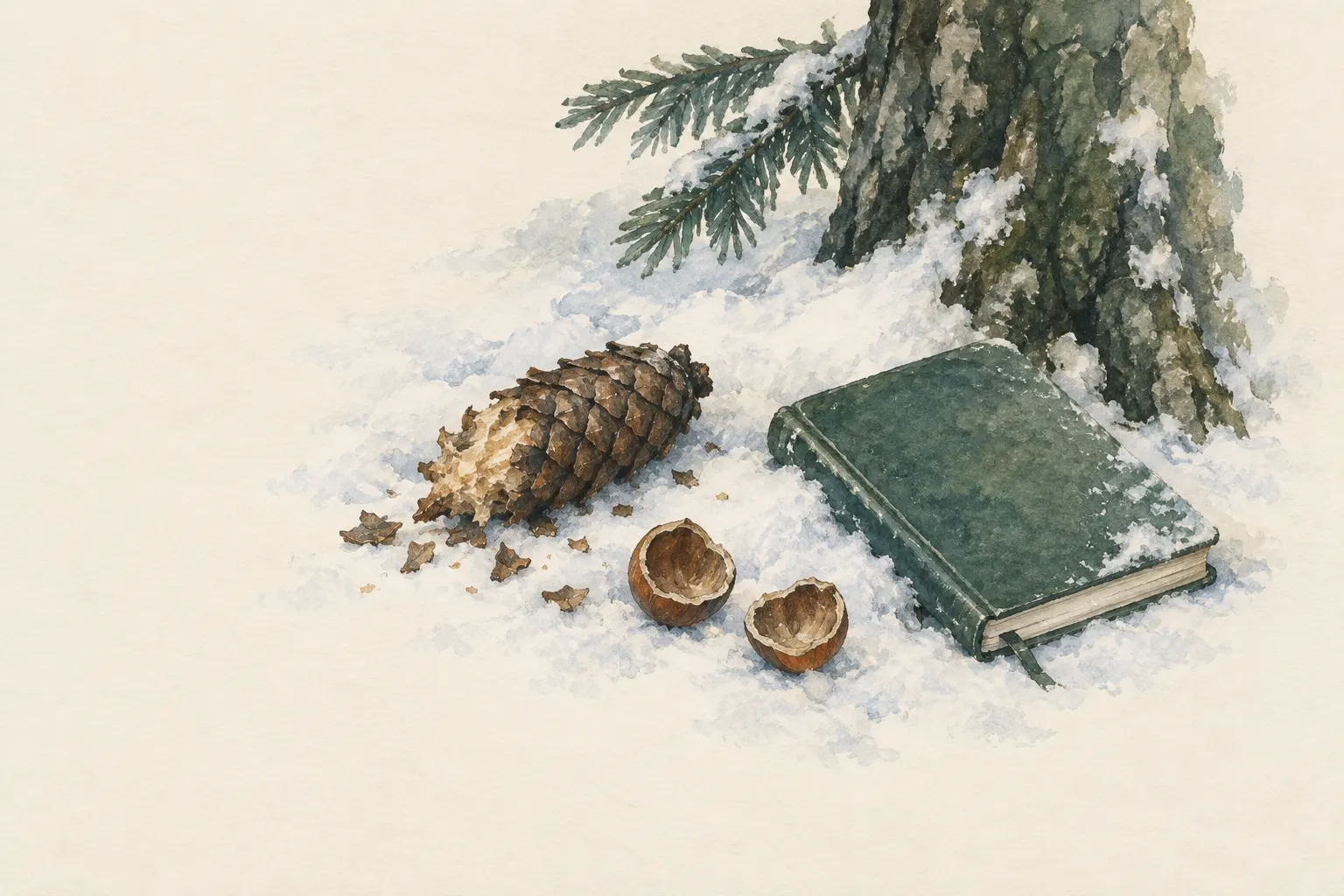
Squirrel trails lead from tree to tree and end at the trunk. Together with feeding signs the picture becomes clear: spruce cones gnawed down to a frayed core, with a heap of scales at the foot of the trunk, and hazelnuts split cleanly into two halves. Mice, on the other hand, gnaw small, round holes in nuts.
Safety: what to watch out for
Brown hares can transmit tularaemia. It also makes people ill, for example if they touch sick or dead animals. So you never touch dead hares and rabbits and you keep dogs away. If you find several dead animals, report it to the local hunting tenant or the veterinary office.
Young hares lie alone and motionless in a hollow during the day. They are not abandoned: the mother usually comes only once or twice a day, mainly at dusk, to suckle them, so that she does not attract predators. A young hare is not touched and not taken away. Move on at once and put your dog on the lead.
Droppings of hares, rabbits and rodents are not touched either. Wash your hands after tracking. Look after yourself in winter: a tracking walk in the snow is fun, but wet clothes and cold hands cool down quickly.
When it makes sense – and when not
Hopping tracks are ideal for beginners and children: they are common, conspicuous and have a clear pattern. After a night of fresh snow you find them in fields, meadows, parks and gardens. Once you have correctly determined the direction of travel, you also understand other trail patterns better.
It becomes difficult in leaves, grass or very deep, loose snow where no clear groups show. Young hares and adult rabbits can hardly be told apart. And mice also hop in groups of four, only tiny ones – there a size comparison with a tape measure helps.
Good to know
Hares have a clever trick: before lying down in their form, they often run back a little along their own trail and then make a long leap to the side. For a pursuer following its nose, the trail ends suddenly. For you it is an exciting puzzle – you often find the continuation a few metres to the side.
Hares and rabbits bite twigs off cleanly and at a slant with their sharp incisors, as if cut with a knife. Deer, by contrast, leave frayed edges because they lack upper incisors. So even without a print you can tell who has nibbled at a bush.
Step by step
Recognise the hop group
Four prints lie close together, then comes a gap and another four prints. Two of them are large and elongated – the hind feet – two smaller and rounder – the front feet.
- 1
Recognise the hop group
Four prints lie close together, then comes a gap and another four prints. Two of them are large and elongated – the hind feet – two smaller and rounder – the front feet.
- 2
Determine the direction of travel
The two large hind prints lie at the front of the group. So the animal travelled in the direction the large prints point to – not the other way round.
- 3
Brown hare: Y shape and long leaps
The two front feet land one behind the other, the two long hind feet side by side in front of them – together like a Y. Hind prints are about 5 to 6 centimetres long, clearly longer in snow when the whole sole prints (guide values). When fleeing the leaps become very long. Hares live in fields and at woodland edges and rest during the day in a shallow hollow, the form.
- 4
Rabbit: smaller and close to the burrow
The rabbit leaves the same pattern, but smaller and with shorter hops. Its tracks gather around burrows with many entrances, often in sandy soil, on banks or in parks, with dropping sites nearby.
- 5
Squirrel: rectangle from tree to tree
In squirrels the small front feet land side by side, and the hind feet also side by side in front of them – the group forms a rectangle. The toes are long and finger-like. The trail leads from tree to tree and ends at the trunk.
- 6
Add feeding signs
Gnawed spruce cones with a frayed core and heaps of scales at the foot of the trunk, as well as hazelnuts split cleanly in two halves, often come from squirrels. Hares and rabbits bite twigs off cleanly at a slant and gnaw bark in winter. Only look at droppings, do not touch them.
- 7
Consideration and hygiene
Leave young hares in the meadow and move on. Never touch dead hares and keep dogs away. In spring put dogs on the lead when young animals lie in the fields. Wash your hands after tracking.
Dead hares can transmit tularaemia.
Common mistakes
- Reading the trail backwards
- Confusing hare and squirrel patterns
- Thinking young hares are abandoned and taking them
- Picking up dead hares
- Attributing mouse feeding signs on nuts to squirrels (mice gnaw small round holes)
Quick view
Materials
Tape measure or folding rule
Mobile phone
The battery drains quickly in cold and with continuous screen and GPS use.
Do not plan on it as your only means of navigation or emergency calls.
Field notebook and pencil
Suitable for
- Fields, meadows, woodland edges and parks
- Winter walks with children
- Gardens with trees
Not suitable for
- Reliably separating brown hare and rabbit in young animals
- Leaf litter without prints
Prerequisites
- Tracks in snow, sand or mud
- Basic knowledge of gaits
Safety
- Never touch hares or rabbits found dead. Brown hares can transmit tularaemia, which also makes people ill. Keep dogs away; if you find several dead animals, report it to the local hunting tenant or the veterinary office.
- Young hares lie alone and motionless in a shallow hollow during the day – the mother only comes to suckle. Do not touch them or take them away, move on at once and put dogs on the lead.
- Never touch or sniff droppings (scat). Droppings of foxes, dogs and other wild animals can contain fox tapeworm eggs and other pathogens. Only photograph them, at most point with a small stick, then wash your hands thoroughly with soap.
How it works
Hopping animals push off with their strong hind legs, land first on their front feet and then swing the hind legs past the front feet. That is why the large hind prints lie at the front of the group – which confuses beginners, who often read the trail backwards. Hares and rabbits put their front feet down one after the other, squirrels, as tree climbers, side by side. So the arrangement of the four prints already reveals who passed by.
Advantages
- Simple, conspicuous pattern
- Ideal for children and beginners
- Common animals
Disadvantages
- Hare and rabbit hard to separate
- Hardly any prints in leaves
Deep knowledge
Background
Bang and Dahlström and Olsen describe the hop groups of brown hare, rabbit and squirrel, the form and the hare's side-leap before lying down, and typical feeding signs on cones and nuts. The CDC describe tularaemia and warn against handling sick or dead hares and rabbits without protection.
The brown hare has become rarer in many regions; quiet in the fields and dogs on the lead during the breeding season help it.
Variants
- The double-back before the form
- Before a hare lies down, it often runs back a bit along its own trail and then jumps far to the side. The trail seems to end suddenly – a nice puzzle for children.
- Mice and dormice
- Mice also often hop in groups of four, but tiny, and in snow sometimes leave a tail drag. Their trails end at small holes in the snow.
Common mistakes
- Reading the trail backwards
- Confusing hare and squirrel patterns
- Thinking young hares are abandoned and taking them
- Picking up dead hares
- Attributing mouse feeding signs on nuts to squirrels (mice gnaw small round holes)
Limits and risks
- Sizes are guide values
- No medical advice
Material alternatives
Derived from material properties: a substitute must have all relevant properties. Observe the notes on the substitute.
- Mobile phone
- Headlamp / flashlight, Battery lantern / LED light
Results come exclusively from structured entries. No improvised instructions are generated.
Sources
Preben Bang, Preben Dahlström – Oxford University Press (2001): Animal Tracks and Signs
Hop groups of hare, rabbit and squirrel, feeding signs on cones and nuts
Lars-Henrik Olsen – Princeton University Press (2013): Tracks and Signs of the Animals and Birds of Britain and Europe
Tracks of lagomorphs and squirrels in Europe
Centers for Disease Control and Prevention (CDC): Tularemia – Prevention
Tularaemia: do not handle sick or dead hares and rabbits unprotected