Boiling water and food without a pot: hot stones and bark vessels
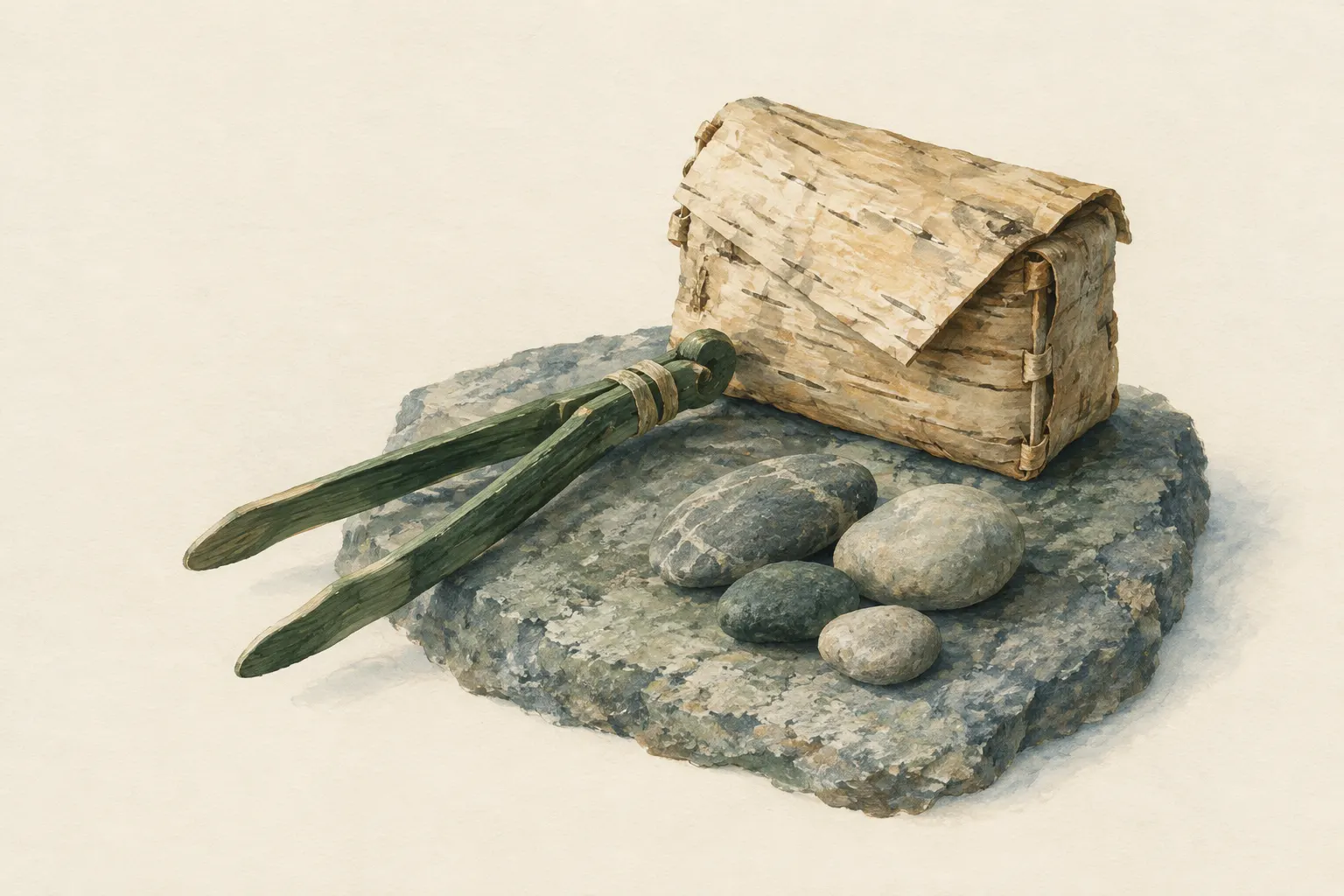
Without a pot you can still bring water to the boil: dry stones are heated in the fire and placed with wooden tongs into a vessel of wood, bark or leather until the water boils. A bark vessel can also be set directly on the embers – the water protects the bark as long as the embers stay below the waterline. Stones from streams or wet ground are off-limits because they can burst; plastic never goes into the fire.
- Heat stones for at least 30 minutes, then 10–30 minutes to the boil
Explained simply
Imagine you have no pot, but you need hot water. Then stones can help. A stone that has been in the fire for a long time gets very hot and stores that heat. When you put it with wooden tongs into a vessel of water, it hisses and the water gets warmer. With several hot stones one after another it starts to boil.
The right stones are very important. Stones from a stream or a wet bank sometimes have water inside them. In the fire this water turns to steam and the stone can shatter with a small bang. So you only take dry stones from a dry, raised place.
There is a second trick: a watertight vessel of birch bark full of water can stand on the embers without burning, because the water cools the bark. But plastic bottles or bags never go into the fire – they melt and give off poisonous smoke.
How it works
Stone can store a lot of heat and releases it slowly. A fist-sized stone that has lain in the embers for half an hour or longer is much hotter than boiling water. When you dip it in, the heat flows into the water until both are about equally warm. A single stone is not enough, but six to ten stones in rotation bring a few litres to the boil.
The bark vessel on the embers uses another property of water: at normal air pressure it does not get hotter than about 100 °C as long as it has not boiled away. The wet bark below the waterline passes its heat straight to the water and therefore does not reach the temperature at which it would burn. The dry rim above the water, however, can catch fire – so embers only, no flames.
This does not apply to plastic. Plastics soften well below the temperature of embers, deform and give off fumes. A plastic bottle in the fire can tip over, split open and spill boiling water.
What really matters
Choosing the stones is the most important step. Good cooking stones are dense, heavy for their size, roundish, without cracks and without layers. They come from a raised, dry place, not from the water, not from the bank, not from damp ground. Layered stones such as slate and porous stones absorb water and can shatter.
Plan enough stones and wood. While some stones cool in the water, the others heat up again in the fire. Tongs made from a green stick – carved thin in the middle and bent – or two sticks used like chopsticks keep your hands away from the heat. Ash is knocked off at the fire so the water stays cleaner.
For safe drinking water the same applies as with a pot: the water must boil vigorously, not just steam, and according to the CDC for at least one minute, three minutes above about 2,000 metres. Then let it settle briefly and skim off the clearer water at the top.
Safety: what to watch out for
Shattering stones can throw splinters and embers around. Keep your distance during the first heating, do not lean over the fire and do not let children come close. A stone that cracks or splits stays in the fire until everything has cooled and is then sorted out.
Hot stones soon look completely normal again but stay dangerously hot for a long time. Never touch them by hand, and after cooking put them where nobody will step on them. Water splashes as they go in – keep face and hands away from the vessel.
Never heat closed cans, bottles or jars – they can burst. Do not put plastic bottles, bags or drink cartons into the fire. And at the end the fire is put out completely: pour on water, stir, feel.
When it makes sense – and when not
Stone boiling is an emergency solution when there is no pot – for instance when gear has been lost. It can make drinking water safe and cook simple soups. Anyone with a metal pot, a tin can without plastic lining or a single-wall metal bottle should use that instead: it is quicker and cleaner.
During a fire ban or high wildfire danger stone boiling is not an option, because it needs a large, long-burning fire. Bark must not be peeled from living trees either; a bark vessel is made from the bark of dead, fallen wood and only where that is permitted.
Good to know
Archaeologists find cracked, fire-discoloured stones at many old campsites. They show that people cooked with hot stones long before pots were invented – in pits, wooden vessels, bark baskets and animal hides.
Boiling frees water from pathogens but removes neither salt nor chemicals. Cloudy water is left to settle first or filtered through a cloth. Ash and sand from the stones settle at the bottom after a few minutes.
Step by step
Choose the right stones
Collect six to ten dry, dense stones, egg- to fist-sized, from a raised, dry place. No stones from streams, lakes, banks or wet ground, no layered, cracked or porous stones.
Caution: Wet stones can burst.
- 1
Choose the right stones
Collect six to ten dry, dense stones, egg- to fist-sized, from a raised, dry place. No stones from streams, lakes, banks or wet ground, no layered, cracked or porous stones.
Wet stones can burst.
- 2
Prepare the vessel
Get a watertight vessel ready: hollowed wood, a folded bark container made from the bark of dead wood or a leather bag. Fill it no more than two-thirds with water and set it down firmly, away from the fire.
- 3
Heat the stones in the fire
Put the stones in a strong fire and leave them in the embers for at least half an hour until they are very hot. Keep your distance meanwhile. In the meantime make tongs from a green stick: carve it thin in the middle and bend it, or use two sticks like chopsticks.
- 4
Knock off the ash
Lift a stone out with the tongs and knock the ash off at the edge of the fireplace. If you like, dip it briefly into a second vessel to rinse it – you do not drink that water.
- 5
Add and swap stones
Let the hot stone slide carefully into the water. When it stops hissing it goes back into the fire and the next one goes in. Keep swapping until the water is at a rolling boil, then keep it bubbling for at least one minute (above about 2,000 m three minutes).
Expect splashes – keep your face away.
- 6
Cook food
For food, put small pieces into the boiling water and keep it simmering with more stones until everything is cooked through. Then wait a moment for ash and sand to settle.
- 7
Without stones: bark vessel on the embers
Fill a watertight bark vessel well with water and set it on a flat bed of embers, not in flames. The embers must stay below the waterline so that only wet bark gets heat; protect the dry rim from flames. Never use plastic bottles or bags this way.
No plastic in the fire.
Common mistakes
- Taking stones from the stream
- Too few or too cold stones
- Touching stones by hand
- Putting a plastic bottle into the fire
- Putting the bark vessel in flames instead of on embers
- Drinking the rinsing water
Quick view
Materials
Dry cooking stones (egg- to fist-sized)
Six to ten, dry
Never take stones from streams, lakes, banks or wet ground – trapped water can make them burst in the heat.
No layered, cracked or porous stones; keep your distance during the first heating.
Lighter, matches or ferro rod
Observe local fire bans.
Dry firewood
Collect only where permitted.
Sturdy sticks / poles
A green stick for the tongs
Do not cut live wood where prohibited.
Knife (fixed or locking blade)
Cut away from your body.
Rules on carrying knives differ by region – check local rules.
Water for extinguishing (bucket, canister or pot)
Have several litres ready before lighting.
Suitable for
- A lost or missing pot in an emergency
- Boiling water to make it safe to drink
- Cooking soups and small pieces
Not suitable for
- When a metal pot or single-wall metal bottle is available – it is easier with that
- A fire ban or high wildfire danger
- Children without close supervision
Prerequisites
- Able to light and keep a fire safely
- A watertight vessel of wood, bark or leather
- Permission for the fire and the wood
Safety
- Hot stones soon look harmless again but stay hot for a long time. Always pick them up with tongs, never by hand, and expect splashing water as they go in.
- Only take bark from dead, fallen trees. Peeling living trees damages them and is forbidden without the owner's permission.
How it works
Stone stores a lot of heat. A very hot stone releases this heat quickly into water – several stones in turn are enough to bring a few litres to the boil. The bark vessel on embers uses another trick: as long as there is water inside, the wet bark below the waterline can hardly get hotter than about 100 °C and therefore does not burn.
Advantages
- Boils water without a pot
- Needs only fire, stones and a vessel
- Good knowledge for emergencies
Disadvantages
- Slow and uses a lot of firewood
- Ash and grit in the water
- Risk of burns and splinters
Deep knowledge
Background
Cooking with hot stones is one of the oldest cooking techniques and was used by many peoples long before there were pots. Bushcraft books such as those by Ray Mears and Mors Kochanski show bark vessels and cooking without a metal pot.
The trick with the water in the vessel can be shown with a paper cup over a candle: as long as there is water inside, the paper below the waterline does not burn.
Variants
- Pit lined with hide or leather
- For larger amounts dig a small pit and line it with an animal hide or a piece of dense leather. Stone boiling works the same way in it. Plastic sheets, on the other hand, melt on the hot stones.
- Single-wall metal bottle
- A single-wall stainless steel bottle without its cap can be placed straight against the embers. Never heat double-wall insulated bottles – they can burst.
Common mistakes
- Taking stones from the stream
- Too few or too cold stones
- Touching stones by hand
- Putting a plastic bottle into the fire
- Putting the bark vessel in flames instead of on embers
- Drinking the rinsing water
Limits and risks
- Boiling does not remove chemicals or salt
- Sand and ash can only be reduced by settling and filtering
- No instructions for making wooden vessels
Material alternatives
Derived from material properties: a substitute must have all relevant properties. Observe the notes on the substitute.
- Lighter, matches or ferro rod
- Ferro rod (Practise before you need it.), Fire striker and hard stone (Carbon steel, not stainless.), Bow drill set (bow, spindle, hearth board, bearing block) (Use only dry wood.), Burning lens / magnifier (Never leave lying in the sun – fire risk.), Fire piston (Maintain the seal.), Pump drill (spindle, flywheel, crossbar, cord) (Fix the flywheel firmly and centrally – a loose disc can fly off.)
- Dry firewood
- Tinder (Carry in waterproof packaging.), Char cloth (charred cotton) (Store dry in a tin.), Finest-grade steel wool (Store separately from batteries – fire risk.), Fatwood (resin-rich wood) (Collect only dead wood where permitted.), Stove fuel (canister, liquid fuel, alcohol) (Store fuels apart from food and in original containers or bottles intended for them.), Petroleum jelly cotton balls (Use only pure cotton.), Cooking oil or cooking fat (tallow, lard) (Never put out burning fat with water – cover it with a lid to smother it.), Tree resin (spruce, pine) (Resin is flammable and sticks to the skin when hot – melt it only slowly over low heat.), Birch bark (from dead, fallen wood) (Never peel from living trees.)
Results come exclusively from structured entries. No improvised instructions are generated.
Sources
Headquarters, Department of the Army (USA) (2002): FM 3-05.70 Survival
Cooking without cookware, boiling water
Ray Mears – Hodder & Stoughton (2002): Bushcraft
Bark vessels and cooking with hot stones
Mors L. Kochanski – Lone Pine Publishing: Bushcraft: Outdoor Skills and Wilderness Survival
Bark vessels and cooking without a metal pot
Centers for Disease Control and Prevention: Making Water Safe in an Emergency
Boil water for at least 1 minute, 3 minutes above 2,000 m
World Health Organization (WHO) (2006): Five Keys to Safer Food Manual
Cook thoroughly