Cooking on a hot stone griddle
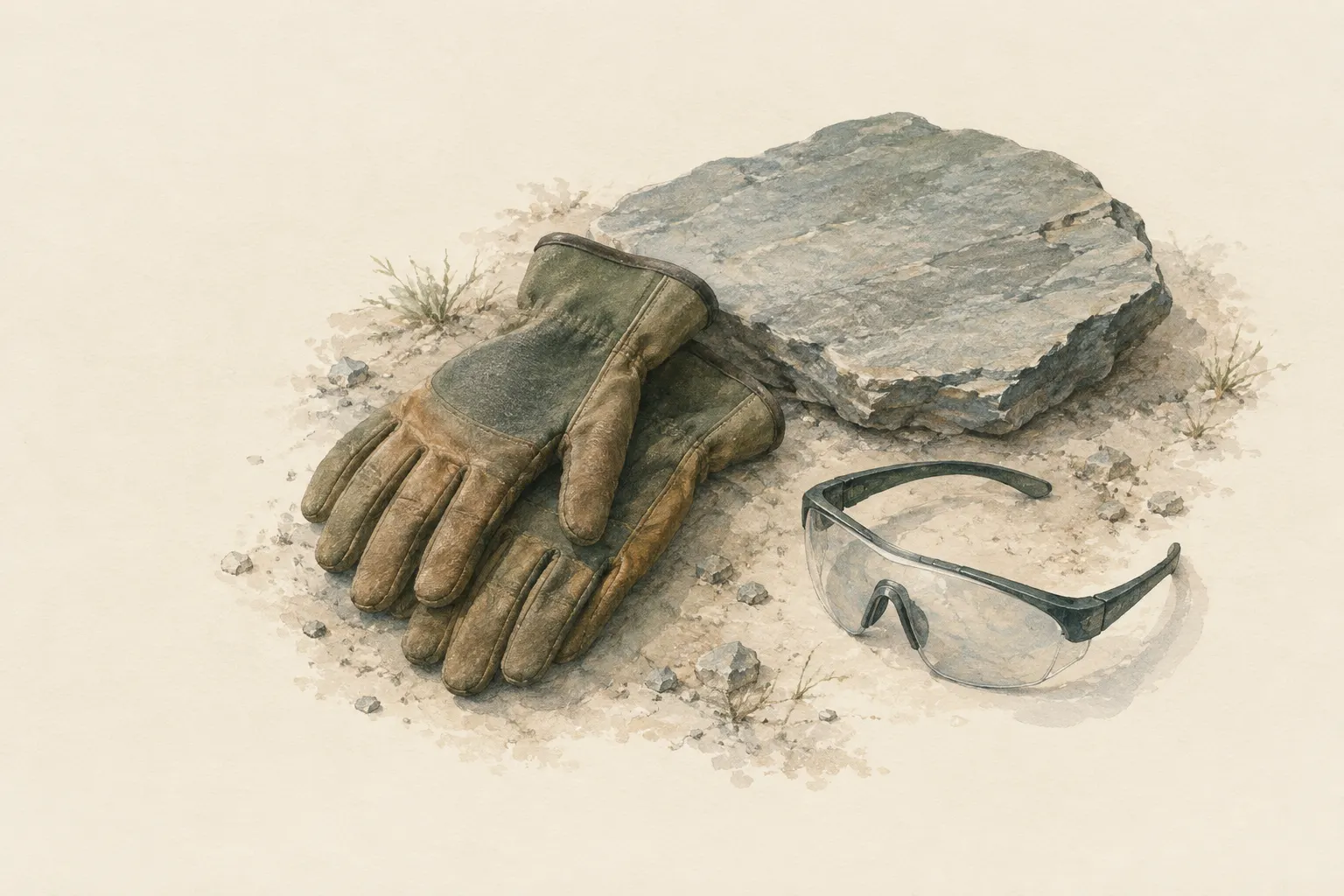
A flat, dry stone heated slowly over the fire becomes a griddle for flatbread, thin pieces of fish or slices of vegetables. The most important rule: never stones from streams, lakes, banks or wet ground – trapped water can make them burst in the heat. Keep your distance and wear safety glasses while heating it.
- Finding and heating the stone 45–90 minutes; frying a few minutes per piece
Explained simply
A flat stone can become a frying pan. You lay it on other stones, make a fire underneath and wait patiently until it is really hot. Then you can fry thin dough cakes, pieces of fish or slices of vegetables on it.
The most important rule is: never take a stone from a stream, a lake, a bank or wet ground. Water can be hidden inside such stones. When it gets hot, it turns to steam and suddenly needs much more space – then the stone can burst like a cracker and throw sharp, hot pieces around.
That is why you wear safety glasses while it heats and stay a few big steps away. And because a hot stone looks exactly like a cold one, nobody touches it with bare hands until it has cooled down completely.
How it works
Stone stores a lot of heat and releases it slowly and evenly – much like a heavy cast-iron pan. Once it is hot, it keeps frying for quite a while, even when the fire gets smaller. That makes it a good cooking surface for thin foods that cook quickly.
At the same time stone conducts heat poorly. If it gets very hot quickly on one side and stays cool on the other, it expands unevenly. Stresses build up, and the stone can crack. That is why it is heated slowly, with a small fire that is made bigger bit by bit.
The greatest danger is water inside. Stones from streams or wet ground often have fine pores and cracks filled with water. When heated, this turns into steam, which needs many times the space. If it cannot escape, it blows the stone apart – sometimes with a loud bang and flying fragments.
What really matters
Choosing the stone is the most important step. A good one is flat and heavy, about two to five centimetres thick and the size of a plate, from a dry place far from water. It should be solid and without cracks. Layered stones that split into slabs, porous or crumbly stones and glassy stones such as flint are ruled out.
A simple test helps: tap it with a second stone. A bright, clear sound suggests solid stone, a dull or rattling sound hidden cracks. If the stone feels damp or clammy-cold, leave it. No test guarantees safety – so distance and safety glasses remain a must anyway.
The stone lies firmly on two or three other dry stones, with about a hand-width of space for the fire underneath. The fire starts small and grows slowly; after half an hour to an hour the stone is evenly hot. A drop of water that hisses and dances at once shows that frying can begin. Only thin pieces go on the stone, no more than about one centimetre thick.
Safety: what to watch out for
Stones from streams, lakes, banks, bogs or wet ground are off-limits – even if they look dry in the sun. The water is inside. The US Army survival manual explicitly warns against putting wet or porous stones by the fire because they can explode. This rule also applies to the stones of a fire ring.
While heating, wear tight-fitting safety glasses, stay two to three metres away and do not lean over the stone. Children stay even further away. If the stone cracks or crackles, step back and wait. Never pour cold water onto a hot stone: it can crack, and the rising steam scalds hands and face.
A hot stone looks exactly like a cold one and stays hot for a long time. Mark it, tell everyone in the group and only touch it with leather gloves. With burns, cool at once with cool running water; with large burns call 112, in Austria also 144. Fire only where it is allowed, and put it out completely at the end.
When it makes sense – and when it does not
The hot stone is a fallback when you have no pan with you and want to fry thin foods – for example flatbread from flour you brought, or thin fish fillets. It needs time, wood and care, but rewards you with even, long-lasting heat.
The stone is not suitable for thick pieces of meat: they turn brown outside and stay raw inside. Anyone in a hurry is also better served by a stove and a light pan. A pan or pot lid is safer, faster and easier to keep clean.
If you cannot find a dry stone from dry ground, better do without. On peat or root-filled ground and when there is wildfire danger, the fire stays out too. Then embers at the edge of a safe fire site, a stick or cold food are the better choice.
Good to know
Sweep ash off the stone with a bundle of fresh grass or a stick. A little fat stops dough and fish from sticking. A flat carved wooden spatula is good for turning – metal gets hot quickly on the stone.
One variant is a small slab heated at the edge of the embers and pulled onto firm ground with gloves and sticks. It holds the heat for a while but is only enough for a few flat cakes. Safety glasses and distance apply here too.
After cooking, let the stone cool slowly where it is. Only when it can be pushed carefully aside with gloves do you put out the embers underneath completely. Anyone leaving the fire site checks with the back of the hand that everything really is cold.
Step by step
Choose the right stone
Look for a flat stone about two to five centimetres thick and the size of a plate in a dry place – for example on a slope or path edge, far from water. It should be heavy, solid and without cracks and must not consist of layers that come apart.
Caution: Never stones from a stream, lake, bank or wet ground.
- 1
Choose the right stone
Look for a flat stone about two to five centimetres thick and the size of a plate in a dry place – for example on a slope or path edge, far from water. It should be heavy, solid and without cracks and must not consist of layers that come apart.
Never stones from a stream, lake, bank or wet ground.
- 2
Check the stone
Tap it with a second stone: a bright, clear sound suggests solid stone, a dull or rattling sound suggests cracks. If the stone is damp, clammy-cold or crumbly, take a different one. Flint and glassy stones are ruled out because they shatter easily.
- 3
Set up the stone
Place the stone slab on two or three other dry stones at the edge of the fire site so there is a hand-width of space for the fire underneath. The slab should lie firmly and not wobble. Laid at a slight angle, fat runs off to the side.
- 4
Heat slowly – keep your distance
Light a small fire under the stone and only make it bigger gradually. Let the stone heat up evenly for at least half an hour to an hour. Wear the safety glasses, stay two to three metres away and do not lean over it.
If the stone cracks or crackles: step away, wait.
- 5
Test the heat and clean
Let one drop of water fall onto the stone from a little distance: if it hisses at once and dances, the stone is hot enough. Sweep off ash with a bundle of fresh grass or a stick and rub the surface with a little fat if you have some.
- 6
Fry thin pieces and turn
Only put thin pieces on: flat dough cakes, fish fillets or vegetable slices no more than one centimetre thick. Turn them with a wooden spatula or small stick when the underside is browned. Fish is done when it is opaque throughout and flakes easily; dough when it is dry inside.
- 7
Let it cool and put the fire out
Let the fire die down and the stone cool slowly where it is – never pour water onto it. Put out the embers beside and underneath it completely as soon as the stone can be pushed carefully aside with the gloves. Check with the back of your hand that everything is cold before you leave.
Common mistakes
- Taking a stone from a stream or bank
- Putting the stone straight into a big, hot fire
- Leaning over the stone while it heats
- Working without safety glasses
- Frying thick pieces of meat
- Pouring cold water on the hot stone
- Leaving the hot stone unmarked
Quick view
Materials
Flat, dry stone as a griddle
About 2–5 cm thick, dry, without cracks
Never stones from streams, lakes, banks or wet ground – trapped water can make them burst in the heat.
No layered, cracked, porous or glassy stones (e.g. flint); keep your distance during the first heating and wear safety glasses.
Close-fitting safety goggles
Wear while heating
Leather or heat-resistant gloves
Synthetic gloves melt onto the skin – only leather or certified heat-resistant gloves.
Wet gloves conduct heat quickly.
Barbecue tongs or wooden tongs
Long tongs keep your hands away from the embers.
Dry firewood
Collect only where permitted.
Lighter, matches or ferro rod
Observe local fire bans.
Water for extinguishing (bucket, canister or pot)
Have several litres ready before lighting.
Suitable for
- Flatbread, pancake batter, bannock
- Thin fish fillets and vegetable slices
- Cooking without a pan
Not suitable for
- Stones from streams, lakes, banks, bogs or wet ground
- Layered, cracked, porous or glassy stones
- Thick pieces of meat – they cook outside and stay raw inside
- A fire ban, or dry meadows and forests
Prerequisites
- A permitted fire site on mineral ground
- A suitable, dry stone from dry ground
- Safety glasses and leather gloves
- Time to heat and cool slowly
Safety
- A hot stone looks exactly like a cold one and stays hot for a very long time. Mark it, only touch it with leather gloves and warn everyone in the group. With burns, cool at once with cool running water; with large burns call 112 (in Austria also 144).
- Fire only where it is allowed and there is no wildfire danger – use existing fire sites, keep water ready to put it out and extinguish the fire completely at the end. Cut green wood from living shrubs only with the landowner's permission.
How it works
Stone stores heat and passes it evenly to the food, much like a heavy cast-iron pan. Because stone conducts heat poorly, it has to be warmed slowly and evenly from below – otherwise stresses build up and it can crack. Water inside a stone expands enormously when it turns to steam; that is why wet stones are dangerous.
Advantages
- No cookware needed
- Even heat that lasts a long time
- Good for flatbread
Disadvantages
- Danger from bursting stones
- Long heating and cooling time
- Ash and dirt on the food
- Only suitable for thin pieces
Deep knowledge
Background
People have cooked on hot stones since the Stone Age. The US Army survival manual (FM 3-05.70) explicitly warns against putting wet or porous stones by the fire because they can explode when heated; bushcraft textbooks repeat this warning for stones from water.
The stone is no match for a pan in cleanliness: it is only roughly cleaned. That is why it suits mainly foods that are cooked right through anyway.
Variants
- Pulling the stone from the embers
- Instead of on supporting stones, a small slab can be heated at the edge of the embers and then pulled onto firm ground with gloves and sticks. It stays hot enough for flatbread for a while. Safety glasses and distance apply here too.
- A pan is better
- A light pan or pot lid is safer, faster and more hygienic than a stone. The hot stone is a fallback when no cookware is available.
Common mistakes
- Taking a stone from a stream or bank
- Putting the stone straight into a big, hot fire
- Leaning over the stone while it heats
- Working without safety glasses
- Frying thick pieces of meat
- Pouring cold water on the hot stone
- Leaving the hot stone unmarked
Limits and risks
- No stone is guaranteed safe – even dry stones can crack
- No rock identification
- Only applies where fire is allowed
Material alternatives
Derived from material properties: a substitute must have all relevant properties. Observe the notes on the substitute.
- Dry firewood
- Tinder (Carry in waterproof packaging.), Char cloth (charred cotton) (Store dry in a tin.), Finest-grade steel wool (Store separately from batteries – fire risk.), Fatwood (resin-rich wood) (Collect only dead wood where permitted.), Stove fuel (canister, liquid fuel, alcohol) (Store fuels apart from food and in original containers or bottles intended for them.), Petroleum jelly cotton balls (Use only pure cotton.), Cooking oil or cooking fat (tallow, lard) (Never put out burning fat with water – cover it with a lid to smother it.), Tree resin (spruce, pine) (Resin is flammable and sticks to the skin when hot – melt it only slowly over low heat.), Birch bark (from dead, fallen wood) (Never peel from living trees.)
- Lighter, matches or ferro rod
- Ferro rod (Practise before you need it.), Fire striker and hard stone (Carbon steel, not stainless.), Bow drill set (bow, spindle, hearth board, bearing block) (Use only dry wood.), Burning lens / magnifier (Never leave lying in the sun – fire risk.), Fire piston (Maintain the seal.), Pump drill (spindle, flywheel, crossbar, cord) (Fix the flywheel firmly and centrally – a loose disc can fly off.)
Results come exclusively from structured entries. No improvised instructions are generated.
Sources
Headquarters, Department of the Army (USA) (2002): FM 3-05.70 Survival
No wet or porous stones by the fire – they can explode when heated
Mors L. Kochanski – Lone Pine Publishing: Bushcraft: Outdoor Skills and Wilderness Survival
Cooking without cookware; warning about stones from water
Ray Mears – Hodder & Stoughton (2002): Bushcraft
Cooking with hot stones at the campfire
European Resuscitation Council – Resuscitation (journal) (2021): European Resuscitation Council Guidelines 2021: First Aid
Cool burns at once with cool running water; call emergency services for severe burns
Leave No Trace Center for Outdoor Ethics: The Seven Principles of Leave No Trace (Principle 5: Minimize Campfire Impacts)
Keep fires small, use existing fire sites, put fires out completely