Checking traps, killing animals quickly and dismantling traps
Anyone who sets traps in an emergency is responsible for every animal in them. That means a fixed checking round at least once a day, approaching carefully, releasing pets and protected species at once, killing caught small game quickly and safely, protecting yourself from diseases such as tularemia, and finally dismantling every trap completely.
- Checking round once or twice daily
Explained simply
Anyone who sets a trap has a big responsibility. An animal sitting in a trap is frightened and often in pain. That is why you must check every day – ideally morning and evening – so it does not have to suffer for long.
If the wrong animal is in the trap, for example a cat or a rare animal, it is freed at once. A jacket over its head calms it, and you take great care that it does not bite. If a rabbit is caught that you have to eat in an emergency, it is killed quickly with a single strong blow so that it does not suffer.
Afterwards you wash your hands well, because wild animals can carry diseases. An animal that looks sick or strangely tame is not eaten. And when the emergency is over, you take down every single trap again – none may be forgotten.
How it works
Checking starts with a plan: a fixed round, always at the same time, with the list of all traps in hand. Many small animals are active at dusk and dawn, so early morning and evening are good times. Each trap is ticked off on the list so that none is missed.
At each trap you first stop a few steps away. That way you do not frighten a caught animal unnecessarily and can calmly assess: is the trap empty, sprung or occupied? Is it a target animal, a pet or a protected species? Is it alive? Only then do you act.
There is a fixed procedure for every outcome: check empty traps, reset or dismantle sprung ones, free non-target animals, recover dead animals and kill live small game quickly and safely. If you know these procedures beforehand, you act more calmly and quickly in the situation – and that shortens suffering.
What really matters
When releasing, darkness helps: a jacket or cloth over the head and body calms most animals. Then you widen the snare with a stick or cut the cord without bringing your hand near the mouth. Large or well-armed animals such as fox, badger, wild boar or a large dog are not freed by you – keep your distance and call the police.
When killing small game, determination counts. The animal is held still with the jacket or a stick, then a strong, well-aimed blow with a club to the back of the head directly behind the ears follows at once, if necessary a second one immediately. Hesitation or half-hearted blows prolong suffering.
Afterwards you check that the animal is really dead: no breathing, a limp body and no blinking when a grass stem carefully touches the surface of the eye. If you are unsure, repeat the blow. Only then is the animal taken out of the trap.
Safety: what to watch out for
Trapped animals bite and scratch in panic, even small ones. Gloves and a jacket protect you. Every animal bite needs medical care: rinse the wound thoroughly with water and soap, cover it and get help as soon as possible – emergency number 112, in Austria also 144.
Wild animals can transmit diseases. In Central Europe, for example, tularemia is known in brown hares and can be transmitted by handling and butchering. So: gloves, then wash hands and knife thoroughly, cook meat right through. Animals that look sick, emaciated, injured or unusually tame, or were found already dead, are not eaten.
With deadfalls the rule remains: the hand never goes under the weight. You lift it from the side using a stick as a lever. Even a trap that seems to have gone off can drop again.
When it makes sense – and when not
These procedures apply to every emergency in which traps have been set – no trap may be set without them. Anyone who is not willing or not able to check daily and kill an animal quickly does not set a trap.
Releasing and reporting also apply in everyday life: anyone who finds someone else's snare or trap with an animal in it frees it only if that can be done without danger, and reports the find to the police. Empty traps are not touched, so that evidence is preserved.
Good to know
Killing an animal is hard for most people, even in an emergency. That is normal. It helps to make clear to yourself beforehand that a quick, determined procedure spares the animal the most suffering.
Every emergency ends with dismantling: every trap according to the list, deadfalls set off with the stick, sticks and stones scattered, wire, cord and tape taken away and counted. If you could not dismantle everything, tell the rescuers or the police exactly where something is still standing – otherwise a forgotten snare goes on catching animals for years.
The German Animal Welfare Act requires that a vertebrate be killed only with the necessary knowledge and as painlessly as possible. The international humane trapping standards judge traps by how quickly they kill. Both show: even in an emergency, animal welfare is not a side issue.
Step by step
Plan a fixed round
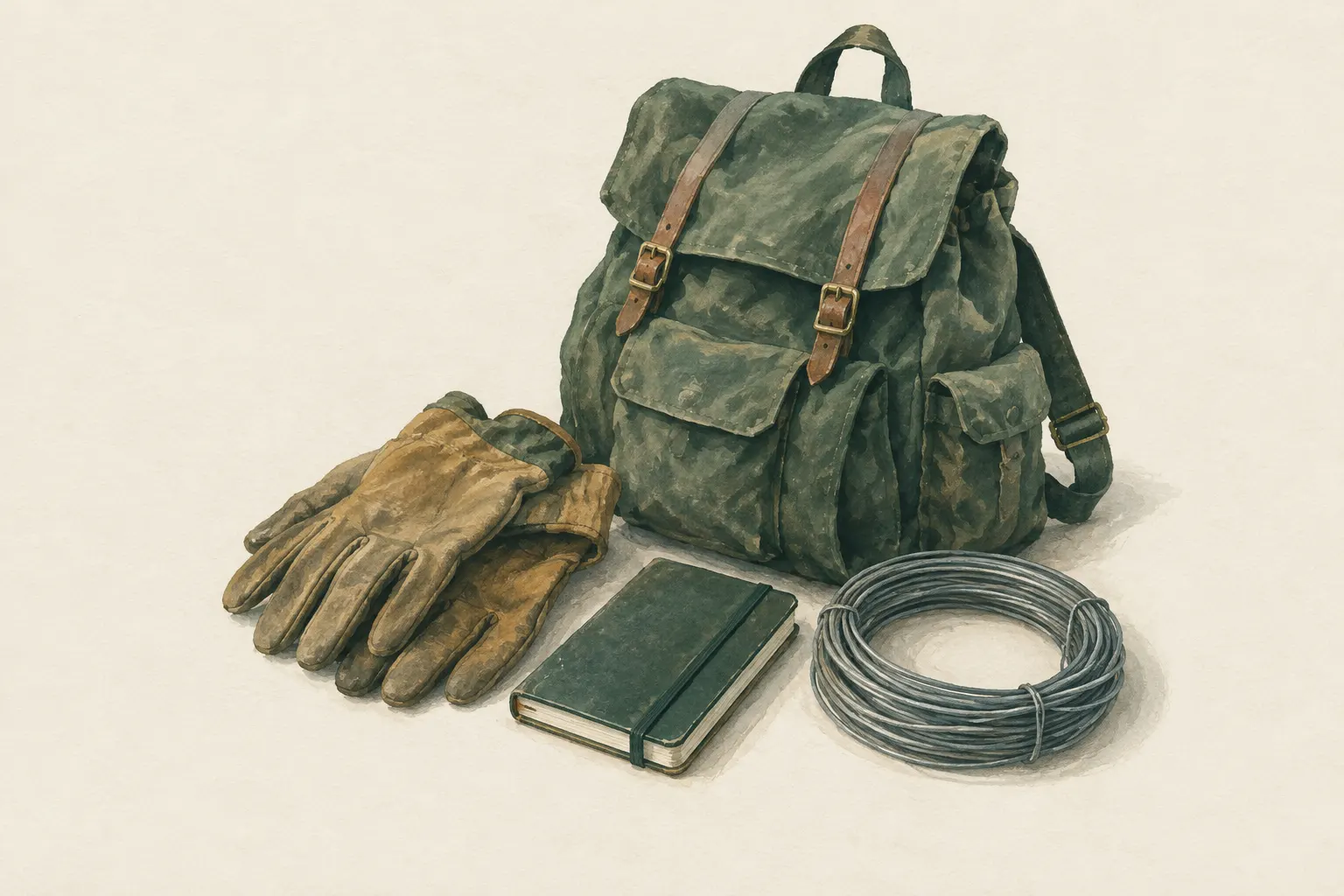
Every day at the same time, ideally early in the morning and in the evening, walk to all traps in order using your list. Take gloves, a sturdy club, a long stick, a knife and a jacket or cloth with you. Tick off every trap on the list.
- 1
Plan a fixed round
Every day at the same time, ideally early in the morning and in the evening, walk to all traps in order using your list. Take gloves, a sturdy club, a long stick, a knife and a jacket or cloth with you. Tick off every trap on the list.
- 2
Approach carefully and assess
Stop a few steps away and look first: is the trap untouched, sprung, or is there an animal in it? Which animal – target species, pet, protected species? Is it alive? Only when you know what you are going to do do you approach slowly and calmly.
- 3
Release non-target animals at once
Pets and protected species are freed at once. Lay a jacket over the head and body – animals calm down in the dark. Widen the snare with a stick or cut cord without bringing your hand near the mouth. With large or well-armed animals keep your distance and call for help (police: Germany 110, Austria 133).
Do not simply let badly injured non-target animals go – get help through the police or a hunter.
- 4
Open deadfalls from the side
If a deadfall has dropped, lift the weight from the side using a stick as a lever, never with your hand underneath. Check whether the animal is dead. If a trap has been set off without a catch, reset it following the rules or dismantle it.
- 5
Kill live small game quickly
Hold the animal still with the jacket or the long stick so it cannot move. Then, without hesitating, deliver a strong, well-aimed blow with the club to the back of the head, directly behind the ears. If necessary, a second one at once. Hesitating prolongs suffering.
- 6
Confirm death
The animal is no longer breathing, the body is limp, and if you carefully touch the surface of the eye with a grass stem, it does not blink. If you are unsure, repeat the blow. Only then do you take the animal out of the trap.
- 7
Watch for disease
Wear gloves. If the animal looks sick or emaciated, has sores or unusual discharge, or was unusually tame or confused beforehand, it is not eaten but buried. Always cook meat right through, then wash hands and knife thoroughly.
- 8
Dismantle all traps completely
When the emergency ends or you can no longer manage the round, dismantle all traps using the list: set off deadfalls with the stick, scatter sticks and stones, take wire, cord and tape with you. At the end the number of dismantled traps must match the number set.
Common mistakes
- Skipping checks or going too rarely
- Walking straight up to the trap without looking
- Reaching near the mouth with bare hands
- Hesitating when killing
- Not confirming death
- Eating sick or tame animals
- Forgetting traps when leaving
Quick view
Materials
Sturdy work gloves
Against bites, scratches and germs
When handling flood mud or chemicals, also wear waterproof gloves.
Sturdy sticks / poles
A sturdy club and a long stick
Do not cut live wood where prohibited.
Knife (fixed or locking blade)
For cutting cord
Cut away from your body.
Rules on carrying knives differ by region – check local rules.
Labels and waterproof marker
List and sketch of all traps
Suitable for
- Every emergency in which traps have been set
- Also for people who have found someone else's traps (release, report)
Not suitable for
- Large or well-armed animals (fox, badger, wild boar, large dog) – keep your distance and call for help
- Children – they stay behind during checks
Prerequisites
- List and sketch of all traps set
- Gloves or a strong cloth
- Basic rules from “Traps in a genuine emergency” read
Safety
- Wild animals can transmit diseases, in hares for example tularemia (rabbit fever). Always wear gloves, wash your hands afterwards, cook meat right through and never eat animals that seem sick, emaciated, unusually tame or were found already dead.
How it works
Animal welfare in an emergency means keeping the time an animal spends in a trap as short as possible and bringing about death quickly and safely. For small game a strong, well-aimed blow to the back of the head is the usual method, because it knocks out the brain at once. Non-target animals are released, and because every forgotten trap keeps on killing, every emergency ends with complete dismantling.
Advantages
- Shortens animal suffering
- Protects pets and protected species
- Protects you from bites and disease
Disadvantages
- Costs time and strength every day
- Killing is emotionally hard
- Not every non-target catch can be freed safely
Deep knowledge
Background
The German Animal Welfare Act requires that a vertebrate be killed only by someone with the necessary knowledge and skills and that pain be avoided as far as circumstances allow. The international humane trapping standards judge traps by how quickly they kill or how unharmed they hold an animal.
Tularemia is a bacterial disease that in Central Europe occurs mainly in brown hares and can be transmitted by handling or butchering infected animals. Gloves and thorough cooking reduce the risk.
Variants
- Found someone else's trap
- Anyone who finds a snare or trap in everyday life does not touch it, notes the location and reports it to the police. A caught pet or wild animal is only freed if that can be done without danger.
Common mistakes
- Skipping checks or going too rarely
- Walking straight up to the trap without looking
- Reaching near the mouth with bare hands
- Hesitating when killing
- Not confirming death
- Eating sick or tame animals
- Forgetting traps when leaving
Limits and risks
- No substitute for hunting training
- No butchering instructions – only basic hygiene rules
- First aid at lay level only
Sources
Headquarters, Department of the Army (USA) (2002): FM 3-05.70 Survival
Check traps regularly; simple snares usually do not kill
Bundesrepublik Deutschland – Bundesministerium der Justiz (gesetze-im-internet.de) (2006): Tierschutzgesetz (TierSchG) in der Fassung der Bekanntmachung vom 18. Mai 2006
§ 17: offence of killing without good reason or causing considerable suffering; § 4: killing only with the necessary knowledge and avoiding pain as far as possible
Republik Österreich – Rechtsinformationssystem des Bundes (RIS) (2004): Bundesgesetz über den Schutz der Tiere (Tierschutzgesetz – TSchG), BGBl. I Nr. 118/2004
Ban on cruelty and on killing animals without good reason
Bundesrepublik Deutschland – Bundesministerium der Justiz (gesetze-im-internet.de) (1976): Bundesjagdgesetz (BJagdG) in der Fassung der Bekanntmachung vom 29. September 1976
§ 19: ban on snares of any kind and on traps that neither catch unharmed nor kill instantly
Bundesrepublik Deutschland – Bundesministerium der Justiz (gesetze-im-internet.de): Strafgesetzbuch (StGB) – § 292 Jagdwilderei
§ 292: poaching; using snares counts as a particularly serious case
Republik Österreich – Rechtsinformationssystem des Bundes (RIS) (1974): Strafgesetzbuch (StGB), BGBl. Nr. 60/1974 – §§ 137, 138 (Eingriff in fremdes Jagd- oder Fischereirecht) und § 222 (Tierquälerei)
§§ 137, 138: interference with another person's hunting rights; § 222: cruelty to animals
European Community, Canada, Russian Federation: Agreement on International Humane Trapping Standards between the European Community, Canada and the Russian Federation
International humane trapping standards: traps must kill quickly or restrain without injury