










Where are the fish? Reading the water
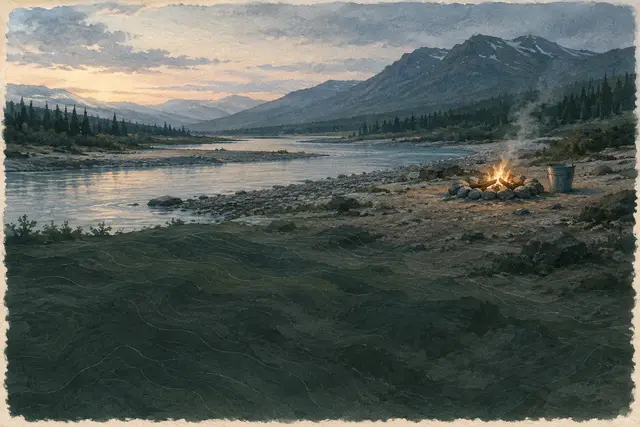
Fish are not spread evenly. They hold where they need little strength, food drifts past and they are protected from predators: behind rocks, under overhanging banks, in deep pools, along current seams and in shade. Anyone who can read the water catches more with a few casts than others do in hours – in ordinary licensed angling just as in an emergency.
- 10–20 minutes of watching before fishing
Expliqué simplement
Fish are a bit lazy – and that is clever. They do not want to swim against the current all day. So they hide behind big rocks where the water is calm and wait until something to eat is washed past them.
They also like dark, deep spots, shade under trees and holes under the bank. No heron can see them there. And on hot days it is nice and cool.
Anyone who first watches quietly from the bank before fishing will find these places. It is like a hide-and-seek game: where would you lie down if you were a fish?
Comment ça marche
A fish has to gain more energy from what it eats than it uses swimming. In flowing water it therefore seeks places where the current is weak but which border directly on fast water. There it saves strength and only needs to dart across briefly to snap up something drifting past.
Such places form behind and in front of large rocks, at roots and fallen trees, on bends and where fast and slow water meet. This boundary is called a current seam; it can often be seen as a line of foam.
Then there is cover and water temperature. Deep pools, undercut banks and shade protect against herons and kingfishers. In summer deep water is cooler and holds more oxygen; in winter it stays warmer.
Ce qui compte vraiment
Look first, then fish. Ten minutes of quiet watching from the bank saves hours. Shadows and footsteps scare fish, so walk quietly, keep a little back from the edge and use bushes as cover.
Work upstream: walking upstream, the mud you stir up drifts away behind you. Walking downstream, you send your mud ahead to the fish as a warning.
Mind the time of day: most fish feed at dusk and dawn; at midday in full sun they withdraw.
Sécurité : à quoi faire attention
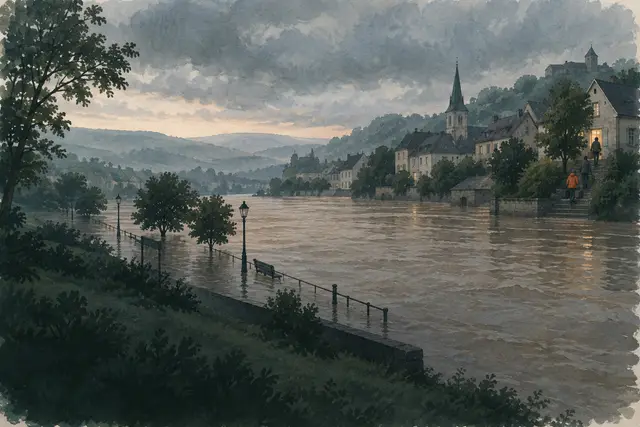
Undercut banks, where fish like to hold, can break off under your weight. Do not step right to the edge. Wet stones are slippery, and in floods you stay away from the bank altogether.
Anyone may watch. Fishing only with a licence and permission from the fishing-rights holder – or in a genuine emergency.
Pas à pas
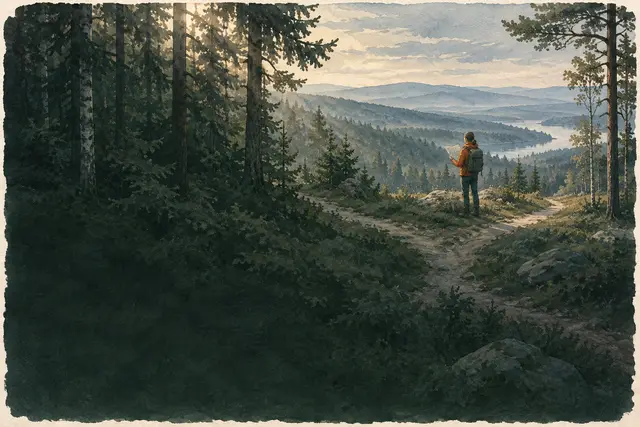
Approach quietly
Fish feel footsteps and see movement on the bank. Walk slowly, stay a little back from the edge and use bushes as cover. Make sure your shadow does not fall on the water.
- 1
Approach quietly
Fish feel footsteps and see movement on the bank. Walk slowly, stay a little back from the edge and use bushes as cover. Make sure your shadow does not fall on the water.
- 2
Read the current
Look at where the water flows fast and where it flows slowly. The boundary between the two – the current seam – can often be seen as a line of foam or small eddies. Food drifts along it, and fish hold in the calm part beside it.
- 3
Behind rocks and obstacles
Behind large rocks, fallen trees and bridge piers a calm zone forms. Fish hold there with their heads facing upstream. Right in front of a large rock there is often a small cushion of calm water as well.
- 4
Pools and deep spots
Where water falls over a step it digs a deep pool. Deep spots are cooler in summer and warmer in winter and offer protection from predators. Larger fish often hold at the tail of a pool, where it becomes shallower again.
- 5
Banks, roots and shade
Undercut banks, roots, overhanging branches and plants offer cover and drop insects into the water. On hot days in particular, fish hold in the shade.
- 6
In a lake: drop-offs and inflows
In still water fish look for places where it suddenly gets deeper, reed edges, sunken trees and the mouths of streams that bring fresh, oxygen-rich water and food.
- 7
Time of day and weather
Fish usually feed most at dawn and dusk. At midday in full sun they withdraw to depth and shade. Light rain or an overcast sky often makes them less shy.
- 8
Make a plan
Draw a small sketch with the best two or three spots. Start with the nearest spot and work your way upstream – that way stirred-up mud drifts away behind you and does not warn the fish.
Erreurs courantes
- Stomping noisily along the bank
- Casting into the middle of the fastest current
- A shadow on the water
- Working downstream and warning the fish with mud
- Searching the shallow bank in midday sun
Aperçu rapide
Matériel
Chapeau de soleil à large bord
Cap or hat against glare
Carnet de notes et crayon
For a sketch of the good spots
Convient pour
- Streams, rivers, lakes and ponds
- Before any angling, fish spear or set line
- Children learning to observe
Ne convient pas pour
- Floods and murky, raging water – then stay away from the bank altogether
Prérequis
- Permission to fish – or genuine danger to life
- Position stable sur la berge
Sécurité
- Undercut banks break off easily and wet stones are slippery. Never step right to the edge and do not climb into the water to see better.
- Watching is allowed everywhere; fishing only with a licence and permission of the fishing-rights holder.
Comment ça marche
A fish has to gain more energy from its food than it uses swimming. In flowing water it therefore seeks calm spots right next to fast current: it saves strength and snaps at whatever drifts past. It also needs cover from herons and other predators and – especially in summer – cool, oxygen-rich water. Where these three things meet, fish hold.
Avantages
- Saves a lot of time and strength
- Helps with every fishing method
- Children enjoy it
Inconvénients
- Needs a little patience
- Harder in murky water
Connaissances approfondies
Contexte technique
Anglers talk about “reading” a stretch of water. They mean working out from the current, depth and banks where fish hold. Survival manuals recommend the same: fish gather in places with cover, calm water and food, and they feed mostly at dusk and dawn.
Behind this is the fish's energy balance: it chooses places where it gets as much food as possible for as little effort as possible – almost exactly the same calculation a person in an emergency has to make.
Variantes
- With polarised sunglasses
- Polarised glasses remove the reflection from the water surface. This lets you see rocks, drop-offs and sometimes the fish themselves.
- En hiver
- In the cold, fish move little and gather in deep, calm areas. Fish slowly and deep.
Erreurs courantes
- Stomping noisily along the bank
- Casting into the middle of the fastest current
- A shadow on the water
- Working downstream and warning the fish with mud
- Searching the shallow bank in midday sun
Limites et risques
- General rules that vary by fish species and water
- No details on individual fish species or closed seasons
Sources (2)
- Headquarters, Department of the Army (USA) (2002): FM 3-05.70 Survival · Fish hold in places with cover and calm water, feed mainly at dusk and dawn; lies vary with weather and time of day
- Freistaat Bayern – Bayerische Staatskanzlei (gesetze-bayern.de) (2008): Bayerisches Fischereigesetz (BayFiG) · Fishing only with permission