






















Trousers as a float: a stopgap in warm water
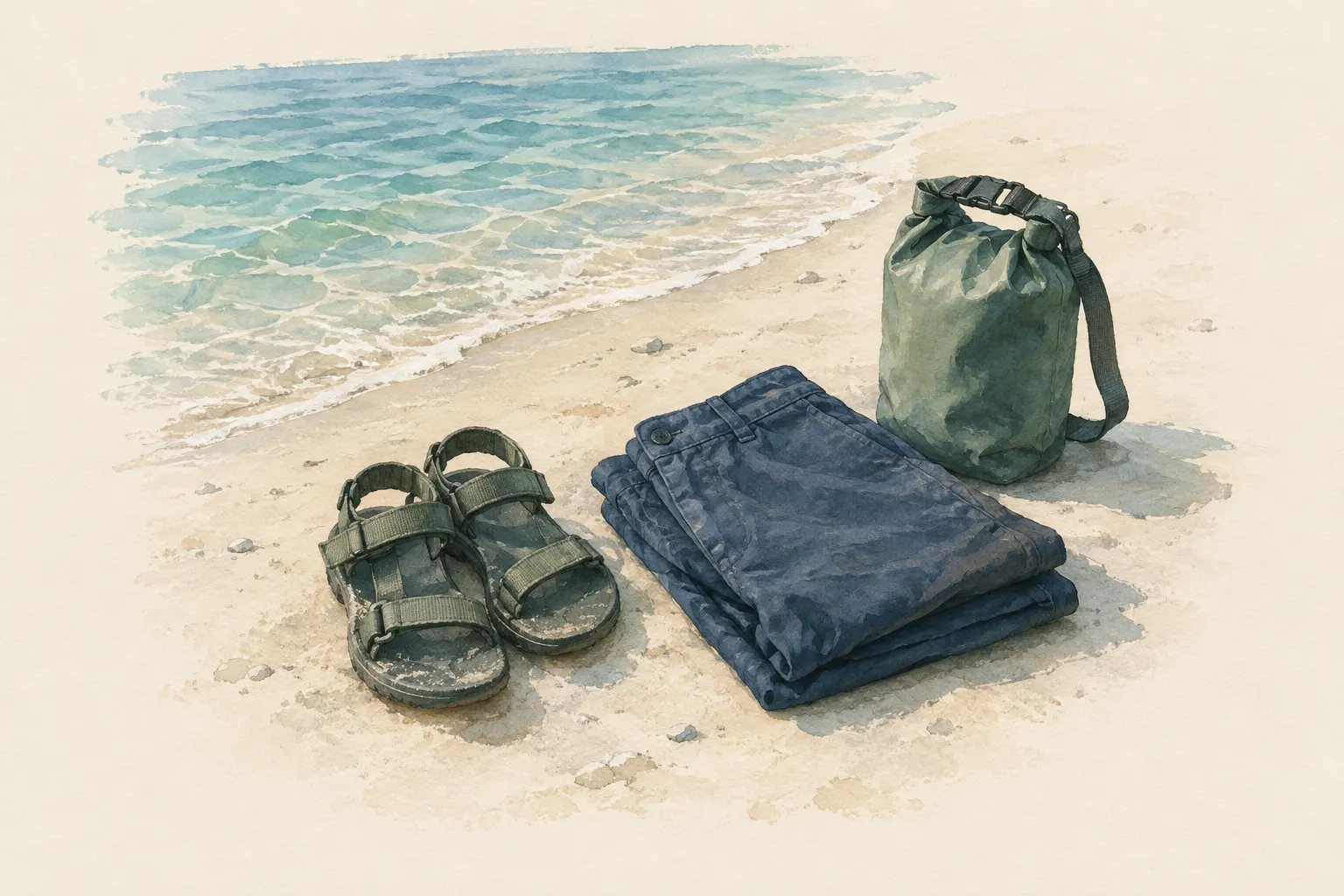
Without a life jacket, a pair of long trousers can become a simple float: knot the legs, swing air into them, hold the waistband closed – and the inflated legs keep your head above water. It is an old trick from navy and swimming training. Here you learn how it works, why it only makes sense in warm, calm water and why in cold water you keep your clothes on and float on your back.
- 1–2 minutes to inflate; top up every few minutes
Explained simply
If you have no life jacket in warm water, a pair of long trousers can help. You knot the trouser legs at the bottom and swing air into them.
The two inflated legs then lie round your neck like a swimming ring and keep your head above water.
But: in cold water you never take off clothes. There you lie on your back and float calmly.
How it works
Wet fabric only lets air through slowly, because water seals the tiny holes in the weave. If you slap the open waistband onto the water with a swing, air is forced into the knotted legs.
The air escapes little by little. So you have to top up every few minutes by swinging again or blowing air into the waistband under water.
What matters
Dense fabric such as jeans or sturdy hiking trousers works better than thin, loose fabric.
Calm: float and catch your breath first, then undress and knot calmly.
Hold the waistband firmly together under water, otherwise the air is gone at once.
Safety: what to watch out for
Only in warm, calm water – never take off clothes in cold water.
The trousers do not replace a life jacket or rescue. Keep waving and shouting.
Practise only in a supervised pool.
Step by step
Float and breathe first
Lie on your back and breathe calmly until you feel safe. In warm water you can slip off your shoes.
- 1
Float and breathe first
Lie on your back and breathe calmly until you feel safe. In warm water you can slip off your shoes.
- 2
Take off the trousers
Take the trousers off under water while you briefly put your face in the water on one breath. Then back onto your back.
- 3
Knot the legs
Knot both trouser legs firmly at the ends, each on its own or both together. Close the zip.
- 4
Swing air in
Hold the trousers by the waistband behind your head, swing them forcefully over your head and slap the open waistband onto the water. The legs fill with air.
- 5
Hold the waistband closed, head in between
Hold the waistband together under water with your hand and put your head between the two inflated legs – they carry you like a swimming ring.
- 6
Top up
When the trousers go limp, top up: open the waistband and blow air in under water or swing again. Wave and shout in between.
Common mistakes
- Taking off clothes in cold water
- Starting to undress when exhausted
- Letting go of the waistband – the air escapes
- Relying only on the trousers
Quick view
Materials
Life jacket / buoyancy aid
Always better than any trousers
Size and buoyancy must match body weight; children need children's jackets. Follow manufacturer instructions and service intervals.
Suitable for
- Warm sea or lake without a life jacket
- Waiting for help in the water
- Practice in a supervised pool
Not suitable for
- Cold water – keep clothes on and float
- Strong waves and current
- Non-swimmers
Prerequisites
- Confident swimming and floating
- Warm, calm water
- Long trousers of dense fabric
Safety
- Undressing and inflating in the water is tiring. Float calmly on your back first and catch your breath, then start calmly. If exhausted, keep floating instead.
How it works
Wet, dense fabric holds air for a while because water seals the pores. If you swing the trousers down onto the water from above, air is forced into the knotted legs. The two air tubes lie round your neck like a swimming ring. The air escapes slowly, so you have to top up again and again.
Advantages
- No equipment needed
- Helps while waiting for rescue
Disadvantages
- Tiring, needs practice
- Only sensible in warm water
- Needs frequent topping up
Deep knowledge
Background
Trousers as a float were taught in the US Navy in the 1940s and are still part of some lifeguard and military training today.
Modern sea rescuers stress, however: more important than any trick is the life jacket – and in cold water calm floating on your back.
Variants
- Shirt or jacket
- A buttoned shirt or jacket can trap air under your back if you hold the collar and blow air in. It carries less than trousers.
- Waterproof dry bag
- A closed, air-filled dry bag or an empty bottle is a simpler float – hold on and drift.
Common mistakes
- Taking off clothes in cold water
- Starting to undress when exhausted
- Letting go of the waistband – the air escapes
- Relying only on the trousers
Limits and risks
- No guarantee that it will hold
- Not for cold water
Sources (3)
- Royal National Lifeboat Institution (RNLI), UK: Respect the Water – Float to Live · Float on your back, keep clothes on in cold water
- Wilderness & Environmental Medicine (Wilderness Medical Society) (2019): Wilderness Medical Society Clinical Practice Guidelines for the Out-of-Hospital Evaluation and Treatment of Accidental Hypothermia: 2019 Update · Hypothermia in cold water: cold shock, swim failure, later hypothermia; keep warm, avoid needless movement
- Headquarters, Department of the Army (USA) (2002): FM 3-05.70 Survival · Improvised flotation from clothing