























Fallen into cold water: the 1-10-1 rule, floating and keeping warm
Anyone who suddenly falls into cold water is in most danger in the first seconds: cold shock makes you gasp for air, and inhaling water then can drown you before the cold even takes effect. Here you learn the 1-10-1 rule, why you float on your back first instead of swimming, how to do the right thing in the first minutes, save heat with the HELP position and in a group – and when to swim for the shore and when not.
- Knowledge for an emergency; practise only supervised in a pool
Explained simply
Anyone who falls into cold water gets such a fright that they gasp for air. That is the most dangerous moment, because you can inhale water.
So the rule is: do not swim wildly, but lie on your back and float calmly until your breathing is calm again. That takes about a minute.
After that you have about ten minutes in which arms and legs work well. In that time you climb out or hold on and call for help.
How it works
Cold water on the skin triggers a reflex: you breathe in deeply and fast, your pulse races, your blood pressure rises. After about a minute this cold shock eases.
After that the muscles and nerves in arms and legs cool down. After about ten minutes they become stiff and weak – swimming and holding on become hard. Real hypothermia, in which you lose consciousness, usually takes an hour or more.
What matters
Calm in the first minute: float on your back, head back, breathe slowly.
A wise decision afterwards: if rescue is close, use the ten minutes to climb out. If it is far, stay calm and save warmth.
The life jacket: it keeps you up even when arms and legs no longer work.
Safety: what to watch out for
Do not jump in after them: anyone who wants to help calls 112 and reaches or throws something, but stays on land.
Keep clothes on: they hold air and warmth.
After getting out: wrap up dry and get a medical check, even if you feel fine.
Step by step
First minute: float
Lie on your back, head back, ears in the water, arms and legs slightly spread. Do not kick. Breathe out slowly and in again until the shock eases.
Caution: Do not swim wildly.
- 1
First minute: float
Lie on your back, head back, ears in the water, arms and legs slightly spread. Do not kick. Breathe out slowly and in again until the shock eases.
Do not swim wildly.
- 2
Look around and decide
Once your breathing is calmer: where is the nearest shore, boat or ice edge? If it is very close, use the next ten minutes to get there. If it is far, stay floating and make yourself noticed.
- 3
Call for help
Shout loudly, wave one arm, use the whistle on your jacket. If you have a waterproof phone or a distress beacon, send the emergency call now.
- 4
Climb out
At a boat or ice edge: arms far onto the edge, kick hard and flat behind you like front crawl and push yourself out on your belly. On ice, roll away lying flat.
- 5
HELP position
If you cannot get out, with a life jacket pull your knees to your chest and press your arms against your body. This protects armpits, chest and groin, where most heat is lost.
- 6
Huddle as a group
Several people in the water hold each other tightly in a circle, children and the weakest in the middle. That keeps warm and is easier for rescuers to see.
- 7
After getting out
Take off wet clothes, dry off, dry clothes or blankets, keep off the wind, a warm sweet drink if the person is awake and can swallow. Call emergency services and get a medical check.
Common mistakes
- Starting to swim immediately and inhaling water
- Taking off heavy clothes and shoes in cold water
- Swimming for a distant shore
- Jumping in to rescue someone
- Skipping a medical check after getting out
Quick view
Materials
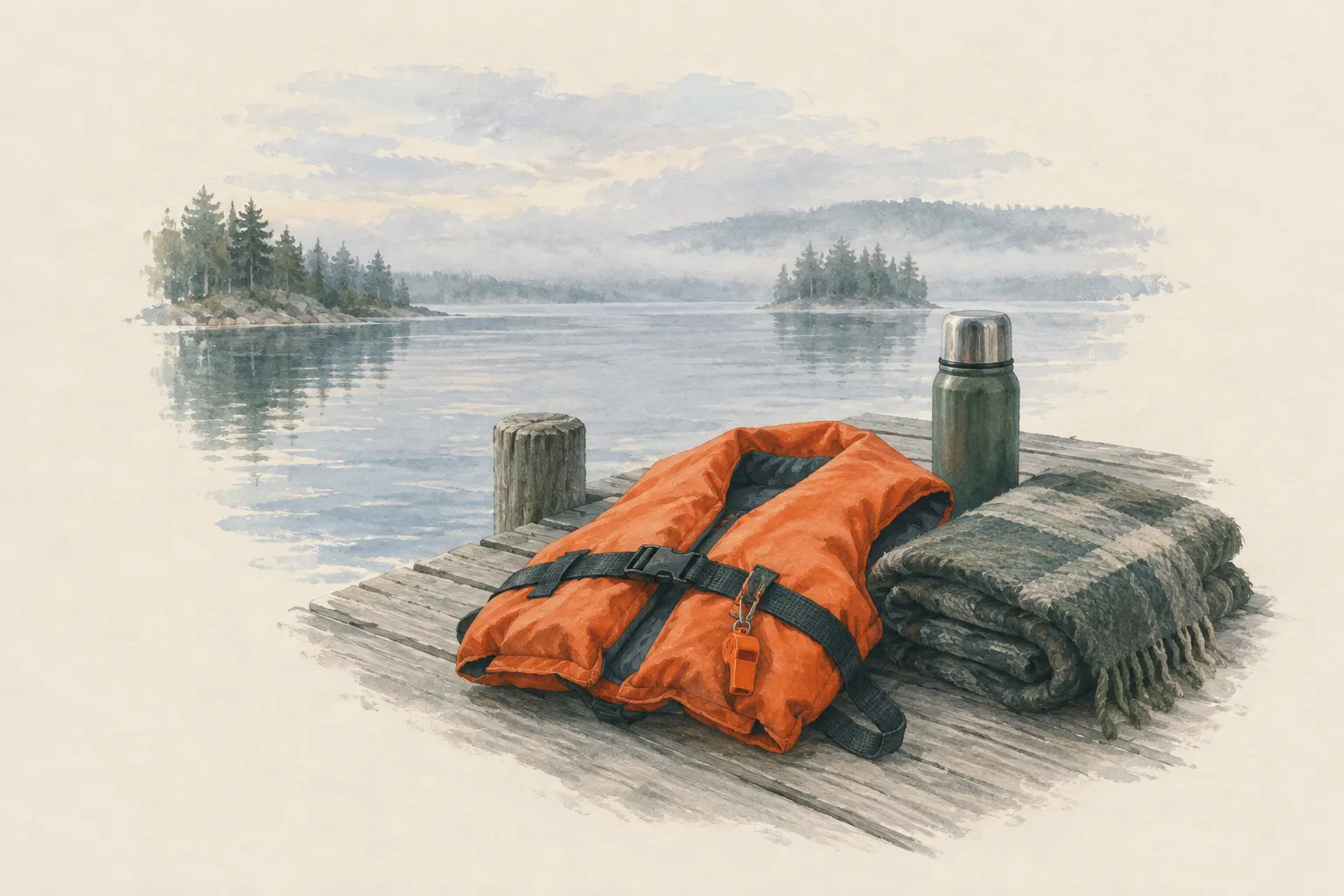
Life jacket / buoyancy aid
The best precaution: wear a life jacket
Size and buoyancy must match body weight; children need children's jackets. Follow manufacturer instructions and service intervals.
Signal whistle
Attached to the jacket
Carry within easy reach, not deep in the pack.
Do not blow right next to other people's ears.
Suitable for
- Falling from a boat, jetty or bank
- Falling through ice
- Capsizing
Not suitable for
- Pulling others out of the water without protecting yourself
- Strong current – then go with the current diagonally towards the shore
Prerequisites
- Knowing these rules beforehand
- Wearing a life jacket near water
How it works
Cold water draws heat from the body about 25 times faster than air. The 1-10-1 rule describes the danger in three stages: 1 minute of cold shock with gasping, about 10 minutes in which arms and legs still work well, and about 1 hour until hypothermia leads to unconsciousness – considerably longer with a life jacket. Calm floating saves strength and heat; swimming pumps cold water through clothing and cools you faster.
Advantages
- Simple rules that save lives
- Applies in lake, river and sea
Disadvantages
- Hard to apply without practice
- Of limited use without a life jacket
Deep knowledge
Background
For a long time people thought those in cold water died mainly of hypothermia. Today we know: most drown in the first minutes through cold shock or because arms and legs fail. The British lifeboat institution therefore campaigns with "Float to Live" – float first, then act.
The 1-10-1 rule comes from the Canadian cold physiologist Gordon Giesbrecht.
Variants
- In a current
- In a river lie on your back, feet first and at the surface, and drift until you can get diagonally to the bank. Never stand up in a river – feet can get trapped between stones.
- Falling through ice
- Turn towards the direction you came from – the ice held there. Arms onto the ice, legs kicking, push out, roll away flat.
Common mistakes
- Starting to swim immediately and inhaling water
- Taking off heavy clothes and shoes in cold water
- Swimming for a distant shore
- Jumping in to rescue someone
- Skipping a medical check after getting out
Limits and risks
- Times are guide values, not guarantees
- No instructions for water rescue
Sources (4)
- Royal National Lifeboat Institution (RNLI), UK: Respect the Water – Float to Live · Float to Live: cold shock, float on your back, breathe calmly
- Wilderness & Environmental Medicine (Wilderness Medical Society) (2019): Wilderness Medical Society Clinical Practice Guidelines for the Out-of-Hospital Evaluation and Treatment of Accidental Hypothermia: 2019 Update · Hypothermia in cold water: cold shock, swim failure, later hypothermia; keep warm, avoid needless movement
- Deutsche Lebens-Rettungs-Gesellschaft e. V. (DLRG): Eisregeln der DLRG · After falling through stay calm, call for help, rescuers protect themselves
- European Commission: 112 – the European emergency number · Emergency number 112 throughout Europe