























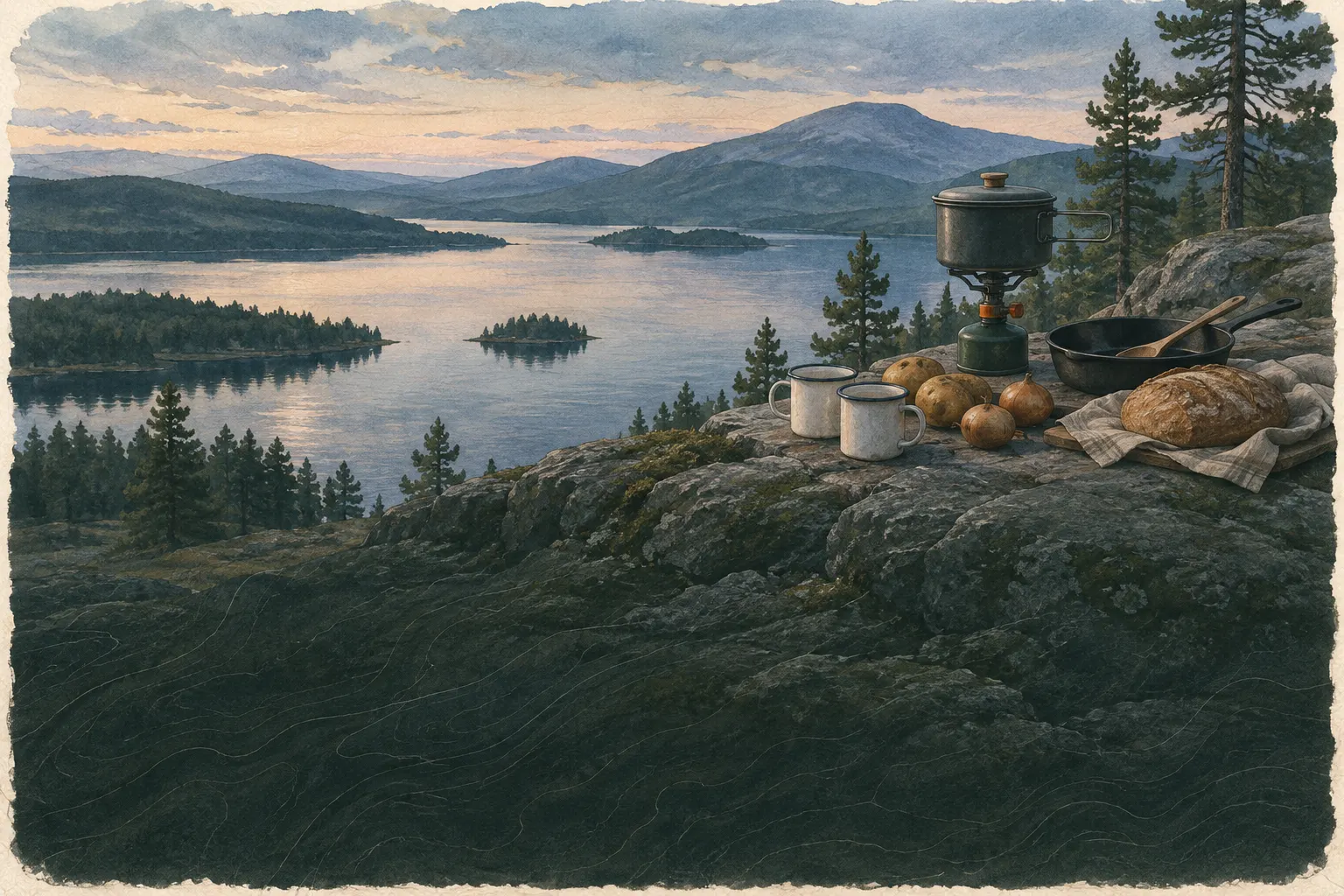
Outdoor cooking
Outdoor recipes
Simple recipes for stove and campfire, with ingredients that fit in a backpack without a fridge. Every recipe with amounts per person, a step-by-step animation, an explanation for children and the key warnings.
Breakfast and sweet things from the pot
Backpack porridge: oats with dried fruit and nuts
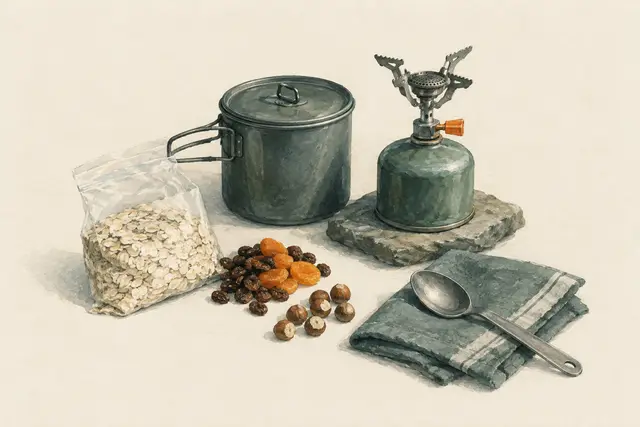
A warm breakfast in ten minutes from one pot: rolled oats, milk powder, a pinch of salt, dried fruit and nuts, mixed at home into one bag per person. Outdoors you bring water to the boil, stir in the mix and let it simmer briefly while stirring. It also works without fuel: soak the oats overnight in safe water.
Scrambled eggs with bread from the pan
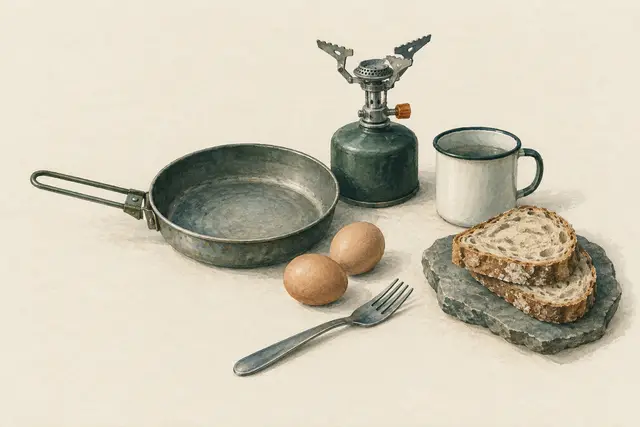
A warm breakfast in ten minutes: briefly toast bread in the pan, then push whisked eggs slowly into scrambled eggs over a low flame until nothing runny is left. Fresh eggs are only suitable for a short trip with a cool bag – for longer trips take whole-egg powder. What matters: stove outdoors, eggs cooked right through, eat at once.
French toast from stale bread
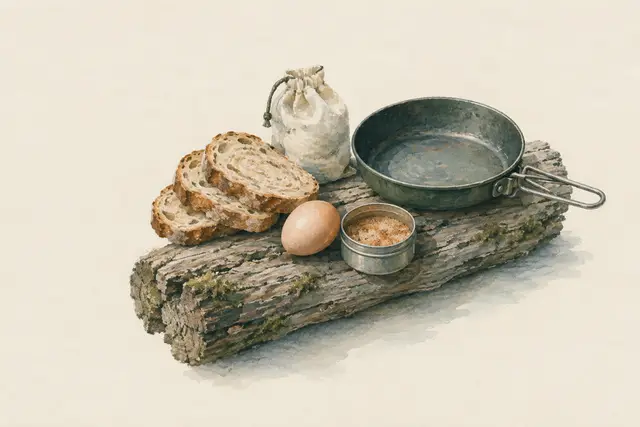
Hard bread becomes a sweet breakfast: dip slices briefly in egg-milk, fry them golden brown in a little fat over a medium to low flame and sprinkle with cinnamon sugar. You mix the milk from powder; the egg can be fresh (short trip) or from egg powder. What matters: the bread must be hot inside with no wet egg-milk left.
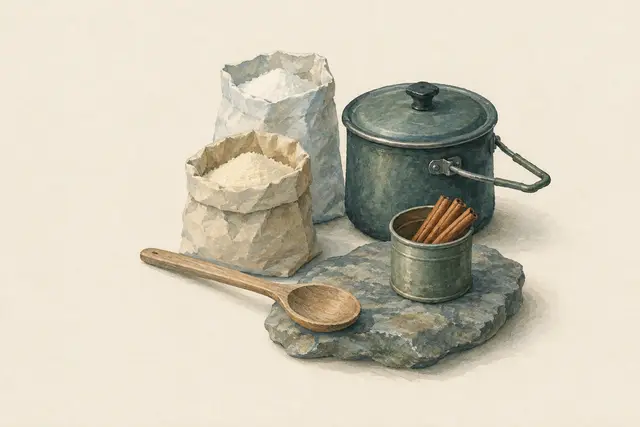
Semolina pudding with cinnamon and sugar
A warm, sweet pudding in a quarter of an hour: mix milk from powder, heat it while stirring, sprinkle in the semolina and keep stirring over the lowest flame until it thickens. Then lid on and let it swell. Constant stirring stops it burning – and careful: bubbling pudding spits and sticks hot to the skin.
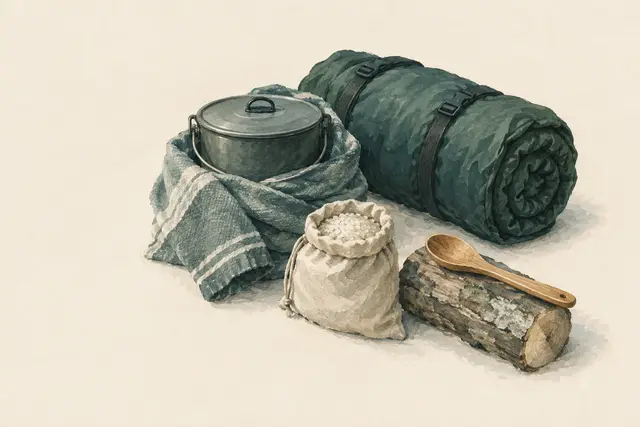
Rice pudding with retained heat
Rice pudding takes a long time – on the stove that would be a lot of fuel. With retained heat it is economical: simmer short-grain rice in milk from powder for a few minutes while stirring, turn the stove off, pack the pot with its lid into an insulating cosy of sleeping bag or jacket and let it swell for a good half hour. Never with the stove or a flame in the cosy – and afterwards eat it hot at once.
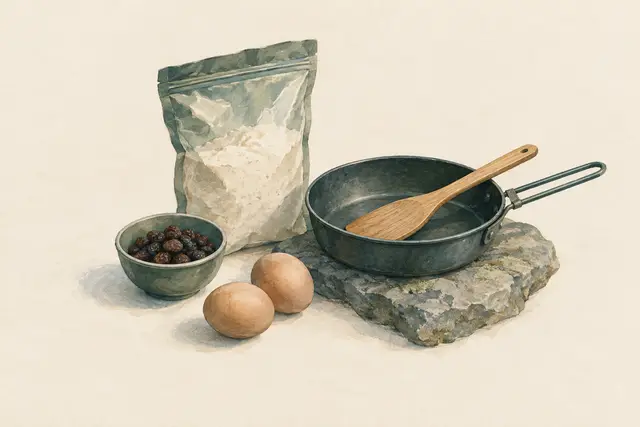
Kaiserschmarrn (torn pancake) from the outdoor pan
The Austrian classic also works on a stove: a thick, fluffy pancake with raisins, torn up in the pan, caramelised with a little sugar and eaten with icing sugar and apple sauce. For trips you pre-mix flour, milk powder and sugar at home; on short trips fresh eggs work, otherwise whole egg powder. What matters is low heat, a lid and that dough and egg are fully cooked through.
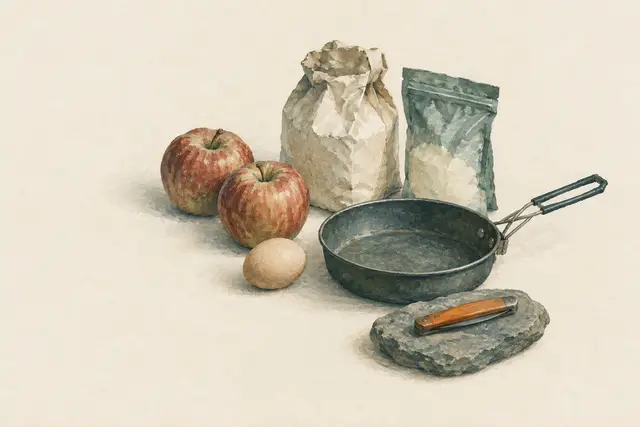
Apple pancakes and apple compote
A batter of flour, milk powder, water and egg or egg powder, plus thin apple slices: briefly fry the apples in fat, pour the batter over them, let it set under a lid, turn and finish frying. If you have no pan with you, cook a quick apple compote from the same apples in the pot. What matters: low flame, bake the batter right through, do not nibble raw batter.
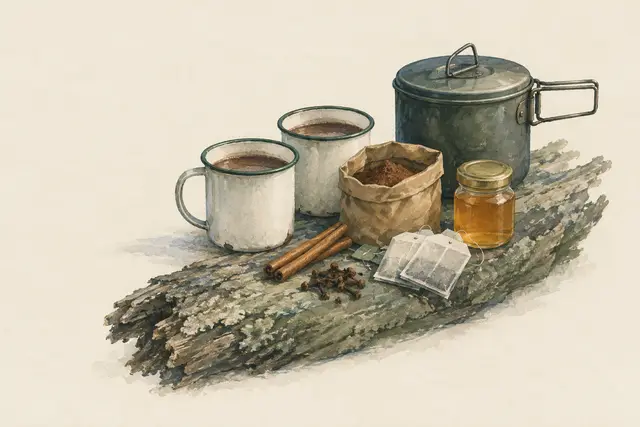
Hot cocoa and spiced tea for cold evenings
Two warm drinks from the backpack: cocoa from cocoa, milk and sugar powder, first stirred into a paste and then topped up with hot water; spiced tea from black or fruit tea with dried cinnamon, cloves and ginger, sweetened with honey. Hot drinks scald quickly – mugs only half full, children get their drink only after the lukewarm test. Alcohol does not belong in it.
Soups and one-pot meals
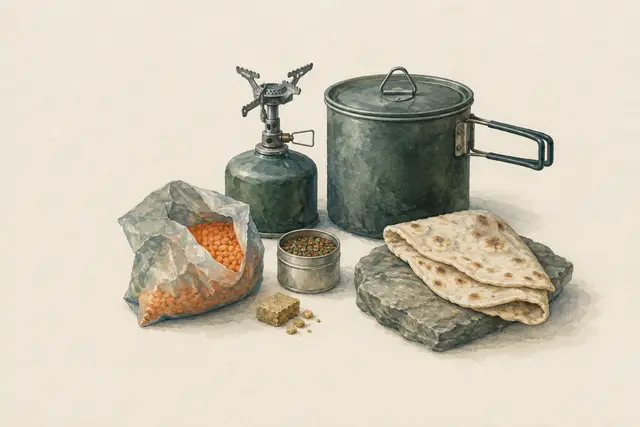
Red lentil soup (dal) from the backpack
Split red lentils are the fastest pulses: they need no soaking and fall apart after about 10 to 15 minutes into a thick, filling soup. With a stock cube, dried onion and spices, and coconut milk powder if you like, it becomes a dal that you scoop out of the pot with flatbread. What matters: a small flame, frequent stirring and cooking the lentils until completely soft.
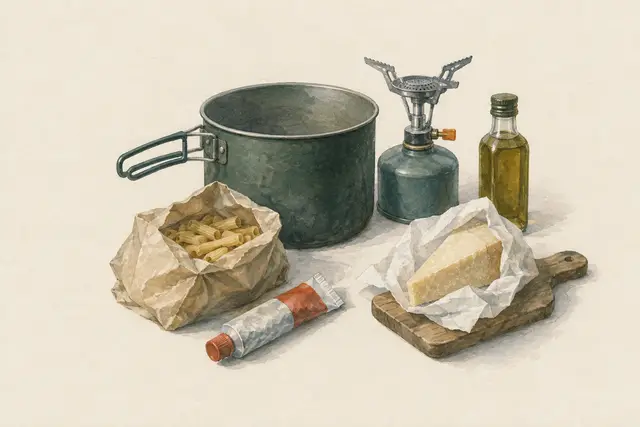
One-pot pasta: noodles with tomato and cheese, no draining
The pasta cooks in just as much water as it soaks up. At the end only a little starchy liquid is left in the pot, which becomes a creamy sauce with tomato paste, olive oil and grated hard cheese. You pour nothing away – that saves water and fuel, and nobody has to handle a pot full of boiling water. The trick: a small flame and frequent stirring.
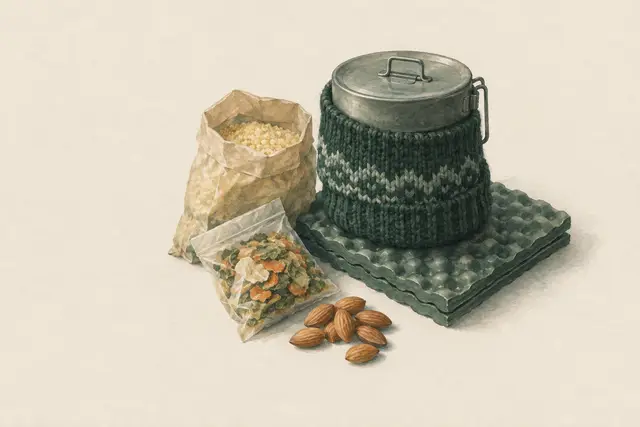
Couscous and bulgur: just boiling water, lid on
Couscous is already pre-cooked and dried. You do not have to cook it, only pour boiling water over it, close the lid, wrap the pot and wait a few minutes. The stove only runs until the water boils – that saves a lot of fuel, and nothing can burn. Savoury with stock, dried vegetables and nuts, or sweet with raisins and cinnamon.
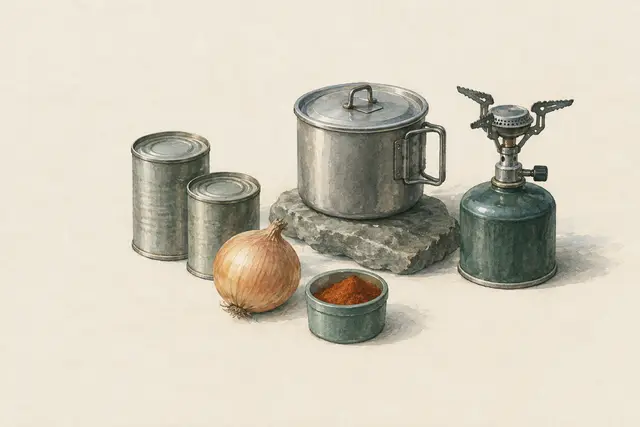
Chili sin carne from cans
A spicy bean stew from canned tomatoes, beans, onion and a few spices – cooked in a single pot in 20 minutes. Ideal for canoe trips, campsites and short hikes where the weight of the cans does not matter. Important: open cans carefully, never keep leftovers in the open can and take the empty cans back with you.
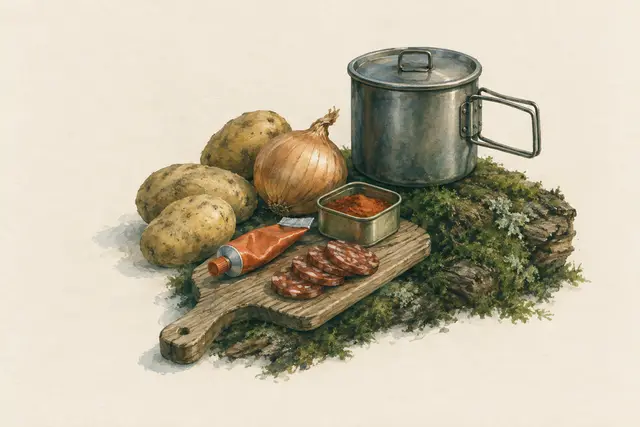
One-pot potato goulash
Potatoes, onion, paprika and tomato paste turn into a thick, warming stew – with slices of shelf-stable dried sausage if you like. Potatoes and onions keep for several days without a fridge. The most important trick: toast the paprika only briefly on a low flame, because it burns within seconds and turns bitter.
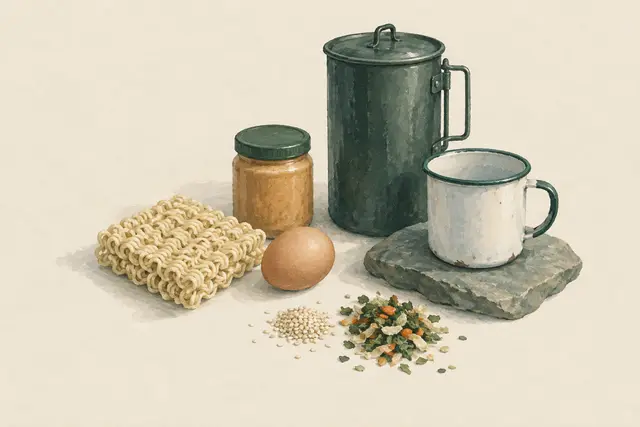
Upgrading instant noodles
With a few ingredients a pack of instant noodles becomes a proper meal: an egg or tofu for protein, dried vegetables and a spoonful of peanut butter or sesame for a creamy broth. Ready in under 10 minutes with little fuel. Two things to watch: the flavour sachet is very salty – half is usually enough – and the egg must be cooked right through.
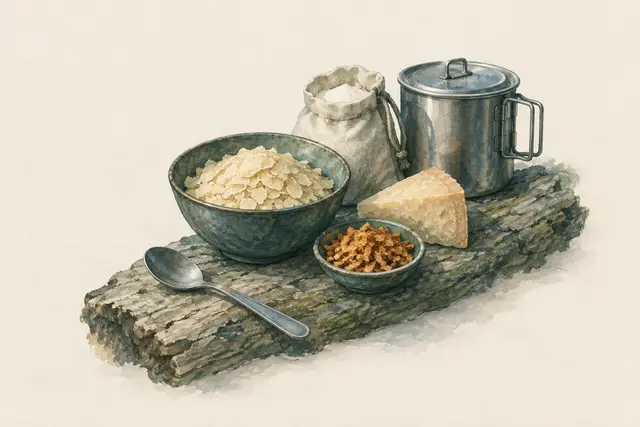
Instant mashed potato with crispy onions and cheese
Potato flakes, milk powder, hard cheese and crispy onions weigh little, keep without a fridge and turn into a warm, creamy dinner in 5 minutes. You only need hot water – the mash itself does not have to boil. This saves fuel, and the pot does not burn. Sprinkle the crispy onions on only just before eating.
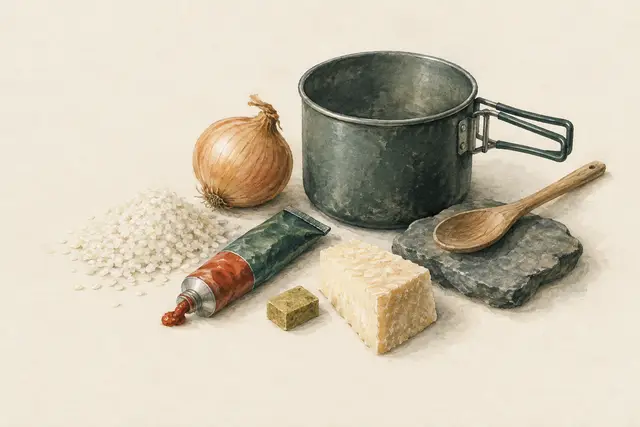
One-pot tomato risotto
Risotto rice, onion, tomato paste, stock and hard cheese make a creamy one-pot rice dish in about 20 minutes – entirely without mushrooms. The secret is frequent stirring and adding the stock in portions. Plan enough water: rice absorbs a lot of liquid, and you need a reserve.
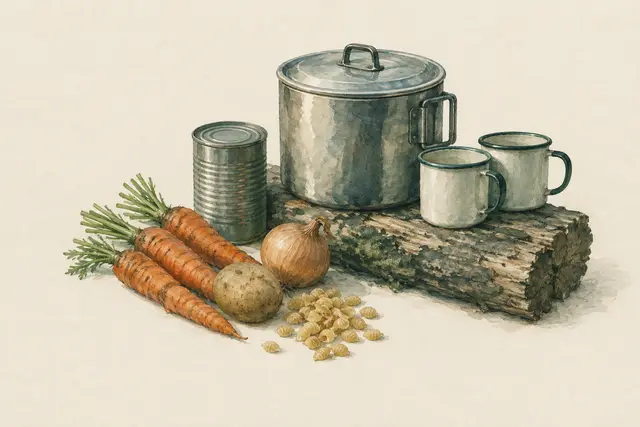
Minestrone vegetable soup
A hearty vegetable soup with small pasta and beans – from fresh carrots, onion and potato or from dried soup vegetables. Everything cooks one after another in one pot: first the vegetables, then the pasta, finally the beans. It warms, fills and brings fluid into the body. Note: soup vegetables and stock often contain celery.
Pan and campfire
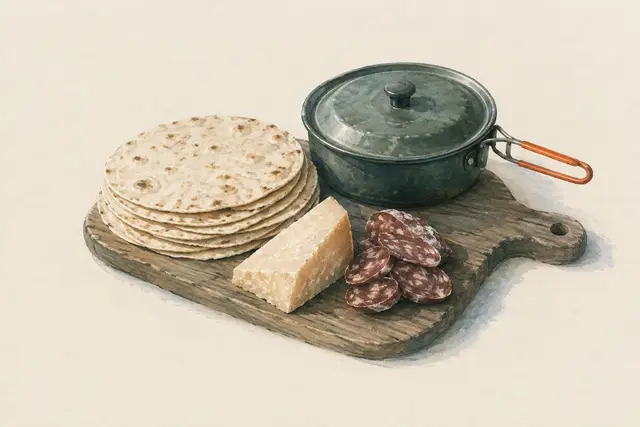
Pan pizza from tortillas and quesadilla
A wheat tortilla is toasted briefly in the pan, spread thinly with tomato paste, topped with hard cheese and sausage or vegetables and baked under the lid on low heat until the cheese melts. It works on a stove and over a flat bed of embers. Two tortillas on top of each other make a quesadilla. The trick: little topping, low heat, lid on – then nothing burns.
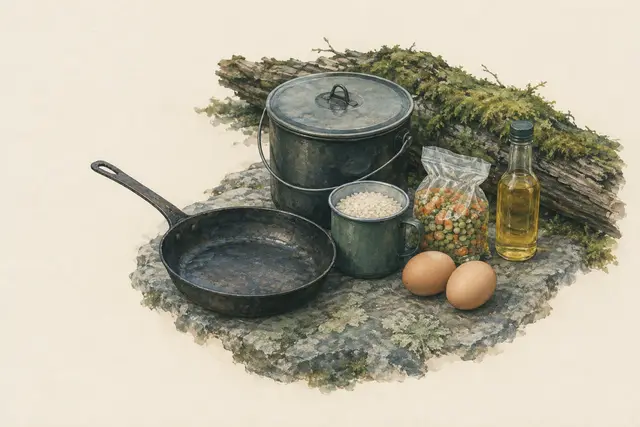
Fried rice from the pan
A quick pan dish for the stove: rice is cooked on the spot, then fried in a little oil with soaked dried vegetables, an egg is stirred in and everything is seasoned with soy sauce. Everything except the egg keeps without a fridge. Important: the rice is cooked fresh and eaten straight away – cooked rice must not sit around lukewarm for hours.
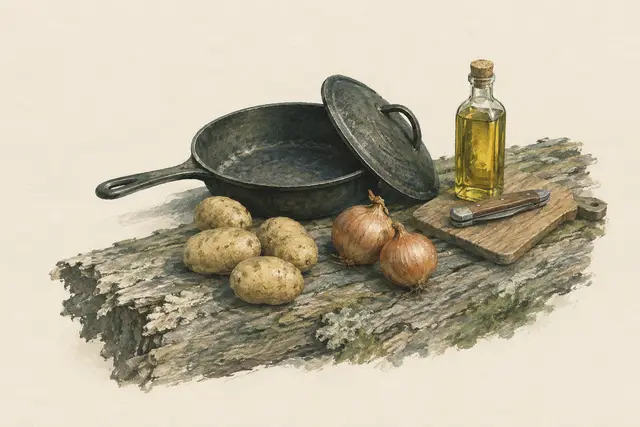
Fried potatoes with onions
Raw potatoes need no fridge: you boil them in their skins on the spot, let them steam dry, slice them and fry them golden with onions in a little oil. The trick is patience – leave them, only then turn. And for emergencies: if fat catches fire, the lid goes on and the heat goes off, never water.
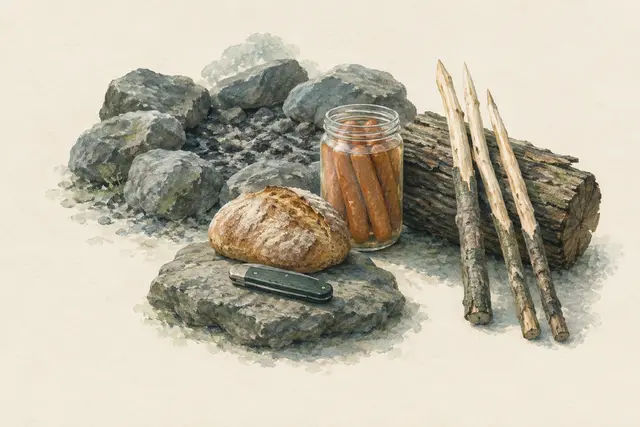
Sausages on a stick
The simplest campfire classic: pre-cooked sausages are pushed onto a peeled hazel stick and turned over the embers until they are hot inside. What matters is a stick of safely non-toxic wood, embers instead of flames and clear rules for children at the fire. Sausages from a jar or tin need no fridge while unopened; vegetarian sausages work just the same.
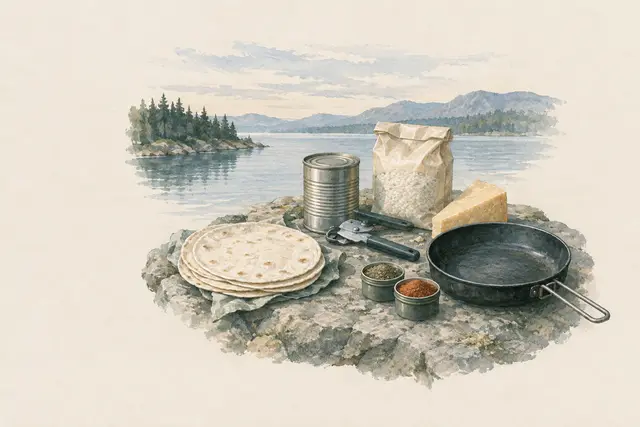
Bean and rice wraps
Tortillas, canned beans, quick-cook rice, spices and cheese – all of it keeps without a fridge; only the cheese should travel in the shade. Rice and beans are seasoned and heated in the pot, the tortillas warmed in the dry pan, filled, rolled and briefly toasted until the cheese melts. Important: always open the tin first and never heat it closed.
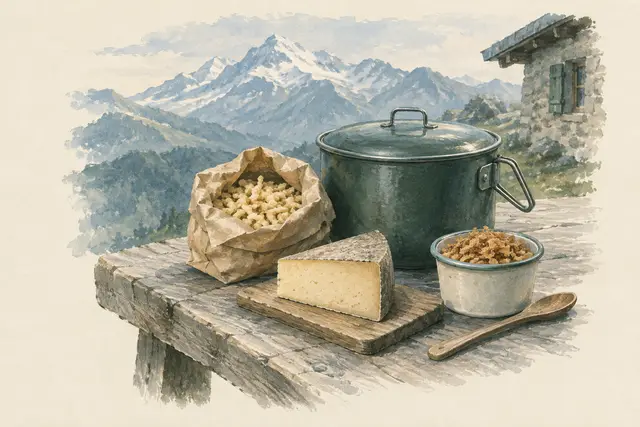
Cheese spätzle from the pot
The classic from the Allgäu, Vorarlberg and Tyrol for the stove: dried spätzle are boiled in salted water, drained and layered with tangy mountain cheese on the lowest flame until the cheese melts. Crispy fried onions from a tub go on top. The biggest danger is the bottom of the pot: cheese burns quickly – so a low flame, stirring and, if needed, letting the retained heat do the work.
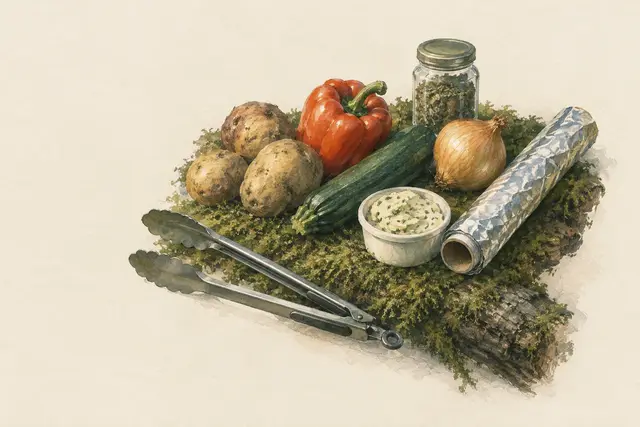
Vegetable foil parcels with herb butter
Potatoes, peppers, onion and courgette are cut small, packed into double aluminium foil with butter or oil and dried herbs and cooked at the edge of the embers. Everyone packs their own parcel. What matters are thin potato slices, tightly folded edges, patience – and care when opening, because the hot steam scalds easily. The foil goes back home with you.
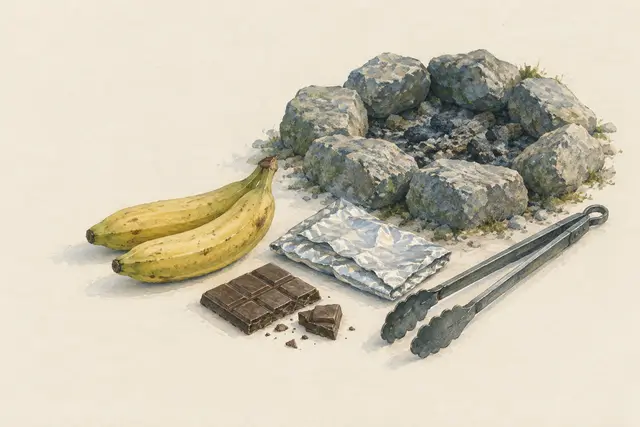
Chocolate banana and baked apple from the embers
A banana is slit lengthwise in its peel, filled with pieces of chocolate, wrapped in aluminium foil and laid at the edge of the embers. After a few minutes the chocolate has melted and the banana is soft – you eat it with a spoon straight from the peel. A filled baked apple works the same way but takes longer. Ideal with children, as long as adults handle the embers and everyone knows: chocolate and steam are hot.
Snacks and no-cook food
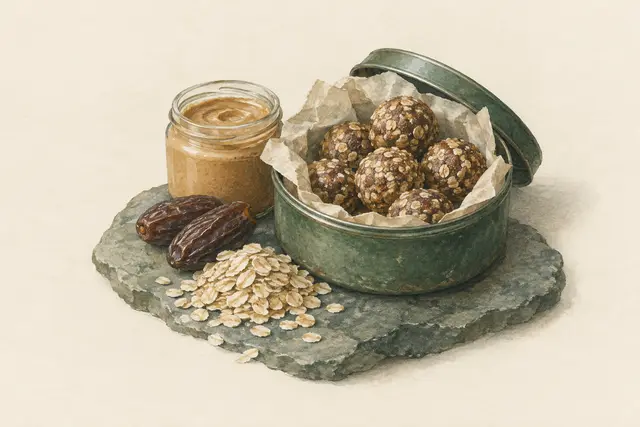
No-bake energy balls
Rolled oats, nut butter, honey, finely chopped dried fruit and a little cocoa are kneaded at home into a sticky dough and rolled into walnut-sized balls – no oven at all. Once firm in the cool, they go into a tin in the backpack and give quick energy on the way. Important: no honey for babies under one year, and think of nut allergies in the group beforehand.
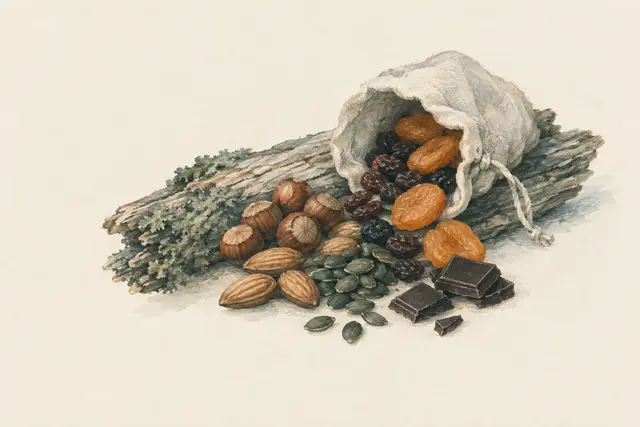
Mixing your own trail mix
Nuts, seeds, dried fruit and a few pieces of chocolate, mixed yourself and portioned straight into day bags: this is the simplest hiking snack of all. It needs no stove, spoils slowly and fits into any jacket pocket. For small children, however, whole nuts are a choking hazard – they get their own mix without nuts.
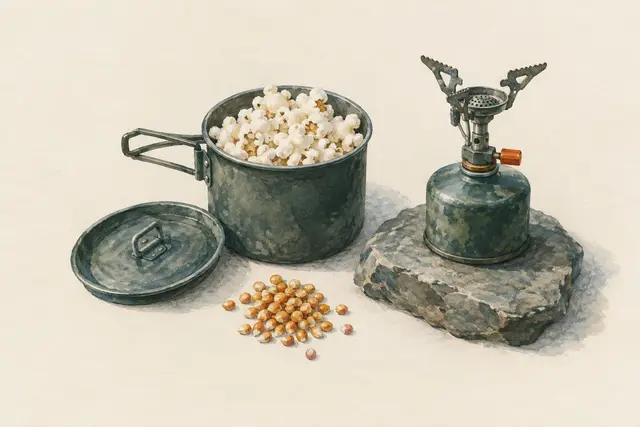
Popcorn in the pot
A little oil, a handful of popping corn, a pot with a lid and low to medium heat – that is all it takes. A few test kernels show when the oil is hot enough; then the rest goes in, the lid stays on and the pot is shaken again and again. The dangers are hot oil and the steam when opening the lid. Popcorn is not suitable for small children because of the choking hazard.
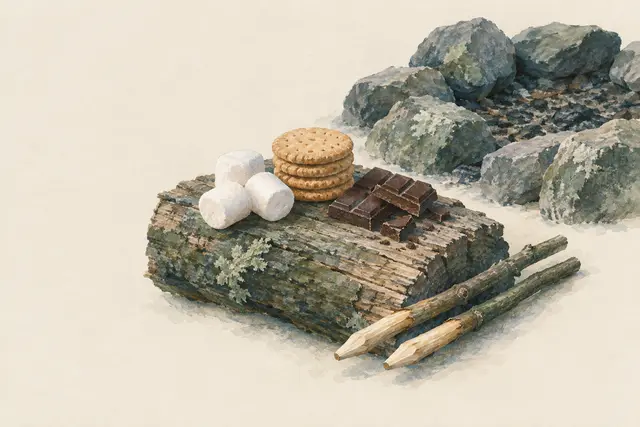
Chocolate biscuit sandwich with toasted marshmallow (“s'mores”)
A marshmallow is toasted golden brown on a peeled stick of safely non-toxic wood beside the embers – not in the flames – and then pressed between two biscuits with a piece of chocolate. The warm marshmallow makes the chocolate melt. Burning marshmallows turn into liquid, sticky sugar that burns deeply: that is why clear rules for children apply at the fire.
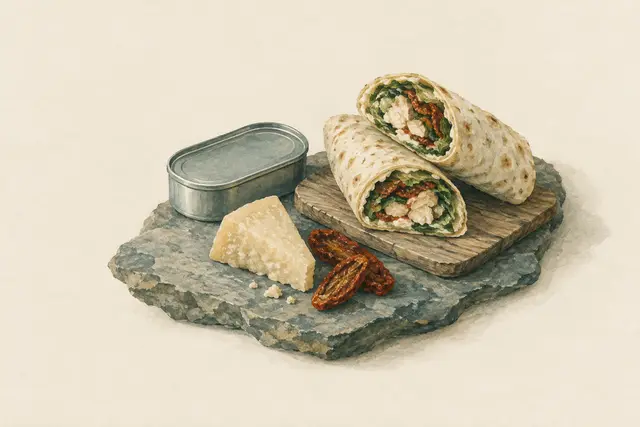
No-cook wraps
A soft tortilla topped with hummus or nut butter, hard cheese, canned tuna or chickpeas and a few sun-dried tomatoes – rolled up, it is a proper lunch without stove, fire or washing-up. All the ingredients keep without a fridge. What matters is clean hands, small tins that are eaten up completely at once, and a look at the allergens.
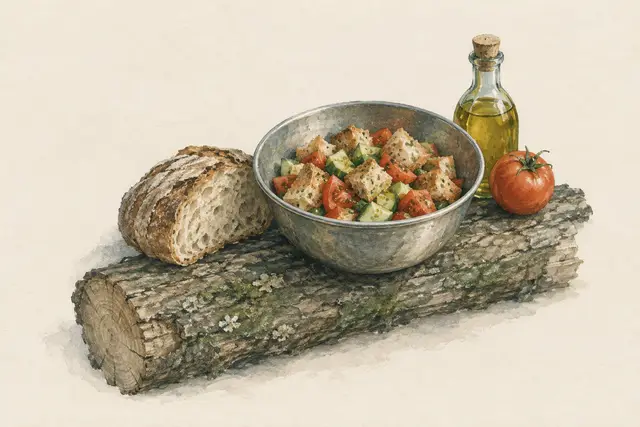
Bread salad from stale bread
Stale, dry bread, tomatoes, cucumber, onion, olive oil, vinegar and salt make an Italian bread salad, panzanella. The bread soaks up tomato juice and dressing and turns juicy again – without any cooking. The vegetables are washed with water of drinking quality, mouldy bread does not go in, and the finished salad is eaten soon.
Tips and tricks for the outdoor kitchen
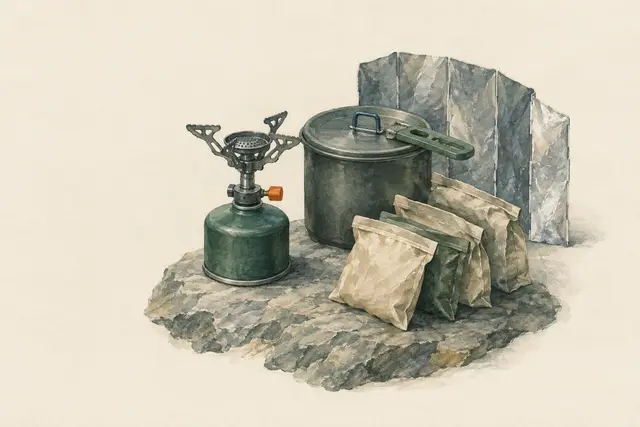
Basics: cooking on the fire
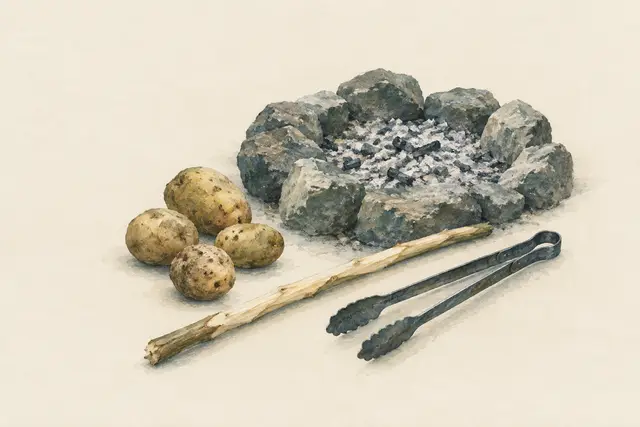
Cooking in the embers: potatoes, ash cake and vegetables
Flames burn food on the outside before the inside is cooked – embers, on the other hand, give even, steady heat. You let hardwood burn down to embers, rake a flat ember bed to one side and put potatoes, onions or a flat dough cake into it. Turn regularly, test with a little stick and only eat when everything is done.
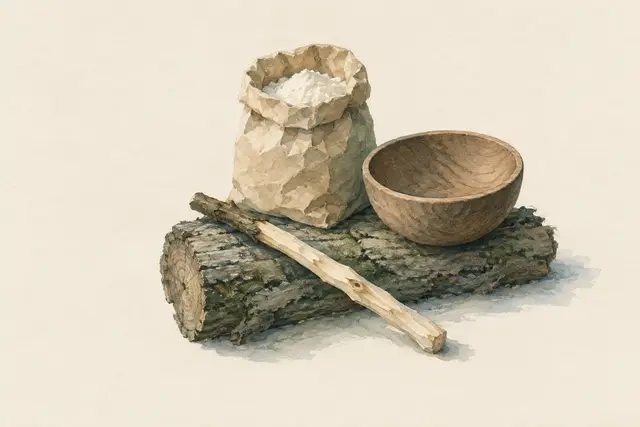
Stick bread and bannock on a stick
A simple dough of flour, water, salt and baking powder or yeast is wound like a snake around the peeled end of a long stick and turned slowly over the embers until it is golden brown all round and dry inside. What matters is the right distance from the embers, patience and a stick of wood that is safely non-toxic. With clear fire rules, stick bread is ideal for children.
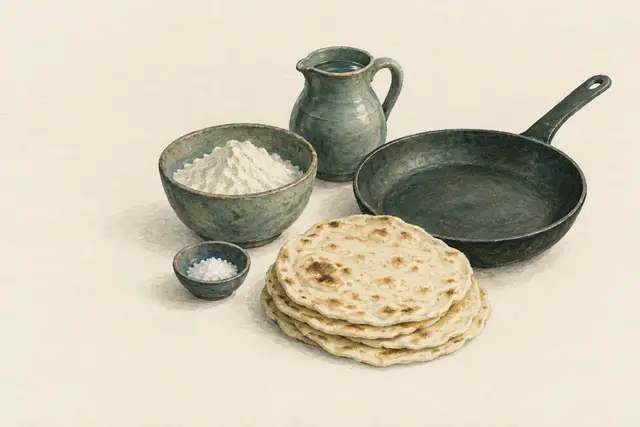
Pan flatbread – bread without an oven
With flour, water and a pinch of salt, a simple flatbread can be cooked in a dry frying pan or on a griddle over a stove. It needs no yeast and no oven and turns flour from the stock into a filling meal. Do not eat raw dough and cook the bread right through.
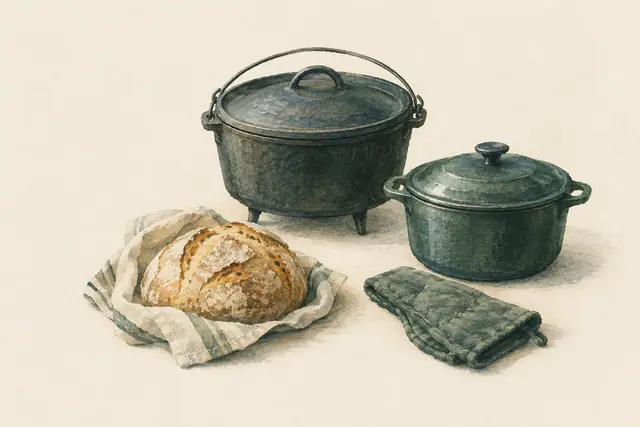
Baking without an oven: in a pot and a Dutch oven
Bread, flatbreads, bakes or simple cakes can be baked without an oven: in a heavy pot with a lid on a stove, or in a cast-iron Dutch oven with embers below and on the lid. What matters is even, moderate heat from all sides, a gap above the pot base and patience. Embers and charcoal belong outdoors only.
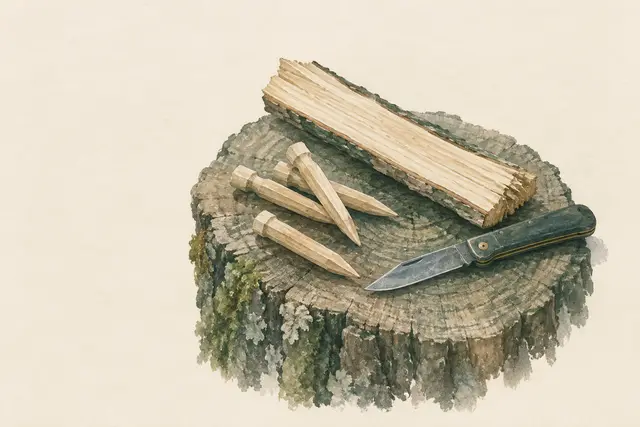
Cooking fish on a stick and on a plank by the fire
A gutted fish cooks at an angle beside the embers on a stick, or opened out on a wooden plank – not in the flames. This way it cooks slowly and evenly without burning on the outside. It is only ready when the flesh at the thickest part is opaque and comes away easily from the bone (at least 63 °C at the centre). Cooking it through protects against parasites; watch out for bones when eating.
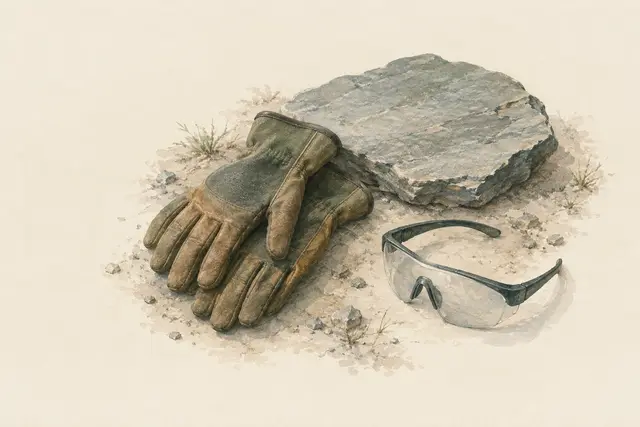
Cooking on a hot stone griddle
A flat, dry stone heated slowly over the fire becomes a griddle for flatbread, thin pieces of fish or slices of vegetables. The most important rule: never stones from streams, lakes, banks or wet ground – trapped water can make them burst in the heat. Keep your distance and wear safety glasses while heating it.