























Kaiserschmarrn (torn pancake) from the outdoor pan
The Austrian classic also works on a stove: a thick, fluffy pancake with raisins, torn up in the pan, caramelised with a little sugar and eaten with icing sugar and apple sauce. For trips you pre-mix flour, milk powder and sugar at home; on short trips fresh eggs work, otherwise whole egg powder. What matters is low heat, a lid and that dough and egg are fully cooked through.
- 10 minutes pre-mixing at home; about 20–25 minutes outdoors
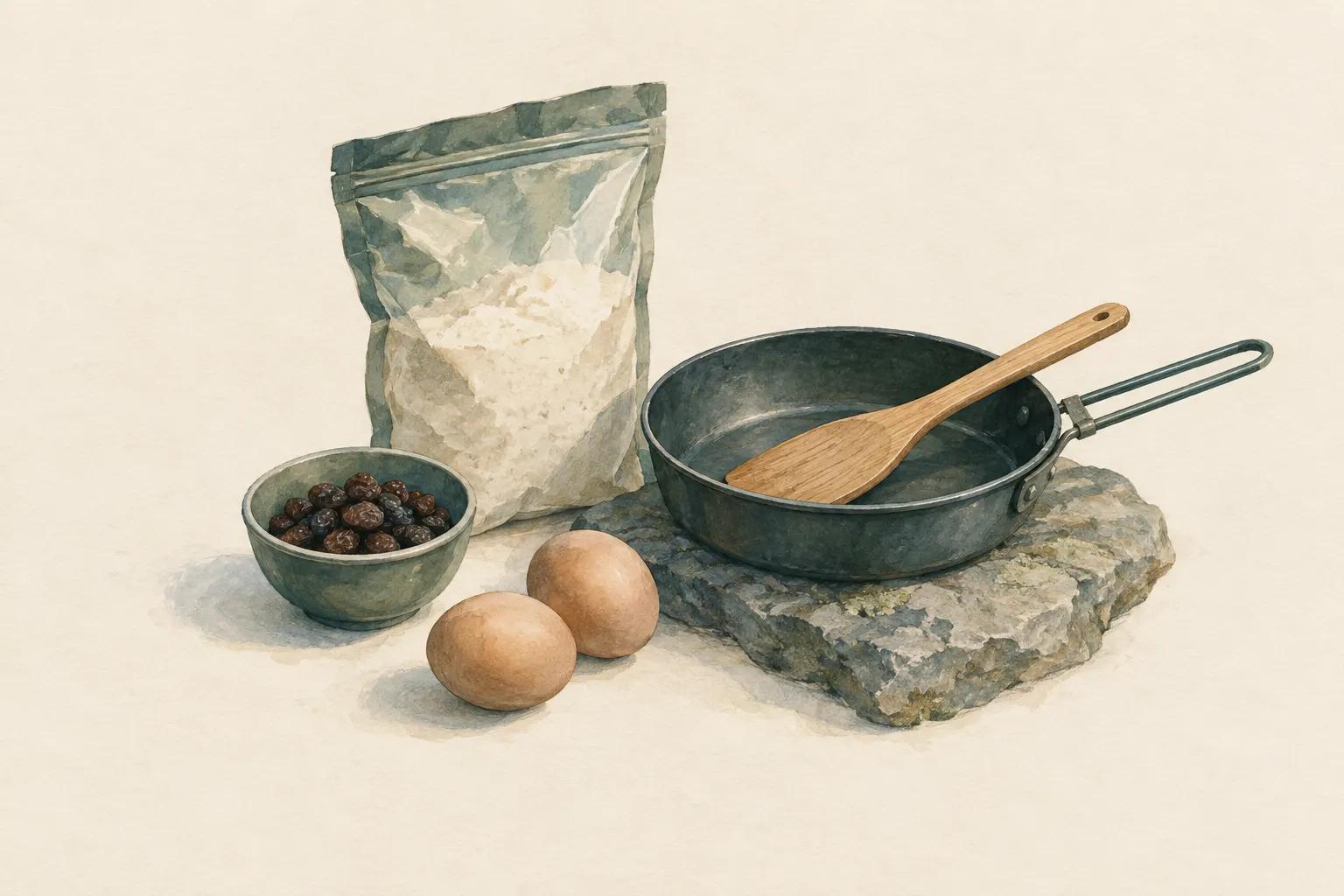
Explained simply
Kaiserschmarrn is a sweet dish from Austria. You bake a thick, soft pancake and then tear it into small pieces in the pan. It comes with raisins, icing sugar and apple sauce. At many alpine huts it is the favourite meal after a hike.
Outdoors you make it just the same, only on a stove. So that the ingredients do not go off in the rucksack, you mix flour, milk powder and sugar in a bag at home. Outdoors you only add water. You only take fresh eggs on short outings; otherwise there is egg powder.
The most important thing: the Schmarrn must be cooked right through. When you break a piece open, it should be dry and fluffy inside, not wet and shiny. And because hot sugar is very hot, an adult stirs in the pan – you may sprinkle the icing sugar on top!
How it works
Kaiserschmarrn starts like a pancake, only thicker. The batter of flour, milk, eggs, sugar and a pinch of salt sets in the pan into a soft cake. Instead of serving it whole, you tear it into pieces. There is a clever reason for this: small pieces have a lot of surface. The heat reaches the middle too, and every piece gets a golden crust.
A thick batter needs low heat and a lid. The pan bakes from below; from above the lid holds in the warmth so the top sets before the base burns. At the end you sprinkle a little sugar over the pieces. It melts, browns slightly and gives the typical, slightly caramel flavour.
Eggs make the batter light and hold it together. That is why they must be fully cooked. The US Food Safety and Inspection Service (FSIS) recommends 71 °C inside for egg dishes. Without a thermometer a simple test helps: a piece broken open is dry and firm inside, with no runny or shiny-wet spots.
What really matters
Half the work happens at home. One bag per meal with flour, milk powder, sugar, salt and – for longer trips – egg powder and a pinch of baking powder. On the bag you write how much water goes with it and which allergens are inside. Outdoors you then have nothing left to weigh. A ready-made pancake mix from the shop, mixed with a little less water, also works.
The batter should be thick but still flowing. The butter melts over a low to medium flame until it foams slightly – if it smokes or turns brown, the pan is too hot. Pour the batter in about one centimetre deep, scatter the soaked raisins on top and put the lid on.
Only tear it once the underside is golden brown and the top almost set. First divide it into quarters and turn them, then tear it into pieces with two turners, or a turner and a fork. Finally sugar on top, a quick toss, icing sugar over it – and eat it straight away, best of all right from the pan.
Safety: what to watch out for
Fresh eggs are delicate. Only take them on short trips, packed cool and protected from breaking, and use them on the first day if possible. Eggs that were bought refrigerated should stay refrigerated. For longer or warm trips, whole egg powder is the safe choice. After cracking raw eggs you wash your hands, and raw batter is not for nibbling – raw flour can also carry germs.
Mixed batter is baked at once, finished Schmarrn is eaten at once. Perishable food should not stand around unrefrigerated for more than 2 hours, above 32 °C not more than 1 hour. Kaiserschmarrn contains gluten, milk and egg – with allergies in the group, ask beforehand and cook separately.
Hot fat and melting sugar cause severe burns. Keep the flame low, do not lean over the pan and only hold it with the grip. Cooking happens outdoors, never in the tent. With a burn, cool it at once with cool running water.
Good to know
In Austria Kaiserschmarrn is one of the best-known sweet dishes, and its name is traditionally linked with the imperial house. It goes well with apple sauce or Zwetschkenröster, a compote of plums. Outdoors, apple sauce in a squeeze pouch is the most practical: light, unbreakable and without glass.
If you like it especially fluffy, separate fresh eggs at the campsite, beat the egg white stiff with a fork and fold it into the batter – just like at an alpine hut. Children can help knead the bag, count raisins and dust the sugar. Pan, stove and hot sugar stay with the adults.
Step by step
Pre-mix at home
Fill one bag for each meal: per person about 60 g flour, milk powder for 125 ml milk, 1 tablespoon sugar, a pinch of salt and – if you use egg powder – egg powder for 2 eggs and a pinch of baking powder. Write on the bag how much water to add and which allergens are inside. Pack raisins and icing sugar separately.
Caution: Fresh eggs only cool and protected from breaking, ideally used on the first day.
- 1
Pre-mix at home
Fill one bag for each meal: per person about 60 g flour, milk powder for 125 ml milk, 1 tablespoon sugar, a pinch of salt and – if you use egg powder – egg powder for 2 eggs and a pinch of baking powder. Write on the bag how much water to add and which allergens are inside. Pack raisins and icing sugar separately.
Fresh eggs only cool and protected from breaking, ideally used on the first day.
- 2
Soak the raisins
Put the raisins in a mug with a little water while you set up the cooking spot. They become soft and juicy and do not burn so quickly in the pan later.
- 3
Mix the batter
Add the water bit by bit to the bag or a bowl and stir or knead until there are no lumps left. With fresh eggs, crack the eggs into the bowl first and stir in milk, flour, sugar and salt. The batter should be thick but still flowing, a little thicker than for thin crêpes. Then wash your hands.
- 4
Melt the fat in the pan
Put the pan on the stove over a low to medium flame and let the butter melt until it foams slightly. It must not turn brown or smoke – then the pan is too hot. Swirl the pan so the base is thinly covered everywhere.
- 5
Bake a thick pancake
Pour the batter into the pan about one centimetre deep and scatter the drained raisins over it. Lid on, flame low. After a few minutes the underside is golden brown and the top almost set. Lift the edge to check.
- 6
Turn and tear
Divide the pancake into quarters with the turner and turn each quarter over. When the second side has colour too, tear everything into bite-sized pieces with two turners, or a turner and a fork. That is the secret of the Schmarrn: the pieces may well be irregular.
- 7
Caramelise and cook through
Sprinkle a teaspoon of sugar over the pieces and turn them over a low flame for one to two minutes until they shine slightly and are golden brown. Break open a thick piece: inside it must be fluffy and dry, with no runny or shiny-wet spots. Otherwise fry it a little longer.
Molten sugar is very hot.
- 8
Dust and eat straight away
Take the pan off the stove, turn off the flame and dust the Schmarrn with icing sugar. Serve with apple sauce from the pouch. Best eaten straight from the pan while it is warm – do not leave leftovers standing warm for hours.
Common mistakes
- Too big a flame – black outside, raw inside
- Pouring the batter too thin – it becomes a crêpe, not a Schmarrn
- Baking without a lid
- Tearing too early while the top is still runny
- Adding sugar over high heat – it burns bitter
- Carrying fresh eggs unrefrigerated in the pack for days
- Eating pieces that are shiny and wet inside
Quick view
Materials
Flour (wheat or spelt)
About 60 g per person (a good 4 tbsp)
Raw flour and raw dough are not for nibbling – flour can carry germs and only becomes safe through baking.
Store dry and out of animals' reach.
Fresh eggs or whole egg powder
2 fresh eggs per person – or whole egg powder in the amount the pack gives for 2 eggs
Contains egg (allergen).
Fresh eggs only on short trips, carried cool and protected from breaking; always cook egg dishes right through.
Wash your hands after cracking raw eggs.
Milk powder
For about 125 ml milk per person, amount as on the pack; or fresh milk
Contains milk (allergen).
Keep dry; treat mixed milk like fresh milk and use it soon.
Sugar and icing sugar
1 tbsp sugar per person for the batter and for caramelising, plus icing sugar
Sugar burns quickly over too much heat and turns bitter; molten sugar causes severe burns.
Table salt
A pinch
Salt improves keeping quality but does not replace heating through.
Raisins
1 tbsp per person
Small, hard pieces: choking risk for toddlers – soak them or leave them out.
Butter, clarified butter or cooking oil
About 1 tbsp butter or clarified butter per person
Butter contains milk (allergen).
Never put out hot fat with water; overheated fat starts to smoke – reduce the heat at once.
Apple sauce (in a squeeze pouch)
One small pouch per person
Use opened apple sauce soon; jars are heavy and can break.
Baking powder or dried yeast
A pinch of baking powder makes it lighter, especially with egg powder
Keep dry – damp baking powder stops working.
Resealable food bags
One bag per meal for the dry mix
Use only bags intended for food; do not use with boiling water unless the manufacturer explicitly allows it.
Labels and permanent marker
Pan with a lid
Ideally 20–24 cm, with a lid
Never heat coated pans strongly while empty and do not put them directly into flames or embers – the coating can be damaged.
Do not turn plastic or folding handles over the flame; they can get hot or melt.
Spatula (wood or heat-resistant plastic)
Two turners, or a turner and a fork, for tearing
Metal turners scratch coated pans.
Thin plastic melts on a hot pan rim.
Stove
Never operate inside a tent, shelter or enclosed room – carbon monoxide and fire risk.
Measuring jug
Or a mug with a mark
Suitable for
- A sweet breakfast or main meal at camp
- Family and group trips
- Hut evenings and campsites
- Cold days when something warm and sweet is welcome
Not suitable for
- Long, warm trips with fresh eggs and no cooling
- Egg, milk or gluten allergy without an adapted recipe
- Stoves whose flame cannot be turned down low
- Cooking in a tent or vestibule
Prerequisites
- A stove with a small, easily adjustable flame
- A pan with a lid
- Clean drinking water for mixing
- Fresh eggs only on a short trip with cool transport
Safety
- Only take fresh eggs on short trips: carried cool, protected from breaking and used as early in the trip as possible. Eggs bought refrigerated should stay refrigerated. Do not leave mixed batter standing but bake it straight away; eat the finished Schmarrn at once and do not leave it standing warm.
- Kaiserschmarrn contains gluten (flour), milk (milk, butter) and egg. With allergies in the group, ask beforehand, check ingredient lists and cook separately and first for those affected.
- Hot fat and caramelising sugar cause severe burns. Keep the heat low, do not lean over the pan, only hold the pan with a grip. With a burn, cool at once with cool running water; with large burns, burns to the face or in children call 112 (in Austria also 144). Only use the stove outdoors.
How it works
Kaiserschmarrn is a thick pancake batter that first sets as a whole and is then torn apart. Tearing creates many small pieces with a large surface: this way the middle also cooks through safely, and every piece gets a golden, slightly caramelised crust. Low heat and a lid let the thick batter set from below and above before the base burns. Egg in the batter makes it light – and must therefore be fully cooked.
Advantages
- Light and long-lasting as a dry mix
- Very filling and comforting on cold days
- Works without perfect pancake technique – tearing forgives mistakes
- Children can help
Disadvantages
- Burns easily over too big a flame
- Fresh eggs need cooling and protection
- Contains gluten, milk and egg
- Needs a pan and a little time
Deep knowledge
Background
Kaiserschmarrn comes from Austria, where it is a popular sweet dish served at many alpine huts; the name is traditionally linked with the imperial house. Typical are a light batter with eggs, raisins, icing sugar and apple sauce or plum compote on the side.
The US Food Safety and Inspection Service (FSIS) recommends cooking egg dishes to 71 °C (160 °F) and keeping eggs refrigerated. The FDA points out that raw flour can also contain pathogens – so raw batter is not for nibbling. Outdoors without a thermometer the simplest test is: break it open and check that everything inside is dry and firm.
Variants
- With ready-made pancake mix
- A dry pancake mix that only needs water is the simplest solution. Mixed with less water than the pack says, the batter becomes thick enough for Schmarrn. Check the ingredient list for allergens.
- Extra fluffy with whisked egg white
- At the campsite with fresh eggs: separate white and yolk, beat the egg white stiff with a fork or a small whisk and fold it into the batter. That takes longer but makes the Schmarrn especially fluffy – just like at an alpine hut.
- With children
- Children can knead the bag, count raisins, watch the tearing with the fork and dust the icing sugar. Pan, stove and sugar in the pan stay with the adults.
- With fruit instead of raisins
- Apple pieces, blueberries or plums also work. Fry apple pieces briefly in butter before pouring the batter over them. Only eat berries you know for certain.
Common mistakes
- Too big a flame – black outside, raw inside
- Pouring the batter too thin – it becomes a crêpe, not a Schmarrn
- Baking without a lid
- Tearing too early while the top is still runny
- Adding sugar over high heat – it burns bitter
- Carrying fresh eggs unrefrigerated in the pack for days
- Eating pieces that are shiny and wet inside
Limits and risks
- Quantities are guide values – flour, milk powder and egg powder absorb different amounts of water
- No statement on how long fresh eggs keep unrefrigerated – when in doubt use egg powder
- Cooking times depend heavily on stove and pan; the test is breaking it open
Material alternatives
Derived from material properties: a substitute must have all relevant properties. Observe the notes on the substitute.
- Resealable food bags
- Single-wall stainless steel bottle (Heat only single-wall bottles without paint/plastic; remove the lid before heating.), Double-wall insulated bottle (Never heat directly.), PET bottle (clear, max. 2 litres) (Do not heat or place in a fire.), Food-grade water container (Only use containers that never held chemicals or fuel.), Airtight food-grade storage container (Fill only when clean and completely dry; never use containers that previously held chemicals.), Collapsible water container or bag (Protect from sharp objects.), Food-grade water bag (Use only for drinking water, never for chemicals or fuel.), Fermentation jar or crock (Use only food-grade containers of glass, food-safe glazed stoneware or food-grade plastic – no metal containers for acidic food.)
- Measuring jug
- Metal pot (stainless steel, aluminium, titanium) (Hot – scalding risk.), Single-wall stainless steel bottle (Heat only single-wall bottles without paint/plastic; remove the lid before heating.), Double-wall insulated bottle (Never heat directly.), PET bottle (clear, max. 2 litres) (Do not heat or place in a fire.), Food-grade water container (Only use containers that never held chemicals or fuel.), Airtight food-grade storage container (Fill only when clean and completely dry; never use containers that previously held chemicals.), Collapsible water container or bag (Protect from sharp objects.), Food-grade water bag (Use only for drinking water, never for chemicals or fuel.), Fermentation jar or crock (Use only food-grade containers of glass, food-safe glazed stoneware or food-grade plastic – no metal containers for acidic food.), Resealable food bags (Use only bags intended for food; do not use with boiling water unless the manufacturer explicitly allows it.), Airy collecting bag or basket (Collect each species separately so nothing unknown gets mixed in), Rigid collecting container (box, basket or mug) (One species per container – never mix in anything unknown)
Results come exclusively from structured entries. No improvised instructions are generated.
Sources (7)
- United States Department of Agriculture – Food Safety and Inspection Service (USDA FSIS): Safe Minimum Internal Temperature Chart · Cook egg dishes to an internal temperature of 71 °C (160 °F)
- United States Department of Agriculture – Food Safety and Inspection Service (USDA FSIS): Shell Eggs from Farm to Table · Keep eggs refrigerated, cook egg dishes thoroughly, do not leave them out unrefrigerated for long
- U.S. Food and Drug Administration (FDA): Handling Flour Safely: What You Need to Know · Raw flour and raw dough can contain pathogens; do not eat them raw
- United States Department of Agriculture – Food Safety and Inspection Service (USDA FSIS): "Danger Zone" (40 °F – 140 °F) · Perishable food not left out more than 2 hours, above 32 °C (90 °F) not more than 1 hour; danger zone 4–60 °C (40–140 °F)
- World Health Organization (WHO) (2006): Five Keys to Safer Food Manual · Wash hands, cook thoroughly, keep raw and cooked apart
- European Parliament and Council of the European Union (2011): Regulation (EU) No 1169/2011 on the provision of food information to consumers · Allergens that must be labelled, including cereals containing gluten, milk, eggs, tree nuts, mustard, celery
- European Resuscitation Council – Resuscitation (journal) (2021): European Resuscitation Council Guidelines 2021: First Aid · Cool burns at once with cool running water; call emergency services for severe burns