























No-cook wraps
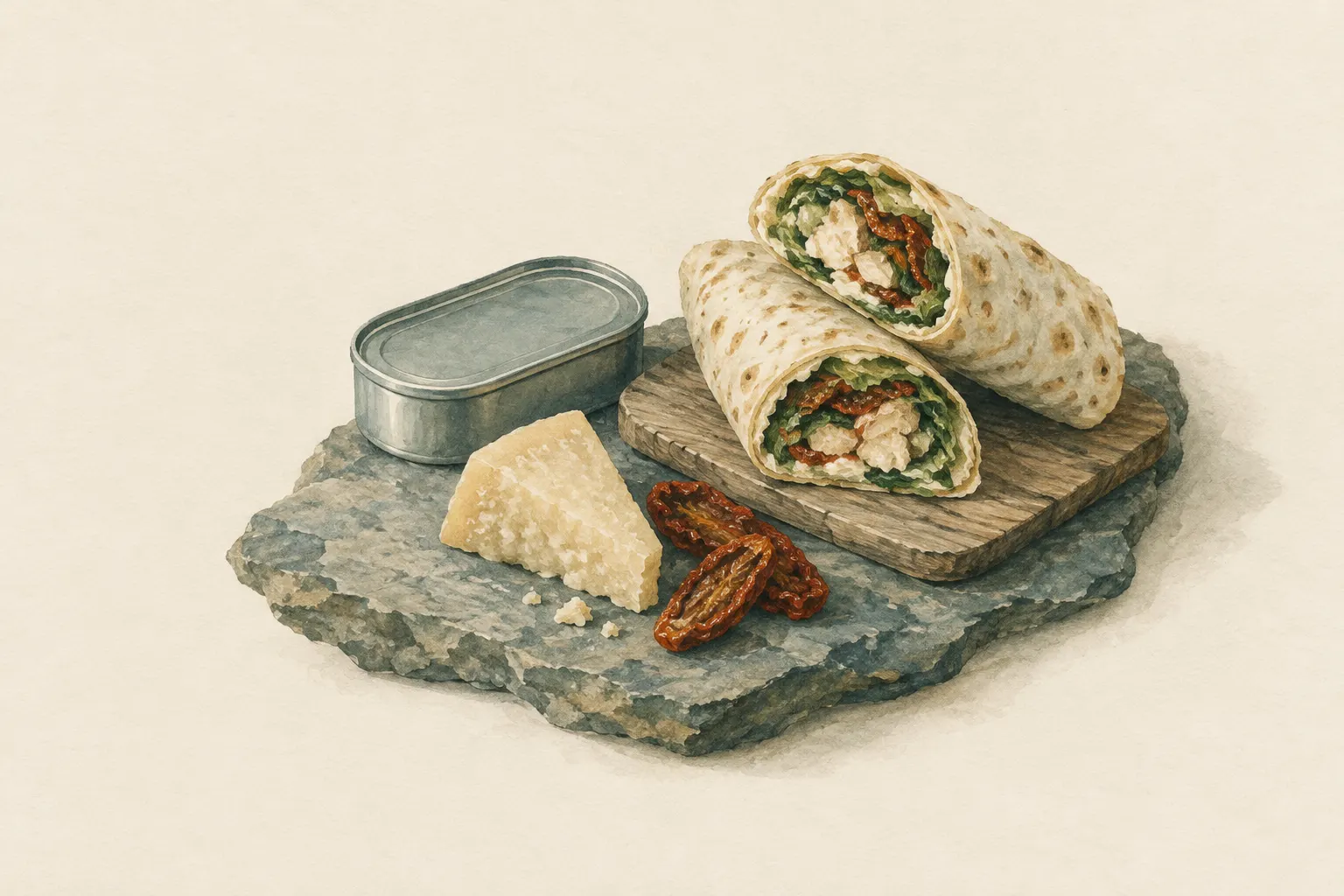
A soft tortilla topped with hummus or nut butter, hard cheese, canned tuna or chickpeas and a few sun-dried tomatoes – rolled up, it is a proper lunch without stove, fire or washing-up. All the ingredients keep without a fridge. What matters is clean hands, small tins that are eaten up completely at once, and a look at the allergens.
- About 10 minutes
Explained simply
A wrap is a thin, soft flatbread roll with a filling. Outdoors it is great, because you need no stove and no fire for it. You spread hummus or nut butter on the tortilla, put cheese, tuna or chickpeas and sun-dried tomatoes on top and roll everything up tightly.
All the ingredients keep without a fridge: tortillas, hard cheese, tins and sun-dried tomatoes. But careful: as soon as a tin is open, it must be eaten up straight away. Open tuna lying for hours in a warm backpack can make you ill.
Before eating you wash your hands. The tin lid is as sharp as a knife – so be careful. And everything left over, including the empty tin, goes back home with you.
How it works
For food to keep without a fridge, it has to make life hard for germs. Hard cheese and sun-dried tomatoes contain little water. Tins were heated so strongly after sealing that no living germs remain inside – as long as the tin stays closed and undamaged.
As soon as the tin is open, germs get in from the air and from hands. In a warm backpack they can then multiply quickly. That is why opened tins follow the same rule as freshly cooked food: do not leave unchilled for more than about two hours – best eat it at once.
The tortilla is plate, cutlery and bread in one. The spread holds the filling in place and stops the tortilla going soggy from moist ingredients.
What really matters
Small tins are the key. A small tin of tuna is just right for one person; a normal tin of chickpeas is enough for two. That way nothing is left over that would have to wait unchilled.
Before opening, you look at the tin. If it is bulging, leaking, rusty or badly dented, it stays closed – a dangerous toxin may have formed inside. You do not tip the water or oil from the tin into the stream or onto the ground; you take it with you or eat it.
When filling, leave a border and lay the filling as a strip in the middle. Fold the bottom up, fold in the sides, roll up – then the wrap holds together in your hand too.
Safety: hygiene and allergens
Because nothing is heated, there is nothing that kills germs either. Clean hands are therefore especially important – above all after going to the toilet or when you have touched animals or soil. If you have no water for washing, hand sanitiser helps.
Many major allergens can come together in a wrap: gluten in the wheat tortilla, sesame in the hummus, milk in the cheese, fish in the tuna, nuts in the nut butter. Anyone preparing food for others asks first and uses a separate knife and surface for people with allergies.
Fresh hummus from the chiller, cream cheese, soft cheese and cold meats need cooling. At most they belong, well chilled, in the first day – and not for hours in the sun.
When it makes sense – and when it does not
No-cook wraps are ideal for lunch breaks, for days with a fire ban, when the stove fails or when things have to be quick. Children like building their own wraps.
On very cold days a warm meal is often more important for morale and body warmth. And on long trips tins are heavy – then dried ingredients are the lighter choice.
Step by step
Wash hands, prepare a surface
Wash your hands with water and soap, away from the stream, or use hand sanitiser. Put down a board or a clean pot lid as a surface and unpack all the ingredients.
- 1
Wash hands, prepare a surface
Wash your hands with water and soap, away from the stream, or use hand sanitiser. Put down a board or a clean pot lid as a surface and unpack all the ingredients.
- 2
Check and open the tin
Look at the tin: if it is bulging, leaking or badly dented, it stays closed. Otherwise open it and pour off the water or oil – into a bag or a cup, not onto the ground. You can rinse chickpeas with a little drinking water.
The edge of the lid is as sharp as a knife.
- 3
Cut the cheese and tomatoes
Cut the hard cheese into thin strips and the sun-dried tomatoes into small pieces. Children cut on the board with an adult beside them, blade always away from the body.
- 4
Spread the tortilla
Lay the tortilla flat and spread two tablespoons of hummus or nut butter in the middle. Leave a finger-wide border all round, otherwise everything squeezes out when you roll it.
- 5
Lay the filling in a strip
Lay tuna or chickpeas, cheese strips and tomato pieces as a thick strip in the middle, running across in front of you. Not too much at once – better two wraps than one that bursts.
- 6
Roll it up
Fold the bottom edge over the filling, then fold both sides inwards, and roll everything up tightly from the bottom to the top. That way the filling stays inside even when you hold the wrap in your hand.
- 7
Eat at once, do not keep leftovers
Eat the wraps straight away and finish the tin while you do. Leftover tin contents are not kept for the evening. Tin, lid and packaging are wiped out, go into the rubbish bag and come back home with you.
Common mistakes
- Opening a large tin and keeping the rest in the pack
- Carrying cream cheese, soft cheese or fresh hummus unchilled for hours
- Filling with dirty hands
- Opening bulging tins anyway
- Not leaving a border – the wrap leaks
- Tipping tin water into the stream
- Carrying tortillas bent – they break
Quick view
Materials
Wheat tortillas (wraps)
2 tortillas per person (about 25 cm)
Contain gluten; check the best-before date and use up opened packs soon.
Carry them flat in the pack, otherwise they break.
Hummus (shelf-stable pack) or tahini
About 2 tablespoons per person; alternatively 1–2 tablespoons of nut butter
Fresh hummus from the chiller needs to be kept cold – outdoors only unopened shelf-stable packs, or well chilled for the first day.
Hummus usually contains sesame – a major allergen.
Nut butter or peanut butter
Instead of hummus, 1–2 tablespoons per person
Peanuts and tree nuts are among the most common and most dangerous food allergens – ask in the group first.
Store cool; oil that settles on top is simply stirred back in.
Hard cheese in one piece
About 30–40 g per person
Hard cheese keeps much better unchilled than soft cheese, but turns oily in warmth – plan it for the first days, leave soft cheese and cream cheese at home.
Contains milk.
Canned tuna or canned chickpeas
One small tin of tuna (about 80 g) or half a tin of chickpeas per person – the tin must be finished at the meal
Do not open or eat from bulging, badly dented, rusty or leaking tins.
Eat opened tins at once – do not keep them unchilled. Choose small tins.
Sun-dried tomatoes
3–4 pieces per person
Dry-packed tomatoes keep best; tomatoes in oil should be chilled after opening or used up soon.
Manual can opener
If the tin has no ring pull
Electric can openers do not work during a power outage.
Knife (fixed or locking blade)
Cut away from your body.
Rules on carrying knives differ by region – check local rules.
Bowl and small chopping board
Board or clean pot lid as a surface
Wash the board thoroughly after raw fish or meat before bread or vegetables go on it.
Soap / detergent
For washing hands
Rinse drinking-water containers thoroughly after cleaning.
Rubbish bag (resealable)
For the tin and packaging
Suitable for
- Lunch break on day trips
- Days with a fire ban or without a stove
- Children who fill their own wrap
- The first days of a multi-day trip
Not suitable for
- Fresh hummus, cream cheese or cold meats without cooling for many hours
- Large tins for one person – leftovers would have to stand unchilled
- Bulging or leaking tins
- People with coeliac disease with ordinary wheat tortillas
Prerequisites
- Clean hands – water and soap or at least hand sanitiser
- A clean surface
- Allergies in the group are clear
Safety
- Many major allergens come together here: wheat (gluten) in the tortillas, sesame in the hummus, milk in the cheese, fish in the tuna, nuts in the nut butter; sun-dried tomatoes may contain sulphites. Ask before sharing and use separate knives and surfaces for people with allergies.
- Wash hands before eating – especially after using the toilet, touching animals or soil. The tin lid is sharp: do not bend it out with your fingers. Do not tip the tin water or oil into streams or onto the ground; take it with you in a bag or eat it. Take packaging, leftovers, nutshells and crumbs back with you and do not feed animals.
How it works
The tortilla is plate and bread in one. The spread glues everything together and keeps the filling moist. Hard cheese, tinned food and sun-dried tomatoes contain little water or are packed germ-free and so keep without a fridge – until the tin is opened. From then on the contents follow the same rules as fresh food: eat quickly, do not leave it standing lukewarm.
Advantages
- No stove, no fire, no washing-up
- All ingredients keep without a fridge
- Filling thanks to protein and fat
- Children can build their own wrap
Disadvantages
- Tins are heavy and have to be carried back out
- Opened tins must be finished at once
- Many allergens in one dish
- No warm food on cold days
Deep knowledge
Background
Wheat tortillas come from Mexico and the south of the USA, where they have long been a travel food: they are flat, light and keep for weeks in their packaging. For trips they are more practical than bread because they cannot be squashed.
Tins are germ-free as long as they are closed and undamaged. Once opened, their contents are as sensitive as freshly cooked food. The WHO food hygiene rules advise not to leave cooked and perishable food at room temperature for more than two hours.
Variants
- Kids variant: wrap pinwheels
- Spread the tortilla thinly with hummus or a cream cheese alternative, lay cheese strips on top, roll it up tightly and cut it into thumb-thick slices. Small pinwheels are easy to hold and eat. For small children, spread nut butter thinly rather than in lumps.
- Vegan
- Hummus, chickpeas, sun-dried tomatoes and a few olives or roasted sunflower seeds – without cheese. Season with paprika or cumin.
- Sweet wrap
- Nut butter, banana slices and a little honey or syrup. No honey for babies under one year; with a nut allergy, sunflower seed butter.
- Warm from the pan
- If you have a stove with you, you can briefly toast the rolled wrap on both sides in a dry pan until the cheese melts. More on this in the pan tortilla pizza. Stove only outdoors.
Common mistakes
- Opening a large tin and keeping the rest in the pack
- Carrying cream cheese, soft cheese or fresh hummus unchilled for hours
- Filling with dirty hands
- Opening bulging tins anyway
- Not leaving a border – the wrap leaks
- Tipping tin water into the stream
- Carrying tortillas bent – they break
Limits and risks
- No shelf-life figures for cheese without cooling – “first days” is a rough guide
- Amounts are recipe guide values
- In great heat, better leave out the cheese
Sources (4)
- World Health Organization (WHO) (2006): Five Keys to Safer Food Manual · Do not leave cooked and perishable food at room temperature for more than 2 hours; wash hands; safe raw materials
- Centers for Disease Control and Prevention (CDC): Botulism – prevention information (including infant botulism) · Do not use bulging, leaking or damaged cans – risk of botulism
- European Parliament and Council of the European Union (2011): Regulation (EU) No 1169/2011 on the provision of food information to consumers · The 14 major allergens that must be labelled, including cereals containing gluten, peanuts, tree nuts, milk, egg, soy, sesame, fish, celery, mustard, sulphites
- Leave No Trace Center for Outdoor Ethics: The Seven Principles of Leave No Trace (Principle 5: Minimize Campfire Impacts) · Pack out rubbish and food scraps; no waste water into water bodies