















Making birch tar: the oldest glue in the world
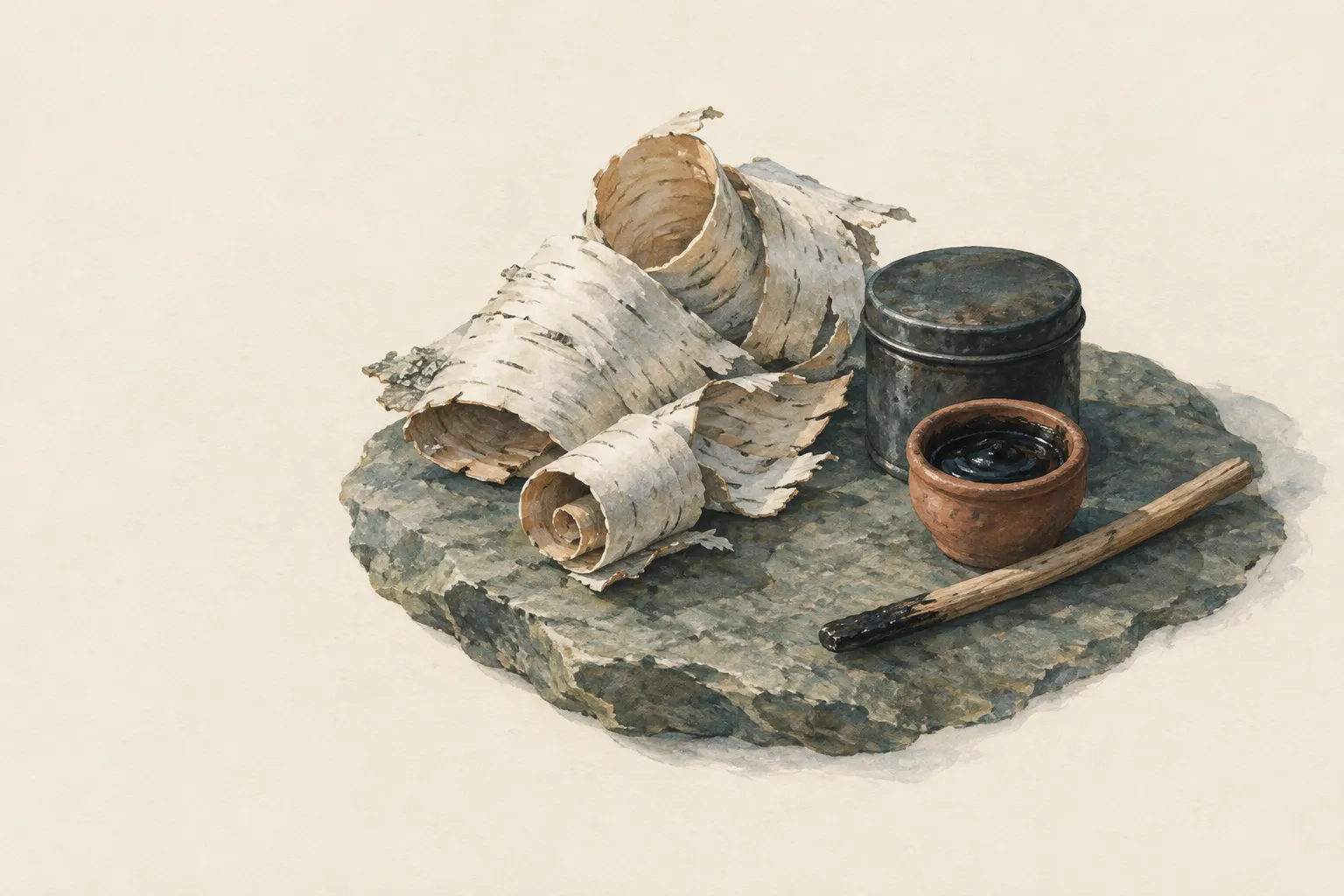
Neanderthals already used birch tar to glue stone points to wooden shafts. It forms when birch bark is heated without air. Today two tin cans make it possible in a campfire: bark in the upper can, a collecting can below, seal well, heat with embers and let it cool. Here you learn to collect bark from fallen wood, prepare the cans, heat them safely, boil the tar down to pitch and use it as glue or wood protection.
- Preparation 30 minutes, heating about 1 hour, cooling 1 hour
Explained simply
Hundreds of thousands of years ago people already made glue – from birch bark. If you heat the bark without air, a black, sticky mass drips out: birch tar.
Today this works with two tin cans. The bark goes in the upper one, the lower one catches the tar. You seal everything with earth and make a fire around it.
Once everything has cooled, you boil the tar down until it is thick. With it you can glue things together or protect wood from wet.
How it works
Birch bark contains a lot of betulin, a white, oily substance. Without oxygen the bark cannot burn. Instead the heat breaks it down, producing oily, sticky compounds that move downwards as vapour and liquid.
The lower can sits in the cool ground. There the tar collects instead of burning. When boiled down, the light fractions evaporate, leaving tough pitch.
What matters
Airtight: every air gap lets the bark burn instead of smoulder. Earth or clay around the joint is decisive.
Good bark: white, oily bark from dead, fallen birches gives the most tar. Damp or rotten bark gives little.
Patience: only when hardly any smoke comes is the bark reduced. Then everything must cool completely.
Safety: what to watch out for
Hot and sticky: only touch tar and cans after cooling, wear heat-protective gloves. Cool tar burns at once with cool running water.
Smoke: the smoke irritates eyes and airways. Stand upwind and keep children away.
Fire and forest: only at permitted fire sites, not when there is wildfire danger, and never peel bark all the way round living trees.
Step by step
Collect bark
Collect birch bark from fallen, dead birches or from firewood – never all the way round living trees. The more white, oily bark, the more tar. Tear it into small strips.
- 1
Collect bark
Collect birch bark from fallen, dead birches or from firewood – never all the way round living trees. The more white, oily bark, the more tar. Tear it into small strips.
- 2
Prepare the cans
Punch a few small holes into the base of the larger can with a nail or the tip of a knife. Stuff the bark in tightly and close the top of the can with a lid or folded aluminium sheet.
- 3
Bury the collecting can
Dig a hole next to the fire site and place the smaller can in it so its rim is level with the ground. Set the bark can with its perforated base exactly on top.
- 4
Seal it
Seal the joint between the two cans all round with earth, clay or sand. That way no air gets in and the lower can stays cool.
- 5
Heat with fire
Build a fire all round the upper can and keep it going strongly for about an hour. From the cracks, first white then yellowish smoke rises. When hardly any smoke is visible, the bark has been reduced.
Stand upwind, do not breathe the smoke.
- 6
Let it cool and open
Let the fire die and everything cool completely before touching the cans. In the lower can there is dark, liquid tar; in the upper one, black bark charcoal.
- 7
Boil down to pitch and use it
Heat the tar carefully in the can over low embers until it becomes thick. To glue, apply the warm pitch and press the parts together. A little charcoal powder makes it firmer. Thin tar protects wood and leather from wet.
Common mistakes
- Peeling bark from living trees
- Not sealing the joints – the bark burns
- Opening hot cans
- Standing in the smoke
- Overheating the pitch – it catches fire
Quick view
Materials
Small metal tin with lid
Two tin cans: a larger one with a hole in the base, a smaller one for collecting
Burn off coated or painted tins outdoors first.
Gets very hot in a fire.
Knife (fixed or locking blade)
Cut away from your body.
Rules on carrying knives differ by region – check local rules.
Leather or heat-resistant gloves
Synthetic gloves melt onto the skin – only leather or certified heat-resistant gloves.
Wet gloves conduct heat quickly.
Dry firewood
Collect only where permitted.
Water for extinguishing (bucket, canister or pot)
Have several litres ready before lighting.
Suitable for
- Glue for hafting and repairs
- Protecting wood and leather
- Demonstrating an ancient technique
Not suitable for
- Peeling bark all the way round living trees – the tree dies
- Fire indoors
- High wildfire danger
Prerequisites
- Birch bark from dead, fallen trees or with permission
- A permitted fire site
- Heat-protective gloves
Safety
- The smoke from tar making irritates eyes and lungs. Do not breathe it in, stand upwind, keep children away.
- Wood, bark and trees belong to someone. Without the forest owner's permission you may not fell trees, peel bark or take wood in Austria and Germany. Only take what you are allowed to – best of all dead wood on the ground or wood from your own land.
How it works
If birch bark is heated without oxygen, it cannot burn. Instead it breaks down and releases oily, sticky substances that drip downwards: birch tar. The tightly closed upper can keeps the air out; the hole in its base lets the tar run into the cooler collecting can sunk into the ground. Boiled down, the liquid tar becomes tough pitch that sets and sticks as it cools.
Advantages
- Natural, waterproof glue
- Only bark and two cans needed
- Bark charcoal as a by-product
Disadvantages
- Small yield
- Smoke and heat
- Needs a permitted fire site
Deep knowledge
Background
Birch pitch is the oldest known glue of humankind. Finds from Italy are about 200,000 years old. Ötzi, the Iceman, had also glued his arrowheads to the shaft with birch pitch.
Stone Age people had no cans. Researchers think they smouldered the bark under ash, in pits or against stones – with much less yield than with two cans.
Variants
- Pitch glue with resin
- If you cannot make birch pitch, mix spruce or pine resin with charcoal powder into a similarly good glue.
- With a pot and lid
- Instead of a can, an old pot with a tight lid and a hole in the base works. Do not use the pot for cooking afterwards.
Common mistakes
- Peeling bark from living trees
- Not sealing the joints – the bark burns
- Opening hot cans
- Standing in the smoke
- Overheating the pitch – it catches fire
Limits and risks
- No exact quantities or temperatures
- Do not use tar internally
Material alternatives
Derived from material properties: a substitute must have all relevant properties. Observe the notes on the substitute.
- Small metal tin with lid
- Single-wall stainless steel bottle (Heat only single-wall bottles without paint/plastic; remove the lid before heating.)
- Dry firewood
- Tinder (Carry in waterproof packaging.), Char cloth (charred cotton) (Store dry in a tin.), Finest-grade steel wool (Store separately from batteries – fire risk.), Fatwood (resin-rich wood) (Collect only dead wood where permitted.), Stove fuel (canister, liquid fuel, alcohol) (Store fuels apart from food and in original containers or bottles intended for them.), Petroleum jelly cotton balls (Use only pure cotton.), Cooking oil or cooking fat (tallow, lard) (Never put out burning fat with water – cover it with a lid to smother it.), Tree resin (spruce, pine) (Resin is flammable and sticks to the skin when hot – melt it only slowly over low heat.), Birch bark (from dead, fallen wood) (Never peel from living trees.)
Results come exclusively from structured entries. No improvised instructions are generated.
Sources (5)
- USDA Forest Service / Ad Council / National Association of State Foresters: Campfire Safety (Smokey Bear wildfire prevention campaign) · Never leave a fire unattended, keep water ready, put it out completely
- Centers for Disease Control and Prevention: Carbon Monoxide Poisoning – Prevention guidance · Never use embers, charcoal or fire in closed rooms, tents or vehicles – carbon monoxide
- European Resuscitation Council – Resuscitation (journal) (2021): European Resuscitation Council Guidelines 2021: First Aid · Cool burns at once with cool running water; call emergency services for severe burns
- Mors L. Kochanski – Lone Pine Publishing: Bushcraft: Outdoor Skills and Wilderness Survival · Birch tar and pitch as glue
- Ray Mears – Hodder & Stoughton (2002): Bushcraft · Birch bark and its uses